
From Garage to Industry Leader: How Automated Welding Cells Fueled B&W Trailer Hitches’ Remarkable Growth
Necessity and vision drive innovation
The B&W Trailer Hitches story begins in 1987 in Humboldt, Kansas, when Roger Baker and Joe Works joined forces to provide for their families.
With the demand of Baker's classic car restoration skills diminishing and Works facing tough years on the family farm, they began applying their craftsmanship to building custom truck beds under the name B&W. What started as necessity soon led to innovation when they recognized that permanently mounted gooseneck hitches often caused rattling, got in the way and were easy to misplace.
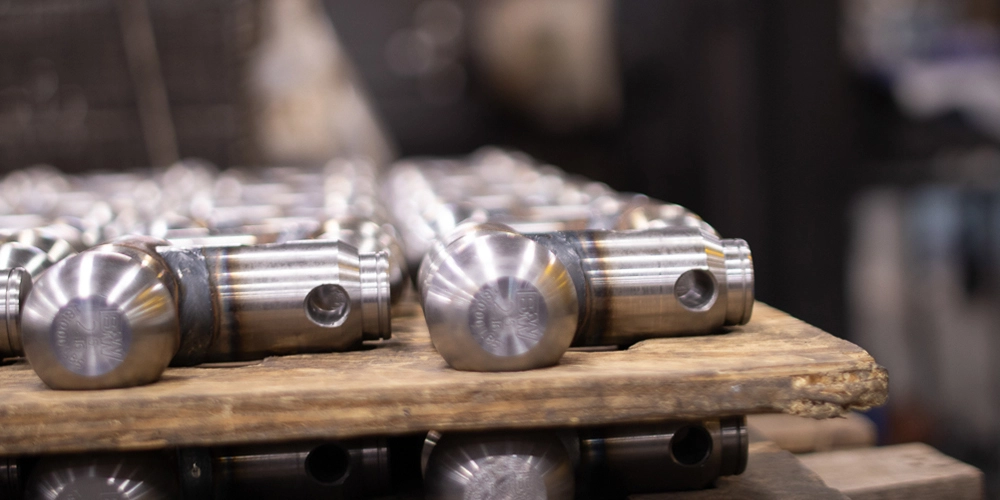
They designed the revolutionary Turnoverball Gooseneck Hitch, featuring mounting hardware underneath the bed and a ball that turned over and stowed in place. By designing the ball as a square rather than a round cylinder, it fit perfectly into the pocket and didn’t need to be taken out. This ingenious solution transformed the industry, with nearly every gooseneck manufacturer today using this type of ball storage and mounting system.
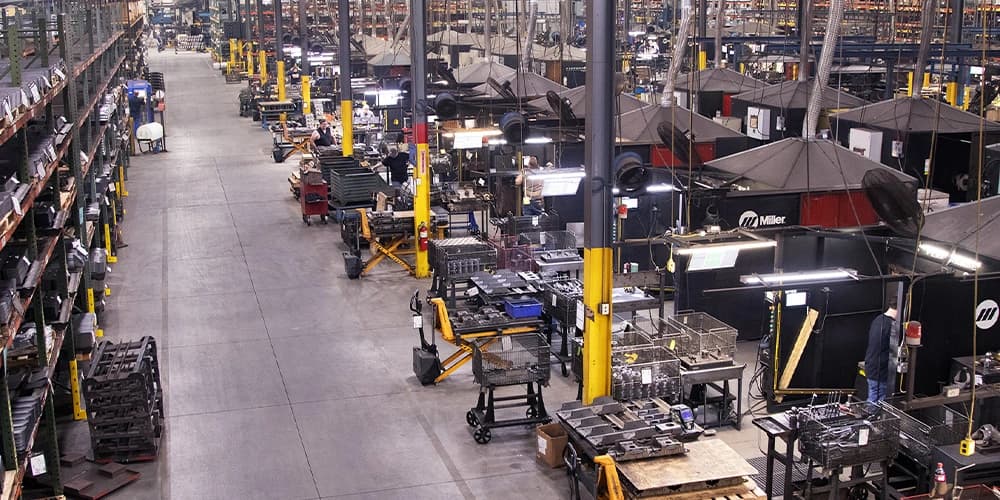
From these humble beginnings, B&W has grown into a 647,000-square-foot manufacturing powerhouse, building some of America's most trusted towing products. Their journey from small shop to industry leader wasn't just about expansion — it was about maintaining the same level of excellence and craftsmanship at scale.

Soaring growth demands a new approach to scaling production processes
As demand for B&W products grew, the company faced a critical question: How could they dramatically increase production while maintaining their rigorous standards?
B&W's reputation had been built on precision and reliability. Their customers — from commercial haulers to weekend camping enthusiasts — trusted B&W to securely tow heavy loads. There was no margin for error or inconsistency.
For a company based in rural Kansas, finding enough skilled welders to support rapid expansion presented another significant challenge. The traditional approach of scaling through additional manual welding stations would be difficult, if not impossible, to sustain.
Perhaps most importantly, B&W needed to maintain their commitment to American manufacturing. Outsourcing wasn't an option — they needed to find a way to dramatically increase productivity in their Humboldt facility.

Automated welding cells play a strategic role in transforming their manufacturing
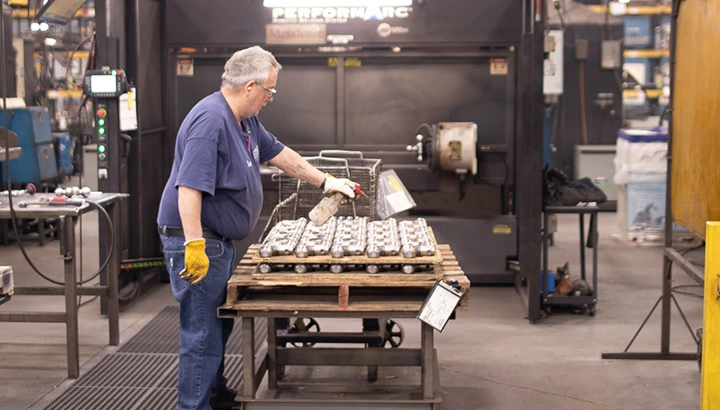
After previous attempts at welding automation fell short, B&W found the solution they needed in Miller® PerformArc™ robotic welding systems. This technology would transform their manufacturing capabilities while preserving their standards.
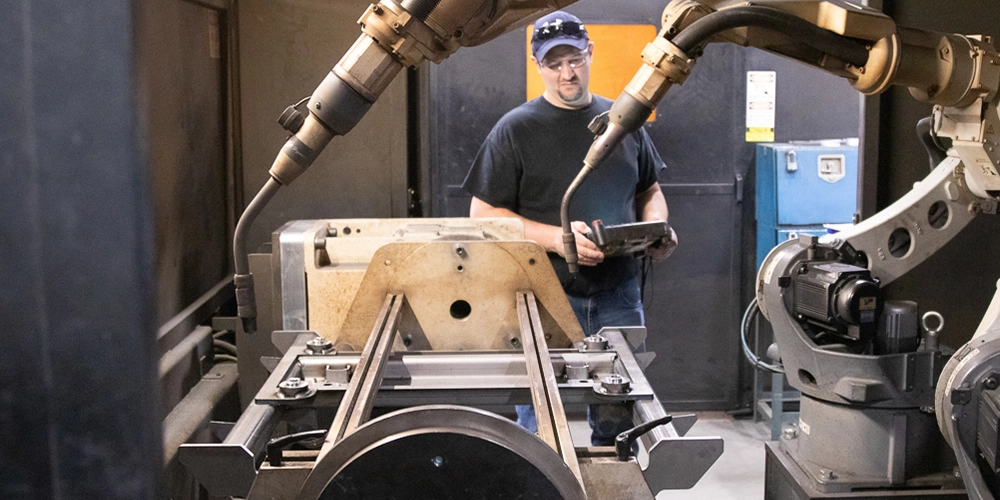
Starting with one PerformArc cell in the early 2000s, B&W began a carefully planned integration of automation into their manufacturing processes. These weren't replacements for skilled workers but tools to enhance their capabilities and focus their expertise where it mattered most.
"A lot of people worry about automation taking away positions and jobs,” says Jeremiah Ivy, supervisor, robotic welding at B&W. “But from my experience, the shops that go with automation end up having to hire more people because they are doing higher-quality work."
What began as a capability-expanding investment became a true partnership. As B&W grew, Miller worked alongside them, continuously improving the PerformArc systems to meet evolving needs. Their growth trajectories aligned perfectly, with each company developing and innovating in tandem.
When standard solutions weren't enough, the partnership became even more valuable. B&W's engineering team collaborated with Miller to develop custom solutions, including creative retrofits that added secondary robotic arms to five existing cells, essentially doubling their production.
Consistent performance powers growth and workforce expansion
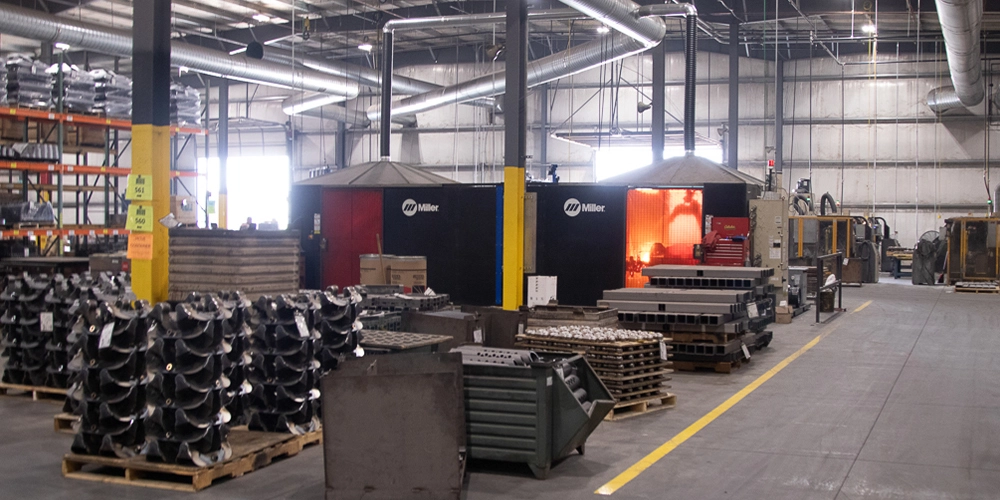
The integration of Miller PerformArc systems enabled B&W to achieve remarkable growth while enhancing product quality and consistency.
"As much as I think that I can weld something and be as smooth and consistent as an automated robot, that's a joke,” says Chad Klauman, quality assurance at B&W. “I am nowhere near a robot. The automation process is very smooth and can produce repeatable welds day in and day out.”
True to form, rather than reducing employment, automation has enabled B&W to grow their operation significantly, creating new jobs and opportunities in their community. In the early 2000s, there were 100 people in the shop, while today, there are over 500. Additionally, they've been able to train operators without extensive welding backgrounds, expanding their workforce beyond the limited pool of skilled manual welders in the region.
One important role that has grown in numbers over the years is that of the certified welding inspectors who ensure every weld meets B&W’s strict requirements. Certified welding inspectors validate the consistency of these automated processes through regular testing and documentation to confirm that the technology is functioning as intended. Their oversight ensures that automation enhances, rather than compromises, weld quality, maintaining the highest standards while driving optimum efficiency across production.
A partnership built for the future
What started as an initial foray into welding automation has resulted in a robust, highly efficient operation where automation and welding operators work hand in hand, producing measurable gains across the business.
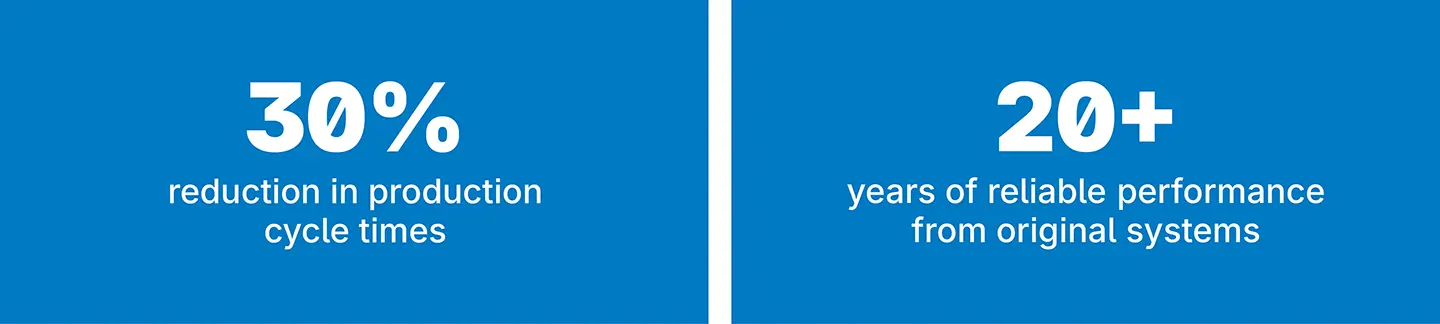
The durability of the PerformArc systems has also provided exceptional return on investment. Some units have been in continuous operation for nearly 20 years while still maintaining the precision required for B&W's standards.
To this day, the partnership between B&W Trailer Hitches and Miller continues to thrive, with both companies committed to innovation and excellence. As B&W looks to the future, they're exploring new ways to leverage automation and robotics in their manufacturing processes while continuing to work closely with Miller to identify opportunities for improved efficiency, precision and productivity.
This collaboration showcases the power of true partnership, where a supplier moves beyond being just a vendor to a collaborative ally in achieving manufacturing excellence well beyond the initial equipment sale.
For manufacturers facing similar challenges, with the right technology partner it's possible to dramatically scale production while enhancing performance and creating new opportunities for skilled workers.
Posted Mar 9, 2024