
Dynasty® 300
55 lb portable AC/DC TIG/Stick, welds up to 3/8", energy-efficient inverter.


When you’re the winningest operation in NASCAR, long-term success seems assured. Hendrick Motorsports, known for its premier stock-car teams and the innovative vehicles behind them, had established a defined lane over its 40 years in business. The Concord, North Carolina, company and its nine welders already juggled full plates, building one chassis each week while tackling wreck repairs and frequent car design shifts to improve performance.
A detour came in the form of a new NASCAR rule in 2022, requiring a single manufacturer to supply all vehicles for the elite Cup Series. Hendrick Motorsports’ consistent workload would soon downshift with the decreased demand for its suspension components and chassis. To keep the team’s employees working and business strong, company leadership knew they had to pivot, and fast.
A winning bid to assist GM Defense, a subsidiary of General Motors, as it ramped up efforts to build the Infantry Squad Vehicle (ISV), a troop transport vehicle used by the U.S. Army’s Airborne Divisions, landed at the perfect time for Hendrick Motorsports. While the new assignment appeared to be an extreme departure from its racing focus, a core competency in fixing, tooling up and adapting quickly allowed for a smooth transition. Yet the change wasn’t without a few roadblocks along the way.
While the roll cage and tubing components of the military vehicles were familiar to Hendrick Motorsports, the welding process differed from that of racecars. Welders were most accustomed to using Millermatic® MIG and Multimatic® multi-process machines for tacking and making thousands of short welds on the racecar chassis. With the introduction of the military project into the workflow, high strength steel and aluminum materials were required to ensure appropriate strength-to-weight ratio. By using mostly 4130 steel for the chassis build, vehicle weight can be kept down to support eventual air lifts and drops of the completed vehicles. These materials demanded TIG machines to complete the work, a large shift for most of the existing team.
As the mechanics of their jobs shifted, volume skyrocketed for the team. Set up to build one racecar chassis per week, the military’s need for up to 20 vehicles per week necessitated a reduction in station time from 16 hours to 4-6 hours. Scaling up was further challenged by the rigorous standards military work demands. While race vehicles similarly require precision and excellence, Hendrick Motorsports was now mandated to certify specific processes and keep thorough maintenance records for its work with GM Defense.
The acceleration in production was both a blessing and a challenge for Hendrick Motorsports. Adding to the nine-person team of welders was critical, and luckily, the highly regarded employer had access to a dynamic talent pool in the heart of North Carolina racing country. Yet one, or five, or even a dozen new hires wouldn’t be enough to support the extreme volume uptick the team was facing. In just four years, the company’s welding workforce grew to eight times its size. With the influx of employees, however, training and working within the existing 28,000-square-foot space became nearly impossible.

The most immediate need for Hendrick Motorsports was transitioning from MIG to TIG welding, along with the machines to support the shift. Flexibility was key, allowing welders to adjust modularly for thicker materials. Inverter power sources were also essential to work efficiently with an increased number of welders in the shop. The team worked with Miller® to ensure the right product mix for its operations — but the partnership went far beyond placing an order. As an extension of Hendrick Motorsports, a cross-specialty team of Miller experts evaluated its operations, recommended equipment and solutions and trained staff on selected machines. With that support and fast access to product, Hendrick Motorsports hit the ground running.
To ensure optimal weld conditions for the required steel and aluminum materials, Miller set the organization up with Dynasty® 300 TIG Welders to tackle the new project. The Dynasty supports high-precision welds with determined pulsing for high-strength alloy steels. The benefit of this pulse welding enables penetration with less total heat, minimizing distortion and making the team’s frequent out-of-position overhead welds easier and more effective.
Always open to change for the good of its business, Hendrick Motorsports embraced automation to keep up with increasing volumes. The team is proud of its great welding talent and sought to support welders as their workload increased. With the company moving into a contract manufacturing environment, the need to hit quality levels was in part achieved by increasing output through the use of automation.
As its growth accelerated with little time to ramp up, Hendrick Motorsports needed an automation solution in operation quickly. The team turned to Miller® to introduce the Copilot™ Cobot into its workflow to improve efficiencies in resolving some of the high-mix, quick changeover operating challenges that were beginning to grow in size. Plus, the easy programming of Copilot allowed Hendrick Motorsports to have it up and running within days. The company continues to explore ways to enhance efficiency through automation, even leveraging a spot welder on a robot to weld fender parts. Always open to optimization, it is also evaluating the OptX™ 2kW handheld laser welder, which would significantly reduce the welding learning curve for less experienced members of the team, enhancing overall productivity without sacrificing quality.
In 2025, Hendrick Motorsports’ advanced manufacturing operation became a stand-alone company known as Hendrick Motorsports Technical Solutions. It also moved into a new 160,000-square-foot facility, allowing it to improve efficiency with a more linear flow and all operations under one roof, bringing order and increased speed that will no doubt support growth well into the future.
Welding Automation Systems
Copilot™
The Copilot™ Builder™ brings customized automation to your shop so you can maximize your workforce and profitability. Its welder-centric design is easily reconfigurable to meet your needs, and its advanced user interface is simple to learn for welders of any skill level.
More than equipment or real estate, Hendrick Motorsports points to something more intangible when it comes to its ability to successfully pivot under less-than-optimal conditions. Driven by the belief that people are its most valuable asset, the company prioritizes a strong culture of care, learning and fun. That commitment is especially attractive to local trade school students and area fabricators displaced from other teams, as they see Hendrick Motorsports Technical Solutions as a destination employer.
Hendrick Motorsports sees its true accomplishment as supporting the families of its employees as well as the country they call home. The company takes immense pride in its relationship with GM Defense, supporting national security and providing quality and reliability that ultimately backs the nation’s troops. Its commitment to excellence and willingness to embrace change has allowed the company to thrive in a new market while maintaining its high standards and strong culture.
Posted Mar 25, 2025
55 lb portable AC/DC TIG/Stick, welds up to 3/8", energy-efficient inverter.

Entry-level collaborative welding system with advanced features that is great for welders who are new to robotic welding automation.
Dramatically boost productivity with ability to weld up to 5/16 in. thickness, ideal for sheet metal applications.
For the Beets and Schnabel crews on Discovery Channel’s “Gold Rush,” mining can be a 24/7 operation — with millions on the line.
Deltaweld® 350 with Intellx™ Elite offers a user-friendly screen, eliminating guesswork and boosting productivity. Discover Miller’s intuitive welding technology.

Learn how the Safran Nacelles Group reduced weld distortion and rework when TIG welding titanium with a switch to the Miller® Dynasty 400 TIG welder.
Structural welding codes in earthquake-prone Seattle are stringent. Apex Steel delivers code-quality welds efficiently with Miller technology.

Boilermakers Local 92 needed to train new members on new welding processes - faster. Advanced welding processes and new technology were key.
Wheeler's fleet optimizations transformed technicians into a resilient service force with improved weld quality, reduced idle time, extended truck life, and safety.

Dobbs Equipment uses the HDI Air Pak to streamline repairs and reduce downtime at a high-output sand mine.

Switching between TIG and stick welding polarity can be a time consuming process. Technology from Miller makes it much simpler for NAES.

Houston fabrication facility Exterran greatly improved production and reduced defect rates with PipeWorx and RMD® welding process.

Learn how Komatsu improved speed and efficiency by adopting SubArc Hercules, enabling the Longview team to cut weld time and stay ahead of demand.
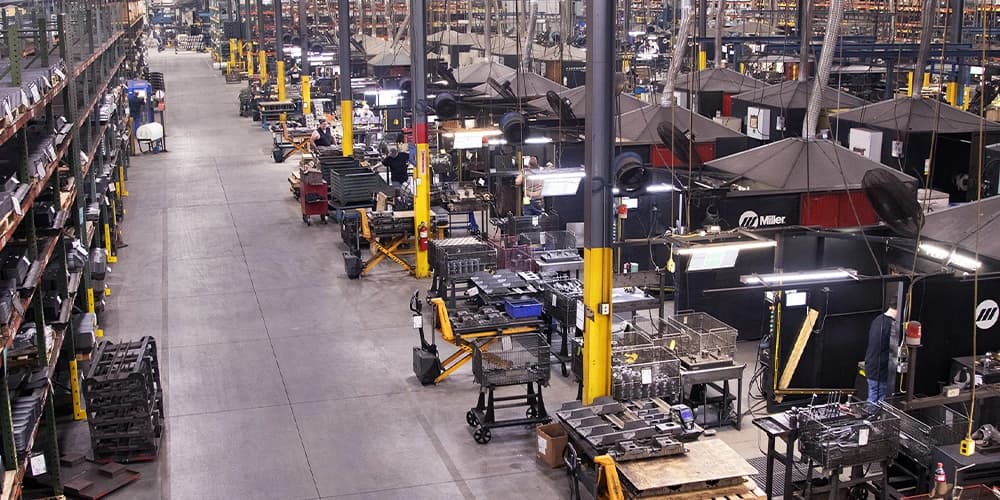
Discover how B&W Trailer Hitches transformed their manufacturing capabilities with Miller® PerformArc™ robotic welding systems. Learn how automation drives quality and efficiency — see what it could do for your operation today.

See how Hartnell College brings real-world welding automation into the classroom to meet evolving manufacturing workforce needs.

Repairs on a mining site are a daily occurrence. The Schnabel crew on "Gold Rush" uses reliable Miller equipment to keep operations running.
Uncover how the Miller team helped AGCO improve operator efficiency and ease while decreasing defects in their stainless steel welding operations.
Ascendum’s fleet overhaul with Miller EnPak® A60 units cut costs, boosts uptime and empowers technicians to deliver superior service.

Dynamic Manufacturing transformed their welding automation speed and quality using IntelliPath™ technology. See the impact on their operational success.
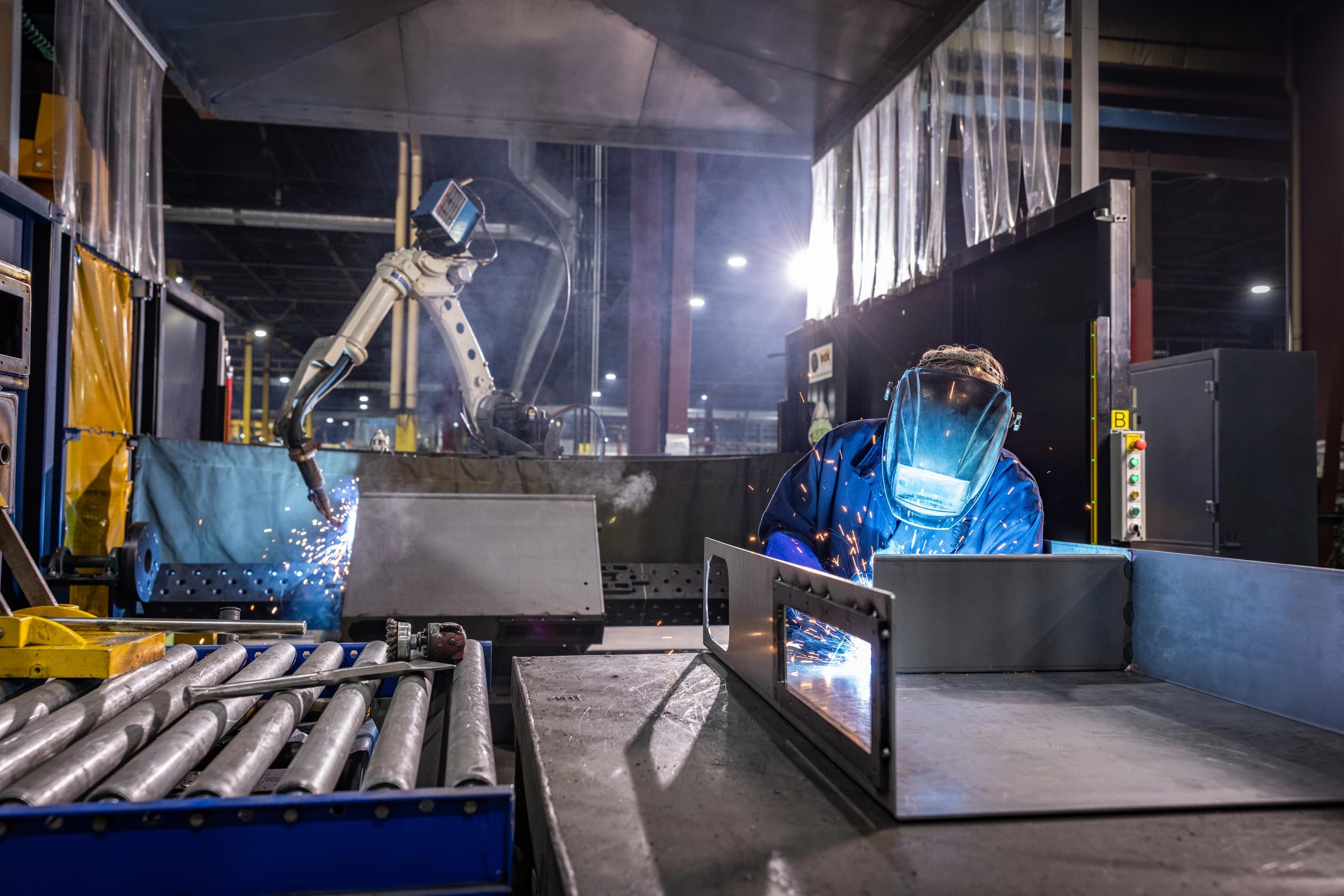
See how IFH Group used robotic welding automation and offline programming to increase throughput 25 to 30 percent on a family of larger tanks.

Learn how Team Industries created their own in-house welding training to address the shortage of skilled welders in the workforce.
Discover how new welding technology helped this racing organization boost productivity and long-term growth. Learn how they found success.

Take a look inside two different models of welder training at Tulsa Welding School and Blinn College and how they use Miller® welding equipment.

Henderson Products relies on the Deltaweld system and Intellx™ wire feeders with pulsed MIG welding to reduce training time and spatter.

G.G. Schmitt & Sons saves time and money welding anodized aluminum with Miller® Dynasty® 400 TIG welders, cutting hours of rework.
DE-CAL, Inc., relies on Miller equipment and technology to become one of the premier mechanical contractors in its region.

A change to Miller® FILTAIR® fume extraction systems helped decrease weld fume exposure and improve productivity for American Seating employees.

Implementing Miller® FILTAIR® MWX Mobile Fume Extractor helped improve air quality and productivity for Muscle Car Restoration employees.

A welding process change allowed Dixie Mechanical to eliminate back purging and double the number of welds completed every day.
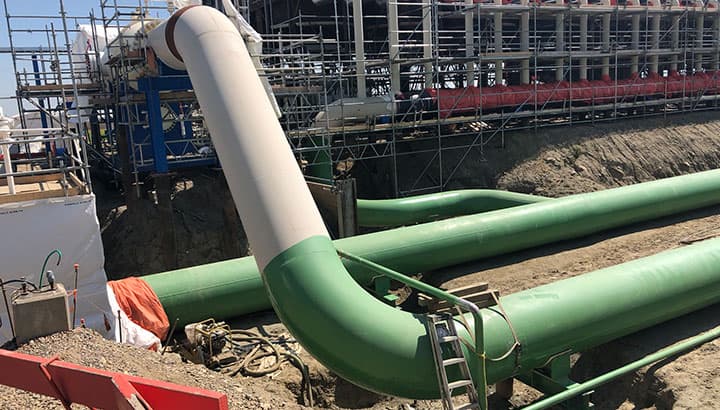
TC Energy switched from TIG and stick welding to wire processes for large-bore pipe on several projects and greatly improved productivity.

Mexia High School welding students enjoy hands-on experience with Miller® equipment and training resources.
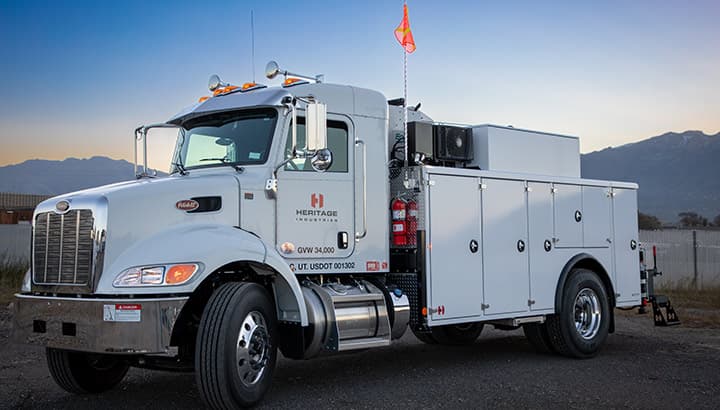
Wheeler CAT significantly reduced engine idling, to an average of 1% on a truck with a fully integrated cab heating and cooling system.