"Gold Rush" Crews Tackle High-Stakes Mining With Miller® Equipment
For the Beets and Schnabel crews on Discovery Channel’s “Gold Rush,” mining can be a 24/7 operation — with millions on the line.

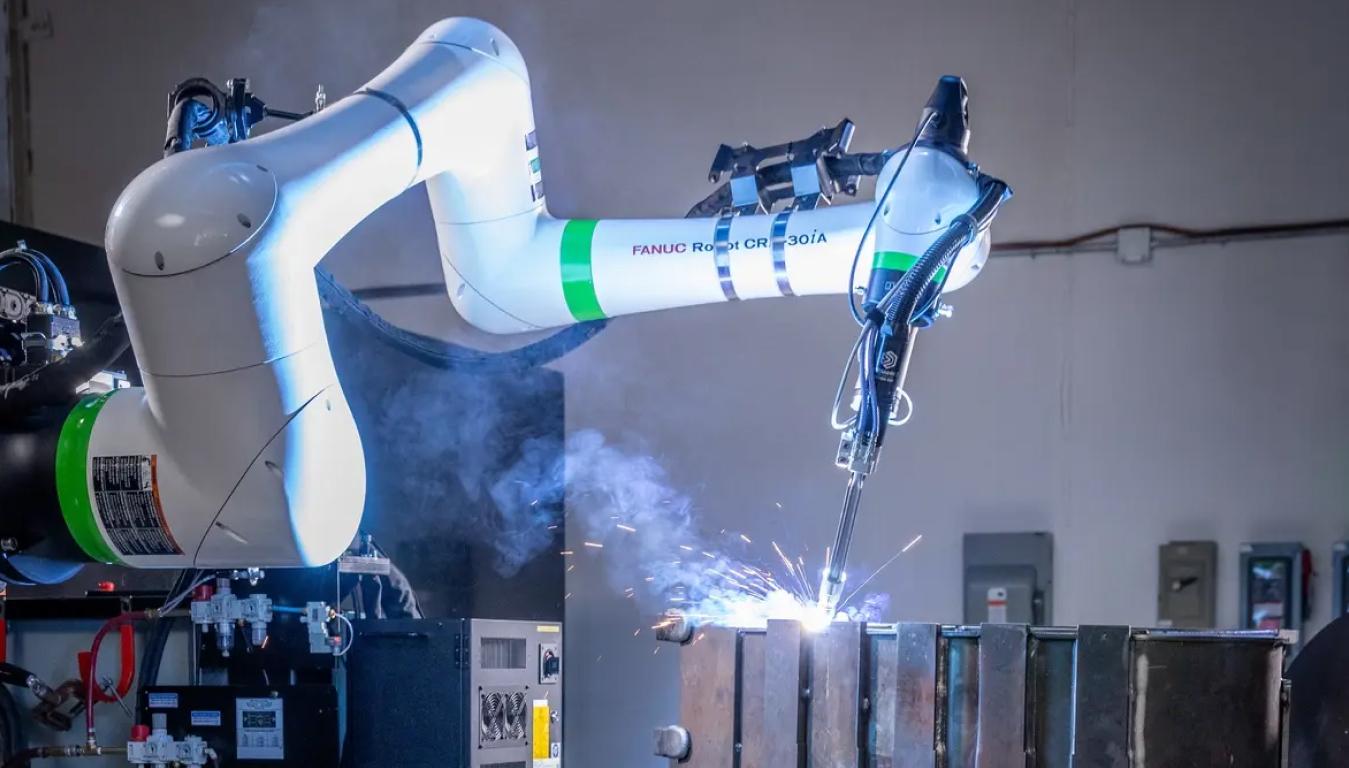
Hartnell College, located in the heart of the “Salad Bowl of America” in Salinas, California, provides crucial technical education in welding, mechatronics and manufacturing to support both the agricultural industry and local fabrication shops. With deep community ties, Hartnell College stands at the intersection of traditional trades and emerging technologies.
As local manufacturers across the Salinas Valley adopted automation, Hartnell College’s faculty noticed a widening disconnect between industry expectations and what traditional training programs could deliver.
Three main challenges stood out:
Rapid technology evolution
Industry technologies like automation and robotics were outpacing educational training, creating a critical skills gap for graduates entering the workforce.
Increasing automation
Local manufacturers were adopting automated welding systems to address labor challenges, but educational programs lacked the modern equipment, updated curriculum and instructor training needed to teach these technologies effectively.
Future-ready skills
Students needed exposure to technologies that would prepare them for both present and future job opportunities.
"The most troubling thing right now is that the technology used in the industry is outpacing our own training,” says Richard Chapman, agricultural engineering instructor at Hartnell. “At Hartnell College, we're trying to stay ahead of this and train students not only for the careers of today, but five years from now."
Hartnell College recognized that it needed a more modern approach to prepare students for the rapidly changing landscape. To close this skills gap and give students hands‑on experience with the tools they’d encounter on the job, the college sought automation solutions that would:
To meet these goals, Hartnell College chose to implement the Miller Copilot welding cobot system in their training program. The decision was reinforced by Hartnell’s long‑standing relationship with Miller and the ongoing support from their local district manager, who works closely with distributors throughout the Salinas Valley. That trusted partnership gave the college confidence that, in adopting Copilot, they would have reliable guidance and service throughout implementation.
Copilot is an intuitive, entry‑level collaborative welding system designed as an all-in-one workstation to give students hands‑on experience with the same automation technologies used in modern fabrication environments.
Key features include:
Hartnell saw it as an ideal tool for preparing students for careers in small and medium-sized manufacturing operations because of its:
“It’s very intuitive to program for a student with some welding experience and a little technology background,” says Chapman. “With it being a cobot, it has the flexibility and adaptability to move on to other types of work as well.”
Using the Miller® Copilot™ on parts of an Amiga tractor platform — an electric micro‑tractor designed to adapt to various cropping systems — Hartnell students reengineered the unit to navigate tall artichoke fields.
Here’s how the team brought the concept to life:
Engineering a custom frame
Students modified the tractor’s frame to stand seven feet tall, preventing crop damage while navigating standard growing beds.
Integrating sensors and imaging tools
They mounted cameras and sensors to collect plant-level data, with algorithms to predict harvest timing and detect plant issues.
Using cross-disciplinary skills
Students applied CAD design, mathematical calculations, fabrication techniques and programming skills.
While Copilot supported welds on parts of the build, the project’s bigger impact was how it pushed students to apply automation and robotics in an industry not typically linked with advanced technology. As the first and only community college in the national Farm Robotics Challenge, Hartnell showed how forward‑looking training can expand student capabilities while gaining exposure to the technologies reshaping one of California’s most essential industries.
By weaving automation into the curriculum, Hartnell gives students a bigger picture of how modern manufacturing operates. They’re not only practicing tasks but gaining the analytical, practical and industry‑aligned exposure that shapes well‑rounded graduates.
The impact of this approach emerges across several areas.
Enhanced technical understanding
The Miller® Copilot™ standardizes welding variables like travel speed and work angles, allowing students to focus on analyzing weld quality without the variability of manual execution. This accelerates learning and builds deeper technical knowledge.
Business value recognition
Students learn to evaluate when automation makes economic sense by experiencing the productivity advantages for repetitive tasks. This builds skills in calculating ROI for technology investments, combining technical and business knowledge.
Direct employment pathways
By aligning with local industry technology adoption, Hartnell created targeted internship opportunities with manufacturers using the same equipment. Students gain experience that makes them immediately valuable without extensive onboarding.
Hartnell’s automation-focused approach created a two‑way advantage: elevating student readiness while delivering meaningful value to the community’s manufacturing businesses.
Companies adopting automation technologies like the Miller® Copilot™ often expand their workforce because:
Because the Salinas Valley manufacturing landscape consists predominantly of multigenerational family businesses that have evolved over the course of more than 50 years, Hartnell's technology training aligns with these businesses' ongoing growth trajectory and helps empower new operators in the workforce.
In reviewing its experience, Hartnell offers practical guidance for other institutions looking to modernize welding education and better prepare students for today’s technology‑driven manufacturing environment.
These key takeaways include:
Balance traditional skills with new technology
Maintain core manual skills while introducing automation technologies. This dual approach ensures graduates can work effectively in both traditional and highly automated environments.
Select user-friendly systems
Prioritize technologies with intuitive interfaces that don't require extensive programming knowledge. This makes technology access more democratic across student skill levels.
Align with local industry
Research which automation systems are being adopted by regional employers. This direct alignment creates immediate employment pathways for graduates.
Develop an adaptability mindset
Foster an attitude that views new technologies as opportunities rather than threats, preparing students for careers of continuous technological evolution.
By embracing collaborative robotics and automation tools like the Miller® Copilot™ welding system, educational institutions can help prepare students for manufacturing's future, where human skills and technological capabilities combine to create more productive, higher-quality outcomes.
Posted Oct 14, 2024
For the Beets and Schnabel crews on Discovery Channel’s “Gold Rush,” mining can be a 24/7 operation — with millions on the line.
Deltaweld® 350 with Intellx™ Elite offers a user-friendly screen, eliminating guesswork and boosting productivity. Discover Miller’s intuitive welding technology.

Learn how the Safran Nacelles Group reduced weld distortion and rework when TIG welding titanium with a switch to the Miller® Dynasty 400 TIG welder.
Structural welding codes in earthquake-prone Seattle are stringent. Apex Steel delivers code-quality welds efficiently with Miller technology.

Boilermakers Local 92 needed to train new members on new welding processes - faster. Advanced welding processes and new technology were key.
Wheeler's fleet optimizations transformed technicians into a resilient service force with improved weld quality, reduced idle time, extended truck life, and safety.

Dobbs Equipment uses the HDI Air Pak to streamline repairs and reduce downtime at a high-output sand mine.

Switching between TIG and stick welding polarity can be a time consuming process. Technology from Miller makes it much simpler for NAES.

Houston fabrication facility Exterran greatly improved production and reduced defect rates with PipeWorx and RMD® welding process.

Learn how Komatsu improved speed and efficiency by adopting SubArc Hercules, enabling the Longview team to cut weld time and stay ahead of demand.
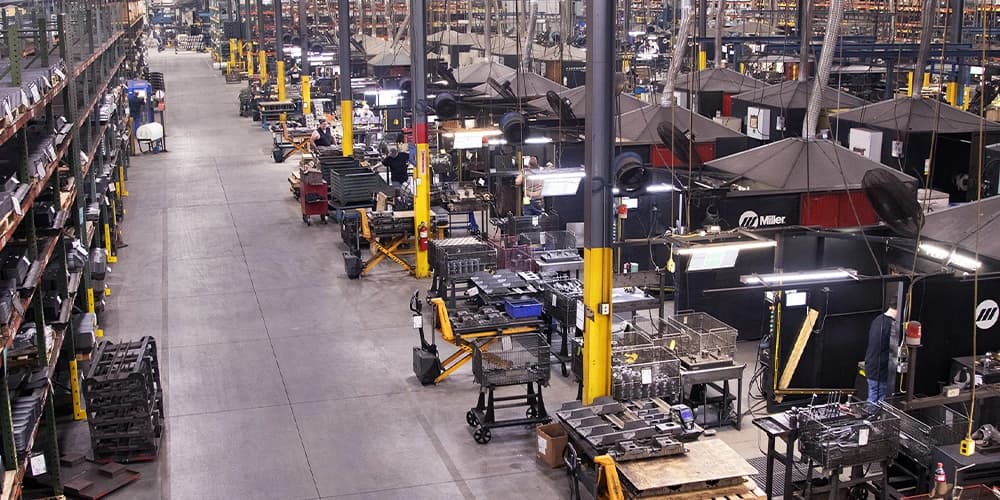
Discover how B&W Trailer Hitches transformed their manufacturing capabilities with Miller® PerformArc™ robotic welding systems. Learn how automation drives quality and efficiency — see what it could do for your operation today.

See how Hartnell College brings real-world welding automation into the classroom to meet evolving manufacturing workforce needs.

Repairs on a mining site are a daily occurrence. The Schnabel crew on "Gold Rush" uses reliable Miller equipment to keep operations running.
Uncover how the Miller team helped AGCO improve operator efficiency and ease while decreasing defects in their stainless steel welding operations.
Ascendum’s fleet overhaul with Miller EnPak® A60 units cut costs, boosts uptime and empowers technicians to deliver superior service.

Dynamic Manufacturing transformed their welding automation speed and quality using IntelliPath™ technology. See the impact on their operational success.
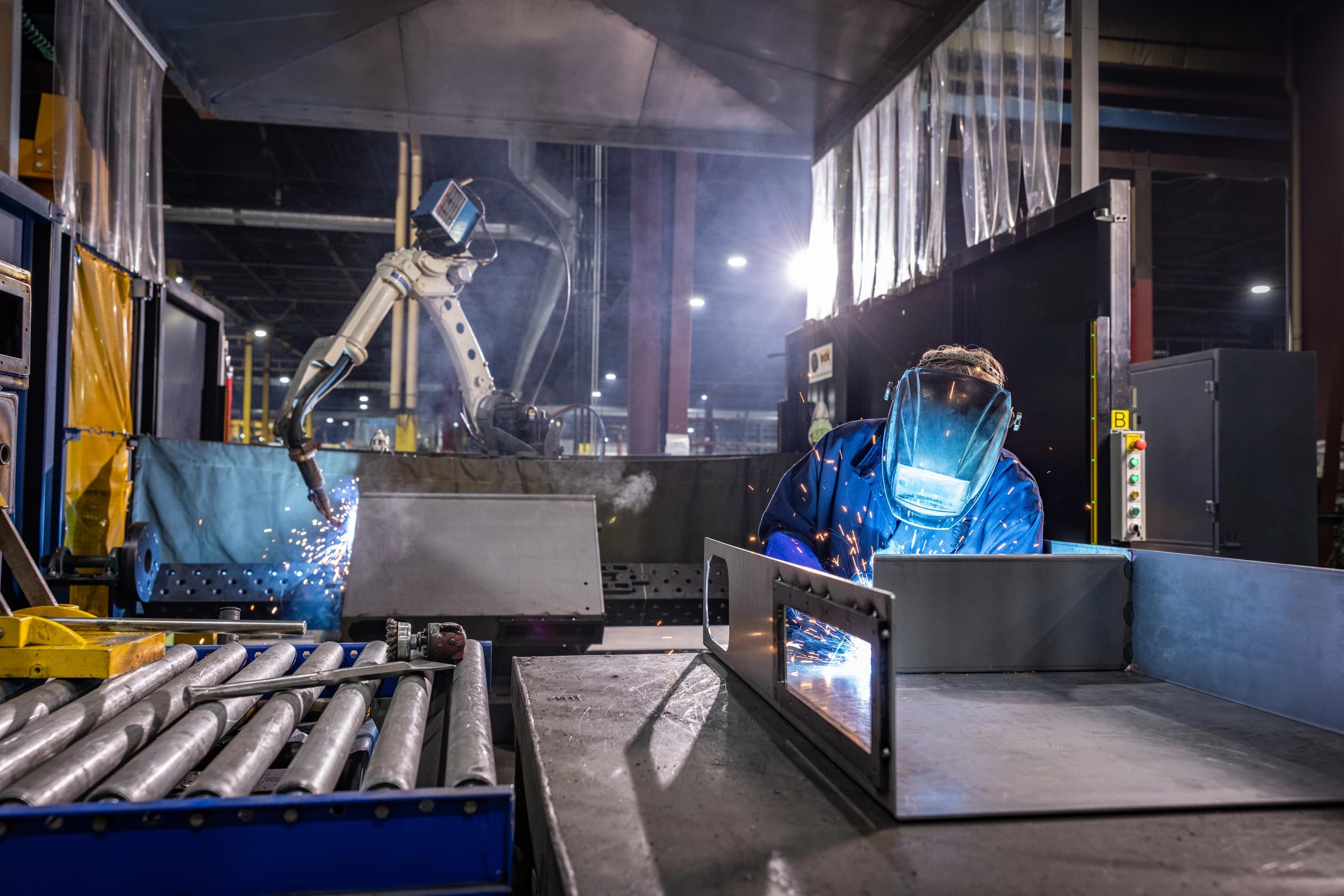
See how IFH Group used robotic welding automation and offline programming to increase throughput 25 to 30 percent on a family of larger tanks.

Learn how Team Industries created their own in-house welding training to address the shortage of skilled welders in the workforce.

Discover how new welding technology helped this racing organization boost productivity and long-term growth. Learn how they found success.

Take a look inside two different models of welder training at Tulsa Welding School and Blinn College and how they use Miller® welding equipment.

Henderson Products relies on the Deltaweld system and Intellx™ wire feeders with pulsed MIG welding to reduce training time and spatter.

G.G. Schmitt & Sons saves time and money welding anodized aluminum with Miller® Dynasty® 400 TIG welders, cutting hours of rework.
DE-CAL, Inc., relies on Miller equipment and technology to become one of the premier mechanical contractors in its region.

A change to Miller® FILTAIR® fume extraction systems helped decrease weld fume exposure and improve productivity for American Seating employees.

Implementing Miller® FILTAIR® MWX Mobile Fume Extractor helped improve air quality and productivity for Muscle Car Restoration employees.

A welding process change allowed Dixie Mechanical to eliminate back purging and double the number of welds completed every day.
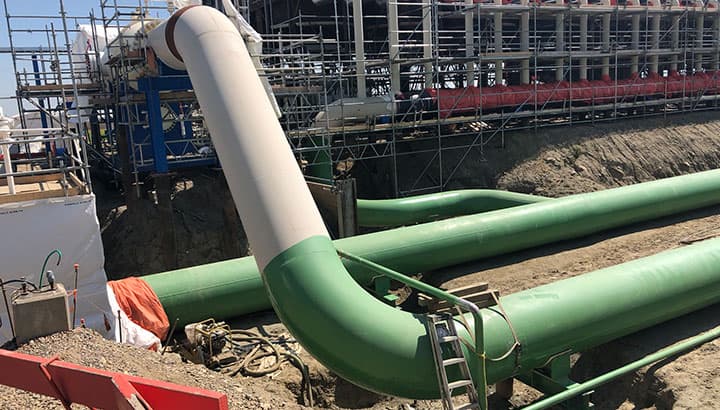
TC Energy switched from TIG and stick welding to wire processes for large-bore pipe on several projects and greatly improved productivity.

Mexia High School welding students enjoy hands-on experience with Miller® equipment and training resources.
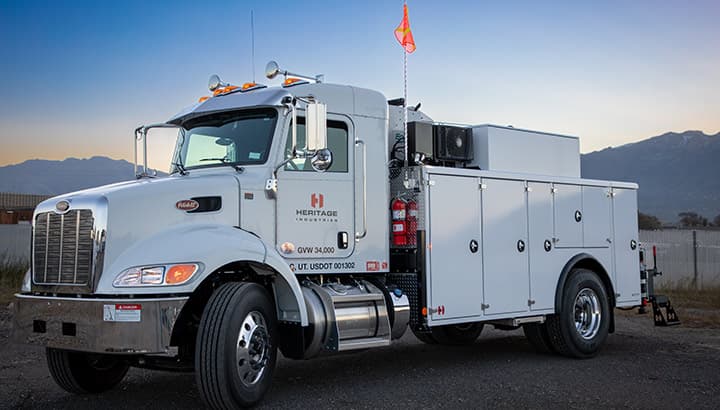
Wheeler CAT significantly reduced engine idling, to an average of 1% on a truck with a fully integrated cab heating and cooling system.