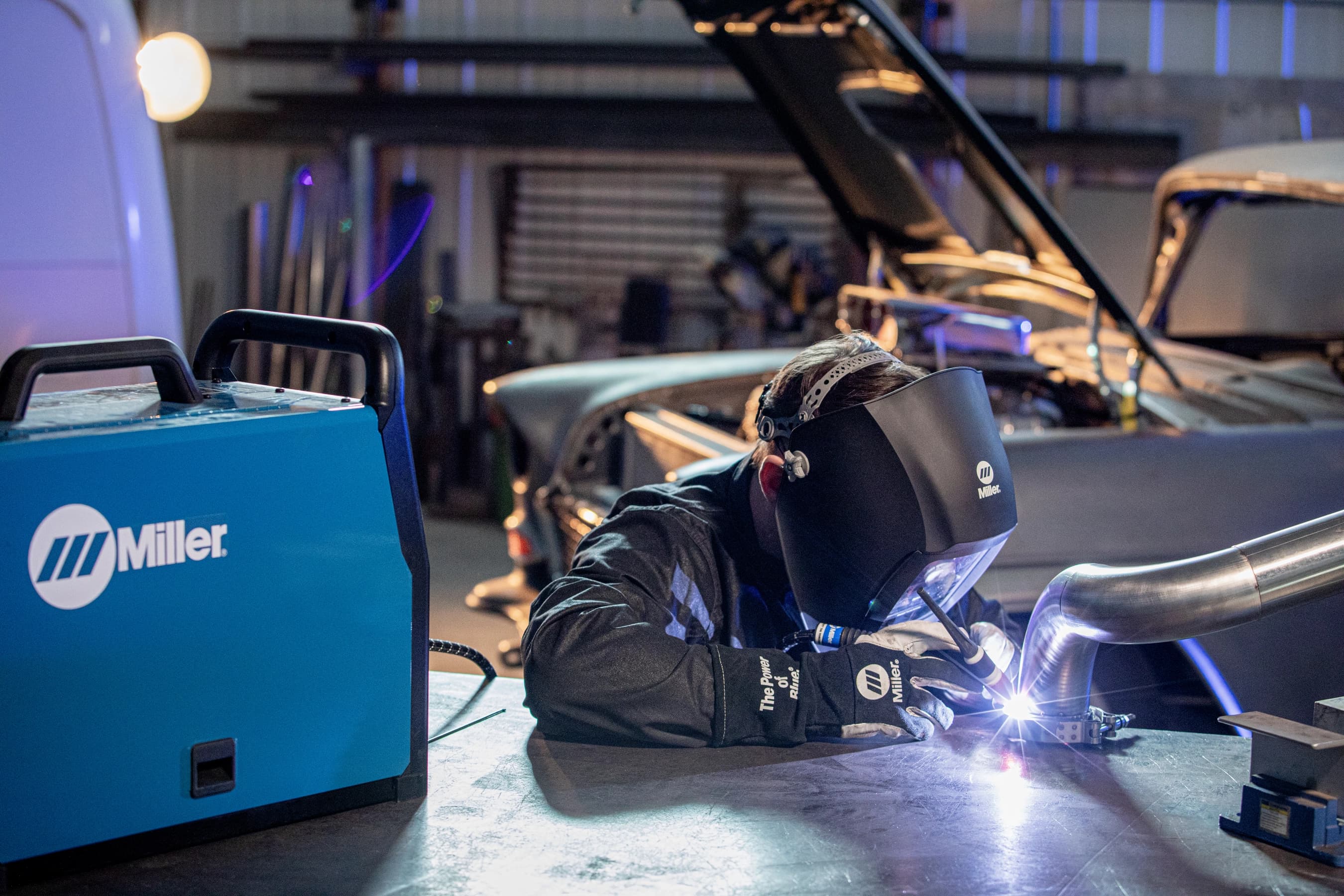
Article
Getting Started With TIG Welding MIG vs TIG Welding Equipment and Process
Learn the key differences between MIG and TIG welding, how the process changes when switching to TIG and how the right equipment helps build confidence and control.

Brian Bellile
Market Segment Manager
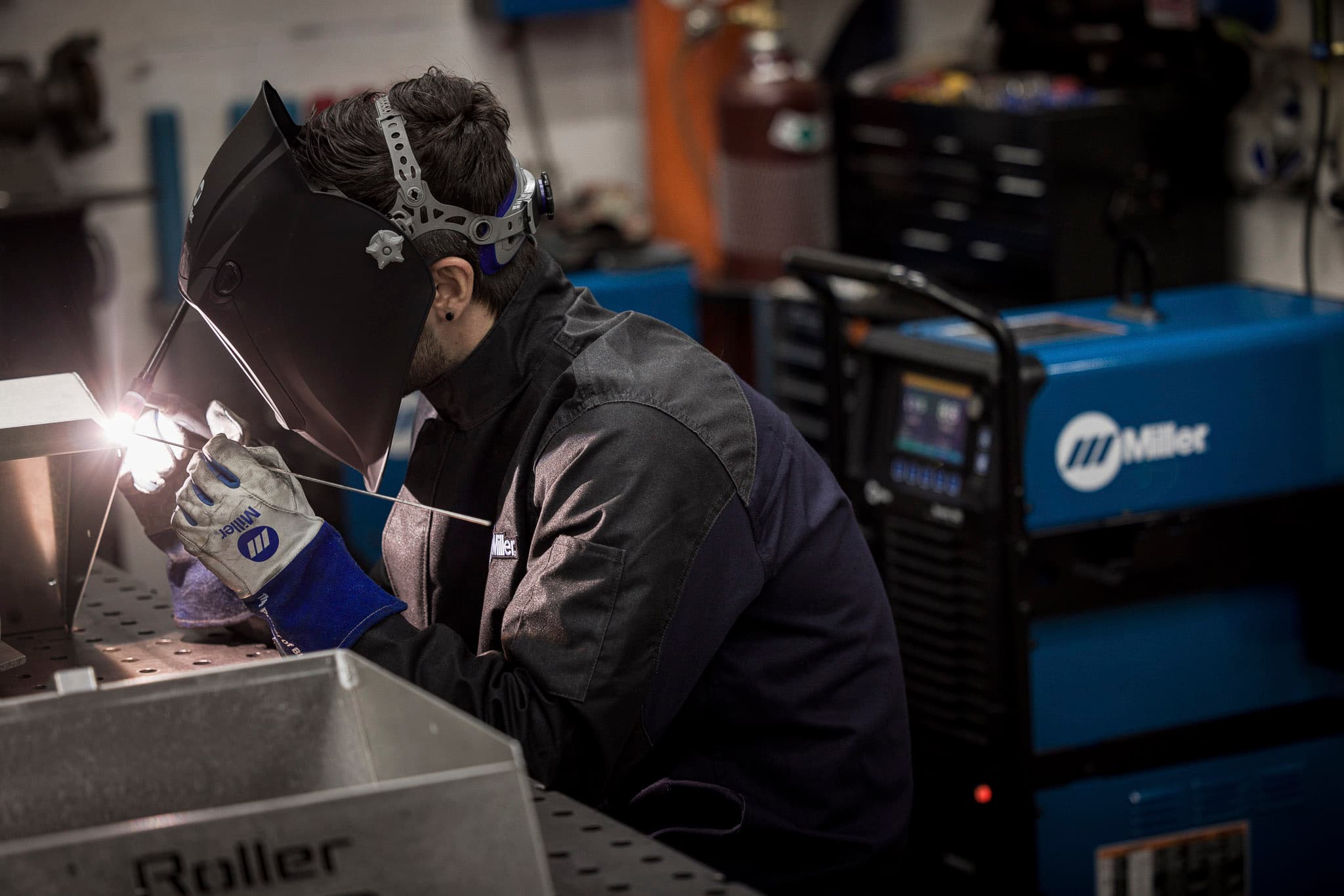
For many welders, the idea of not running a continuous weld on a semi‑trailer repair can raise a red flag. Trailers haul heavy loads, cover long distances and take constant abuse on the road. It’s easy to see why many assume that “more weld” automatically means “more strength.”
But in many trailer repair applications, especially when welding thin aluminum, there’s another technique that saves time, money and added work.
When applied correctly, stitch welding can deliver the required strength while helping control heat, reduce distortion and improve overall efficiency — without compromising safety. The key is knowing when stitch welding is appropriate, when it isn’t and what it takes to do it right.
Stitch welding is an intermittent welding technique where short welds are placed at designed intervals along a joint rather than welding the entire length continuously.
On long trailer components, this can mean dozens of smaller welds strategically placed to provide strength where it’s needed most.
Stitch welding is not the same as tacking parts in place. The individual welds are designed, sized and spaced intentionally to meet structural requirements while limiting excess heat.
| Consideration | Continuous vs. Stitch Welding in Trailer Repair | Stitch Weld |
|---|---|---|
| Heat input | High across entire joint | Lower, localized |
| Distortion risk | Higher on thin materials | Reduced |
| Repair time | Longer | Shorter |
| Filler metal usage | Higher | Lower |
| Structural use | Required for primary load components | Suitable for designed, non-primary load areas |
| Appearance | Uniform bead | Uniform, spaced beads |
In trailer repair, the challenge isn’t just making a weld that holds. Welders must ensure strength, control distortion and maximize time on the road. The top benefits of stitch welding include:
Many trailer repairs involve long seams on thinner materials, such as side panels, roofs and other sheet‑metal components. Running a continuous weld across these areas can introduce excessive heat, leading to warpage that shows up as waviness.
Stitch welding limits heat buildup, helping the material stay flatter and more uniform. To ensure the technique is successful, choosing a welder like the Miller® Dynasty® ensures precise arc control, resulting in short, controlled welds that don’t add unnecessary heat.
One of the biggest misconceptions about stitch welds? That they’re automatically weaker than continuous welds. In reality, well‑designed stitch welds can achieve comparable strength. That’s because the technique is an engineered solution, with weld size, length, spacing and placement meeting specific structural requirements to ensure strength.
In some cases, continuous welding isn’t always the safest option. Running long, uninterrupted welds can introduce excessive heat into the base material, potentially reducing performance by altering the metallurgic structure. Over time, that added heat can increase the risk of distortion or premature fatigue, particularly on long, thin trailer components.
Every extra inch of weld adds down time, filler metal and weight to a trailer repair. On large trailers, that adds up quickly. Reducing unnecessary weld length with a technique like stitch welding can:
For repair operations where uptime matters, this efficiency can be just as important as the weld itself.
Good candidates for stitch welding in semi-trailer repair include:
Full, continuous welds are still required for:
If the component’s job is to hold the trailer together structurally, stitch welding isn’t the right fit.
Welders sometimes avoid stitch welding due to higher risk associated with strict inspection requirements. Yet for those trying the technique for the first time, a good stitch weld looks much like any other quality weld:
Inspection often comes down to one question: Did the welds land where the design intended them to be? This is why involving an engineer is often a critical first step in repair. In fact, in many trailer operations engineers even mark exact weld locations to ensure consistency and eliminate guesswork.
Stitch welding relies on repeated starts and stops rather than a continuous bead, making proper cleaning, penetration and arc stability critical. Dynasty® TIG welders are equipped with features that support the technique with ease.
Key features that directly help with stitch welding include:
Importantly, these features don’t replace good technique or proper prep — they simply make it easier to repeat good results.
Due to the multiple stops and starts this technique requires, it is important to fill crater cracks and file stop and start points to ensure defects are prevented.
Not at all — especially if the right equipment is used to ensure consistency. Features like arc timers and arc controls help reduce variability.
It’s faster because it avoids unnecessary work. The welds that remain are intentional and designed to do their job without excess heat or material.
Stitch welding isn’t a shortcut — it’s a situational repair technique.
When applied where it makes sense and executed with control, it can deliver the strength needed for semi‑trailer repairs while reducing heat, distortion and downtime. Knowing when to use it — and having the right tools to do it consistently — is what makes the difference.
Posted Jul 7, 2026
Learn the key differences between MIG and TIG welding, how the process changes when switching to TIG and how the right equipment helps build confidence and control.
Learn the basics of TIG welding in motorsports applications and the proficiency of a TIG welder on aluminum and chrome-moly.
Pulsed TIG welding gives you better control of heat input, warping and arc stability on stainless steel — improving first-pass yield and lowering costs.