Article
8 Questions About Stick Welding Rods Answered
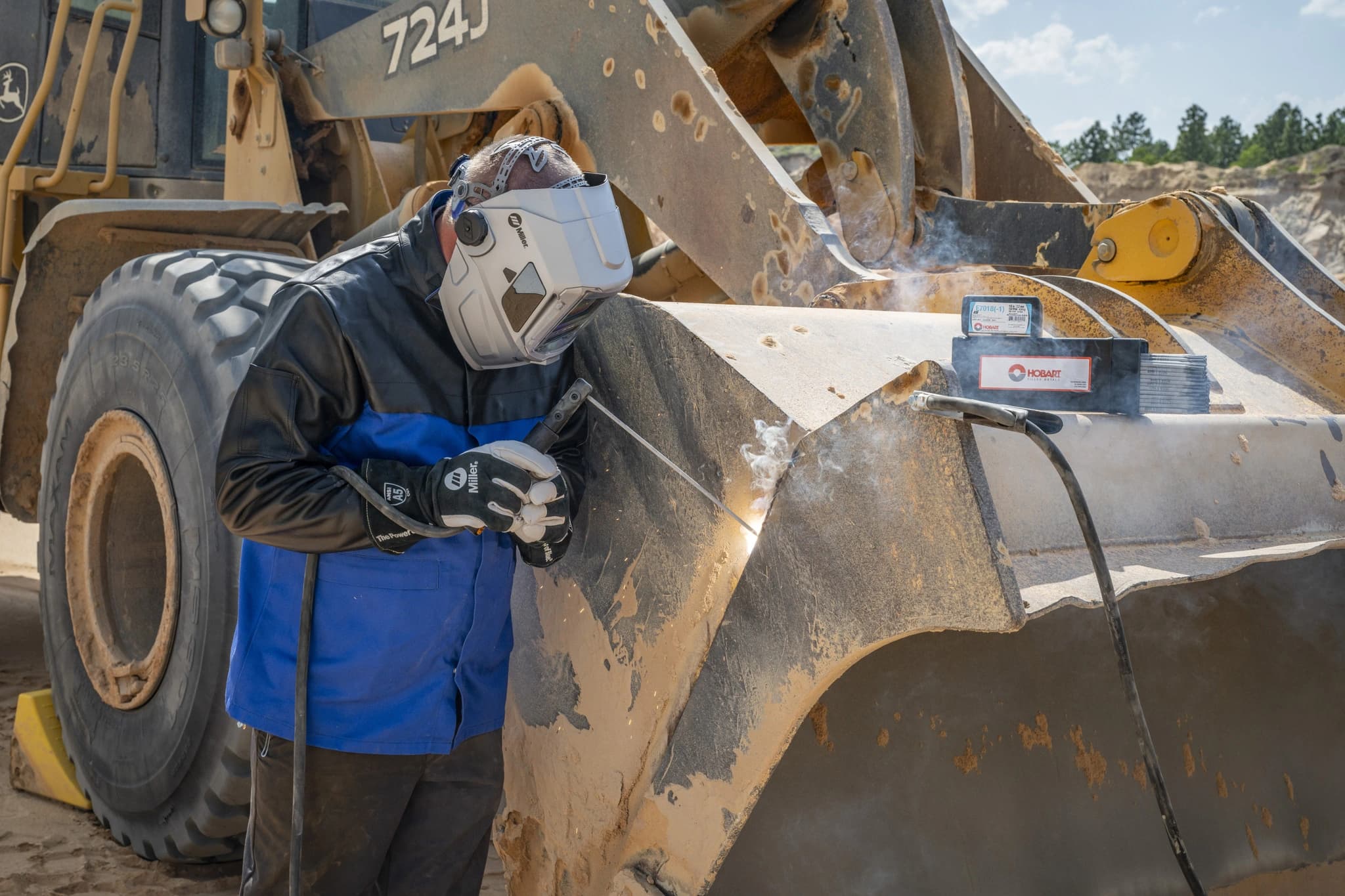
Wondering how to select the right stick welding rods for the application? Get answers to frequently asked questions about stick electrode.

Buying Your First Stick Welder
Learn the five basic elements of stick welding technique to significantly improve your stick welding results.
For many people stick welding, otherwise known as shielded metal arc welding (SMAW), is difficult to learn. Experienced welders who can pick up a stinger and lay down great welds consistently can inspire great awe. They make it look easy.
The rest of us may struggle with it, though. And we don’t have to, not if we pay attention to five basic elements of our technique: current setting, length of arc, angle of electrode, manipulation of electrode and speed of travel — or CLAMS, for short. Properly addressing these five basic areas can improve your results.
While stick welding may be the most forgiving process on dirty or rusty metal, you should still clean the material. Use a wire brush or grinder to remove dirt, grime or rust from the area you'll be welding. Ignoring these steps hurt your chances to make a good weld the first time. Unclean conditions can lead to cracking, porosity, lack of fusion or inclusions. While you’re at it, make sure you have a clean spot for the work clamp. A good, solid electrical connection is important to maintain arc quality.
Position yourself so you have a good view of the weld puddle. For the best view, keep your head off to the side and out of the weld fumes. This view ensures you’re welding in the joint and keeping the arc on the leading edge of the puddle. Make sure your stance allows you to comfortably support and manipulate the electrode.
Bringing all the CLAMS points together may seem like a lot, but it becomes second nature with practice. Don’t get discouraged! There is a learning curve with stick welding. In fact, many believe it got its name because when learning how to weld, everyone sticks the electrode to the workpiece.
The electrode you select will determine whether your machine should be set up in DC positive, DC negative or AC. Make sure you have it set correctly for your application. Electrode positive provides about 10 percent more penetration at a given amperage than AC. On the other hand, DC straight polarity, electrode negative, welds thinner metals better.) The correct amperage setting primarily depends on the diameter and type of electrode you select. The electrode manufacturer usually indicates the electrode’s operating ranges on the box or enclosed materials. Select your amperage based on the electrode (a general rule of thumb is 1 amp for each .001-inch of electrode diameter), welding position (about 15 percent less heat for overhead work compared to a flat weld), and visual inspection of the finished weld. Adjust your welder by 5 to 10 amps at a time, until the ideal setting is reached.
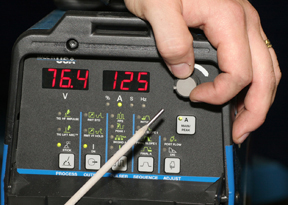
If your amperage is too low, your electrode will be especially sticky when striking an arc. Too low amperage may also cause your arc to keep going out while maintaining the correct arc length or the arc will stutter.
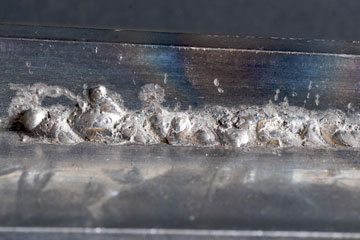
Once you get an arc going, if the puddle is excessively fluid and hard to control, your electrode chars when it’s only half gone, or the arc sounds louder than normal, your amperage might be set too high. Too much heat can also negatively affect the electrode’s flux properties.
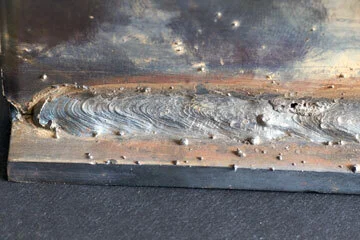
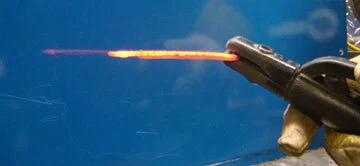
The correct arc length varies with each electrode and application. As a good starting point, arc length should not exceed the diameter of the metal portion (core) of the electrode. For example, an 1/8-inch 6010 electrode is held about 1/8 inch off the base material.
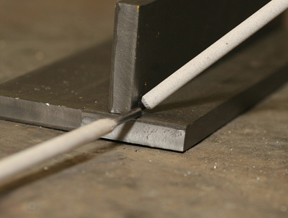
Excessively long arcs (too much voltage) produce spatter, low deposition rates, undercuts and often leaves porosity.
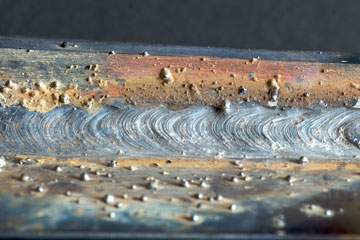
When getting started, it's natural to use too long of an arc, possibly to get a better view of the arc and puddle. If you have trouble seeing, move your head, rather than lengthening the arc. Start by finding a good body position that gives you an adequate view of the puddle, while also allowing you to stabilize and manipulate the electrode. A little practice will show you that a tight, controlled arc length improves bead appearance, creates a narrower bead and minimizes spatter.
Stick welding in the flat, horizontal and overhead positions uses a drag or backhand welding technique. Hold the electrode perpendicular to the joint, and then tilt the top in the direction of travel approximately 5 to 15 degrees. For welding vertical up, use a push or forehand technique and tilt the top of the electrode 0 to 15 degrees away from the direction of travel.
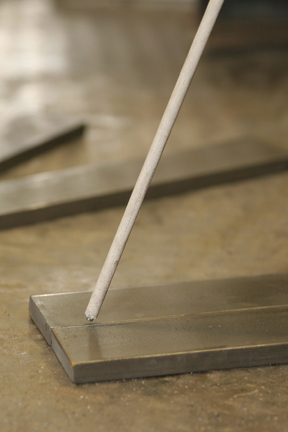
Each welder manipulates the electrode a little differently. Develop your own style by observing others, practicing and noting which techniques produce the best results. On material 1/4 inch and thinner, you don't typically need to weave weaving the electrode because the bead will be wider than necessary. In many instances, you'll just need a straight bead.
To create a wider bead on thicker material, manipulate the electrode from side to side, creating a continuous series of partially overlapping circles in a ‘Z,’ semi-circle or stutter-step pattern. Limit side-to-side motion to two times the diameter of the electrode core. To cover a wider area, make multiple passes or use stringer beads.
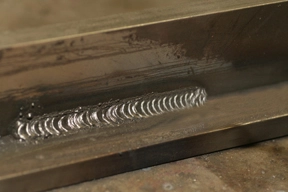
When welding vertical up, focus on welding the sides of the joint, and the middle will take care of itself. Move across the middle of the joint slowly enough so that the weld puddle can catch up, and pause slightly at the sides to ensure solid tie-in to the sidewall. If your weld looks like fish scales, you moved forward too quickly and didn’t hold long enough on the sides.
Your travel speed should allow you to keep the arc in the leading one-third of the weld pool.
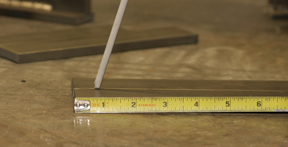
To establish the optimal travel speed, first establish a weld puddle of the desired diameter, and then move at a speed that keeps you in the leading one-third of the puddle. If you travel too slowly, the heat will be directed into the puddle and not into the weld, leading to cold lap or poor fusion.
Traveling too slowly produces a wide, convex bead with shallow penetration and the possibility of cold-lapping, where the weld appears to be simply sitting on the surface of the material.
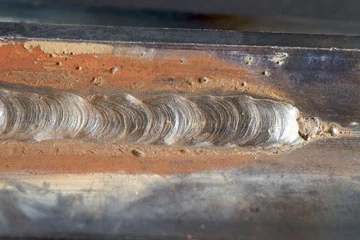
Too slow of a travel speed will create a bead that has too much weld deposit, which can lead to cold-lap. This can result in insufficient penetration in those areas. Traveling too slowly can also focus the heat into the puddle and not into the base material.
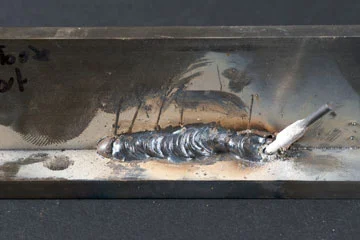
Excessively fast travel speeds also decrease penetration and create a narrower and/or highly crowned bead. It can also possibly lead to underfill or undercut, which is when the area outside of the weld is concave or recessed. Note toward the end of the bead in the image below how the bead appears inconsistent as if the puddle were trying to keep up.
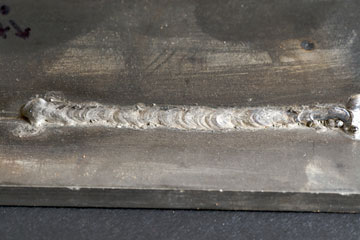
Traveling too fast will create a thinner/undersized bead that will have more of a V-shaped ripple effect in the puddle rather than a nice U-shaped, or stacked dimes, effect.
These tips, along with practice and patience, will help you improve your stick welding technique.
Posted Feb 28, 2024
Wondering how to select the right stick welding rods for the application? Get answers to frequently asked questions about stick electrode.
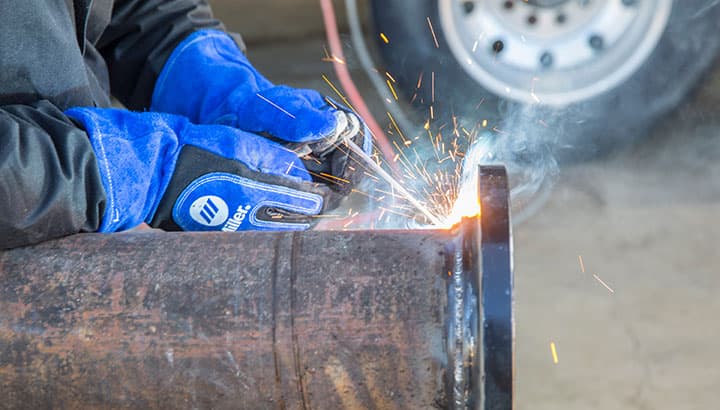
Stick welding takes practice to master and selecting the correct electrode for the job can be equally challenging.
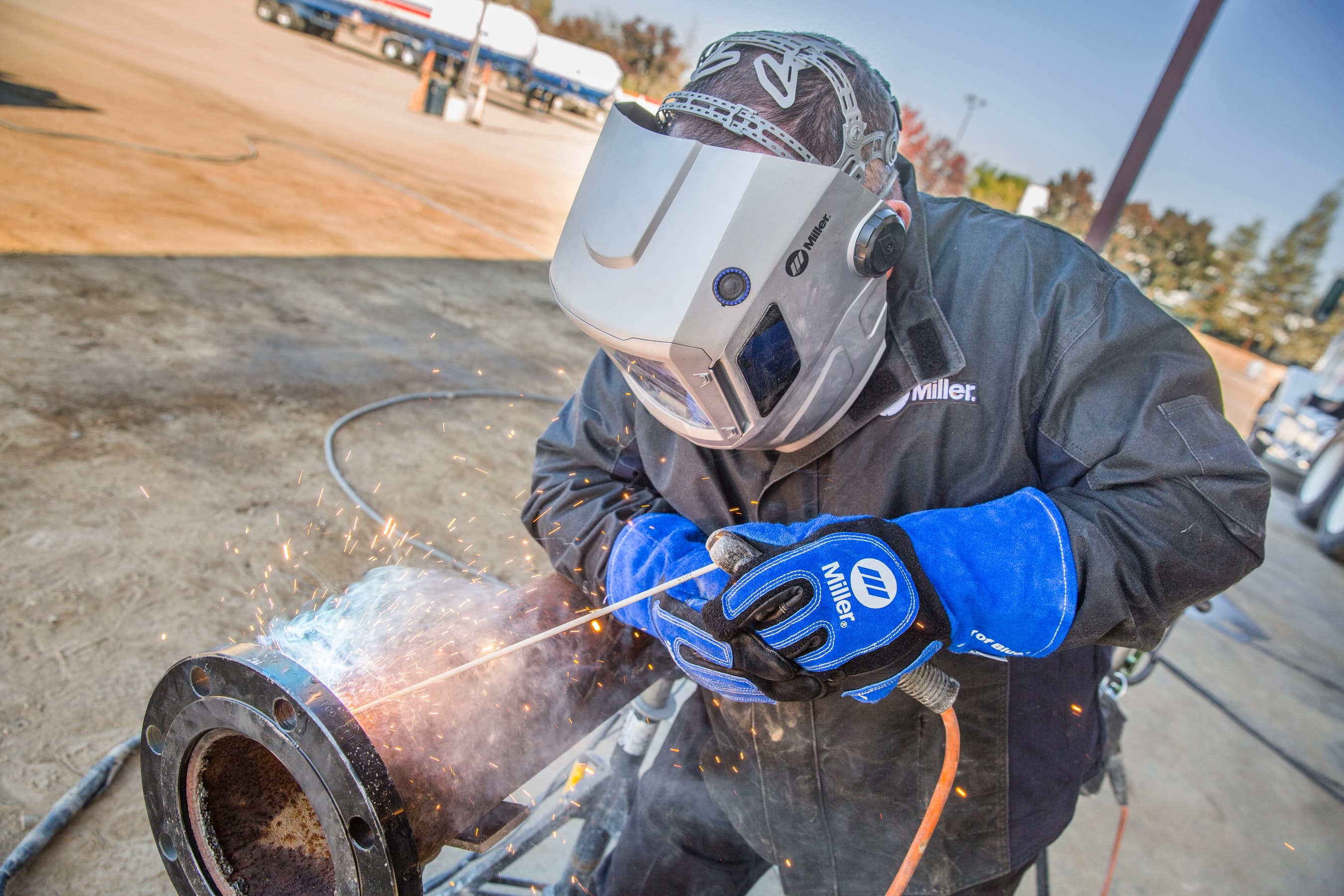
When making stick welding repairs to equipment, a few best practices will optimize your results and get your operation back up and running.