Article
How to Choose MIG Welding Consumables to Optimize Productivity
Labor is 85 percent of a welding operation’s costs. Learn how the right consumables can improve productivity and minimize downtime.

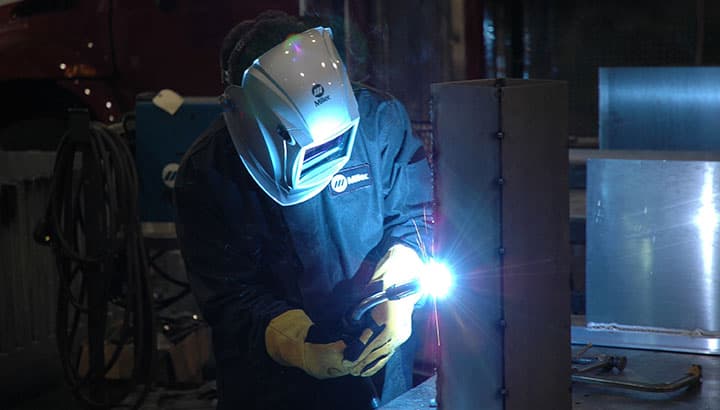
As with most things, welding is subject to human error from time to time. Weld defects are often caused by improper technique, parameters or equipment settings. When a weld defect appears, it's important for welders to have the knowledge to fix the situation as quickly as possible.
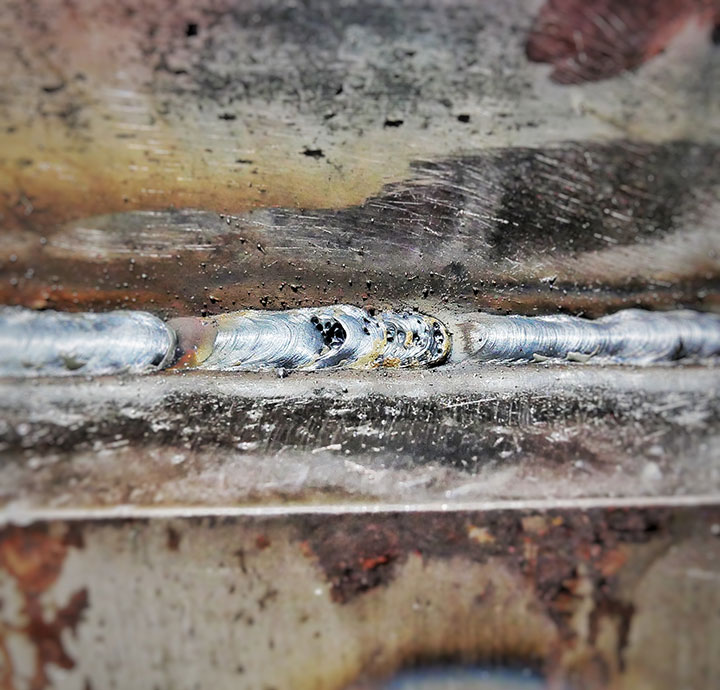
Porosity, one of the most common MIG welding defects, is the result of gas becoming trapped in the weld metal. Inadequate shielding gas coverage is among the biggest culprits, and this can be addressed in several ways. First, check the regulator or flow meter for adequate gas flow, increasing it as necessary. Check the gas hoses and welding gun for possible leaks, and block off the welding area if drafts are present.
To promote proper shielding gas coverage, it’s also important to use a large enough nozzle to shield the weld pool fully with gas, keep the nozzle clean and free of spatter, and follow the manufacturer’s recommendation for proper contact tip recess.
Other causes of porosity include:
The terms cold lap and lack of fusion are often used interchangeably. However, they are slightly different and can happen independently or in conjunction with one another in MIG welding.
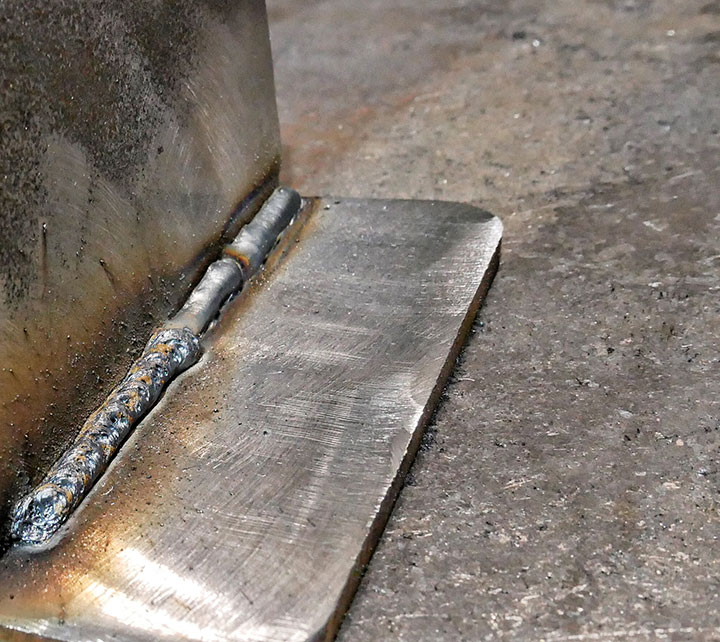
Lack of fusion is the result of the weld metal failing to fuse completely to the base metal or to the preceding weld bead. It’s caused primarily by improper welding gun angle or incorrect travel speed. Avoid this problem by maintaining a 0- to 15-degree gun angle during welding and keeping the arc on the leading edge of the weld pool. It’s sometimes necessary to increase travel speed to maintain correct arc position. Insufficient heat in the weld can also cause lack of fusion. This can be remedied by increasing voltage settings or wire feed speeds.
Using incorrect travel speeds can also result in cold lap, which causes the weld to overfill and essentially overlap on the toes of the weld. Increasing travel speed helps prevent this problem.
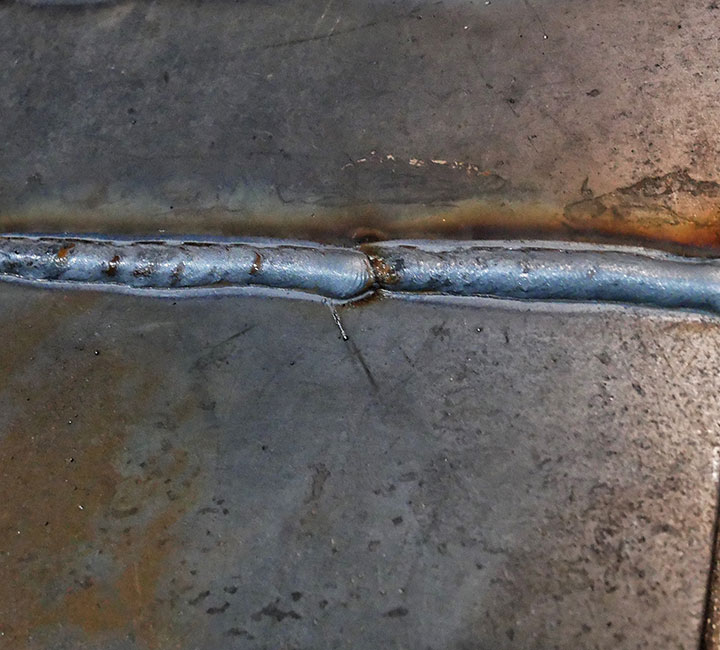
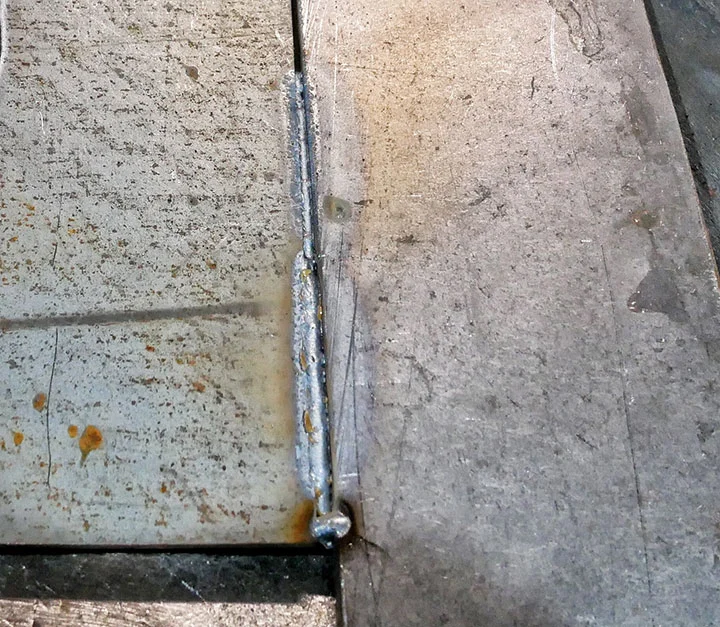
Burn-through, which happens when the weld metal penetrates completely through the base material, is especially common when welding thin materials less than 1/8 inch or about 12 gauge. Excessive heat is the main cause of burn-through, and this can be fixed by reducing voltage or wire feed speed. Increasing travel speed may also help, particularly when MIG welding on materials especially prone to heat buildup like thin aluminum.
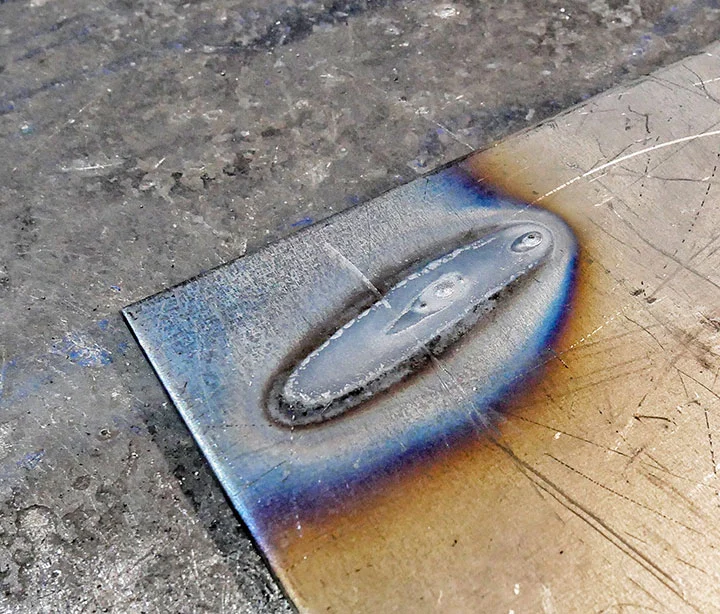
Several issues in the MIG welding process can contribute to excessive spatter, including:
Ensuring proper shielding gas flow, cleaning base materials thoroughly, lowering the weld parameter settings and using a shorter stickout are ways to avoid excessive spatter accumulation.
For self-shielded flux-cored wires, be certain to weld with straight polarity (electrode negative) and use a drag technique to minimize the opportunity for spatter buildup. When using flux-cored or metal-cored wires, low voltage can also produce an excessive amount of spatter. If you see spatter accumulating, increase voltage as needed.
The wrong size contact tip, a worn contact tip or the wrong contact-tip-to-nozzle recess can also cause excessive spatter.
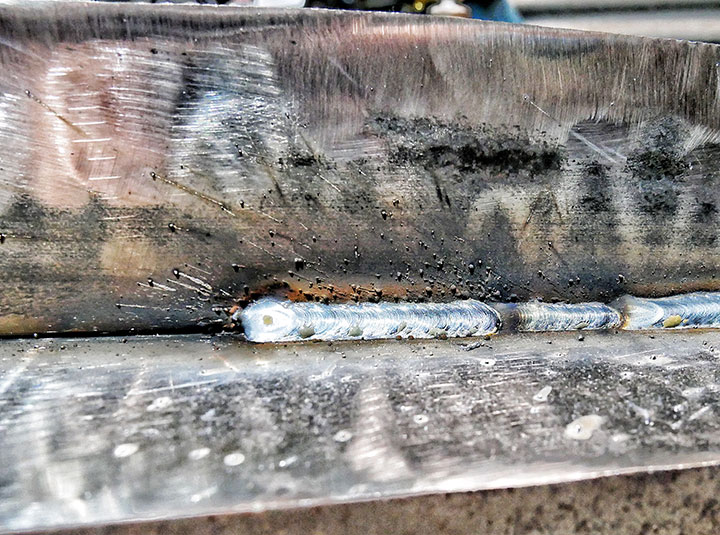
The goal is to create a smooth, flat weld bead. Welds that are too concave or convex can compromise the integrity of the finished product.
Concave weld beads are particularly prevalent when welding in vertical-down applications and are simply the result of working against gravity. Adjust the parameters to a lower setting so the weld pool is less fluid and more able to fill in the joint. If a concave weld bead appears in the flat or horizontal position, it’s often the result of voltage that’s too high, wire feed speed that is too slow or travel speed that is too fast.
Convex weld beads are high, rope-like welds that generally happen in flat and horizontal welding, but can also occur in fillet welds, when the parameters are too cold for the material. Convex weld beads normally have poor fusion of the toes. Increase the voltage to prevent convex beads. Always follow recommended welding procedures and use proper shielding gas for the material, as well as the correct polarity for the wire.
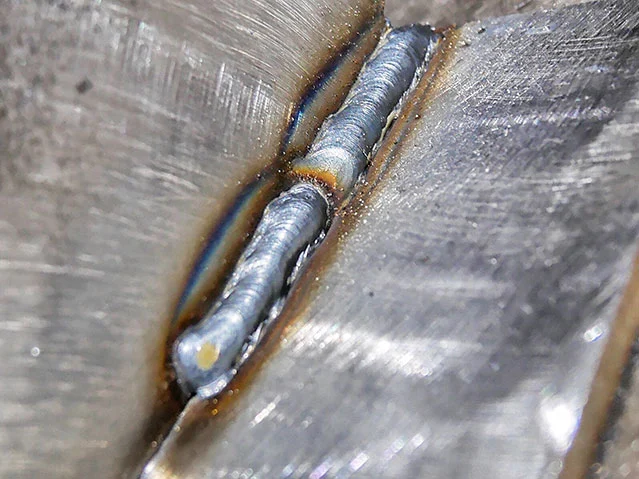
To minimize the time and money spent addressing MIG weld defects, take a systematic approach for troubleshooting each one should they appear. Look for any variables that have changed during the course of welding — such as parameters or welder technique — then consider these tips as potential remedies.
Posted Feb 19, 2024
Labor is 85 percent of a welding operation’s costs. Learn how the right consumables can improve productivity and minimize downtime.
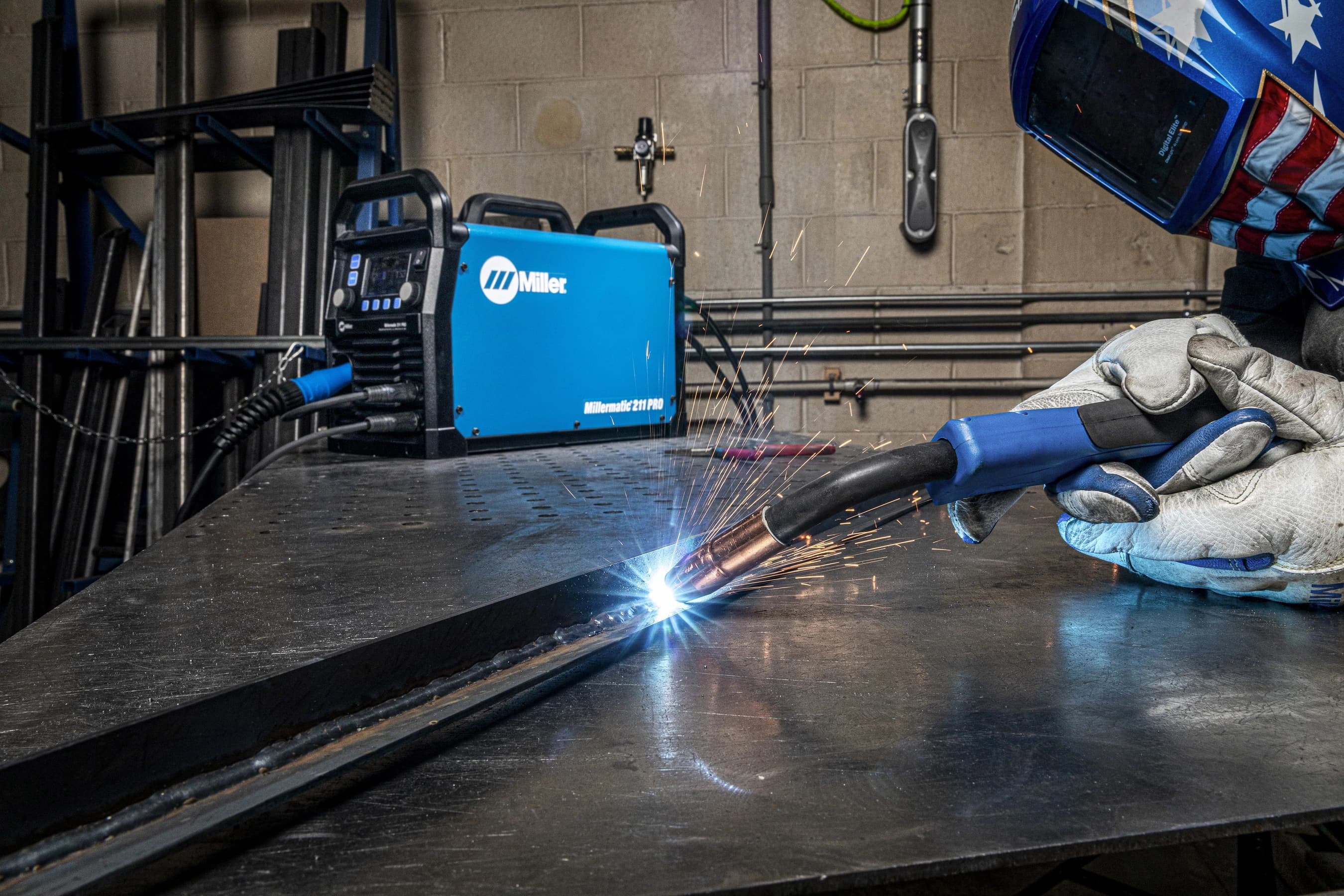
Learn MIG welding basics for beginners — how to use a MIG gun, set voltage and wire speed, choose shielding gas and get the right angle for quality welds.

Choose the right MIG gun with confidence — compare air-cooled, water-cooled, push-pull, spool and fume extraction guns plus tips on amperage and consumables.