Article
Choosing What Filler Metal To Use for DIY Welding Projects
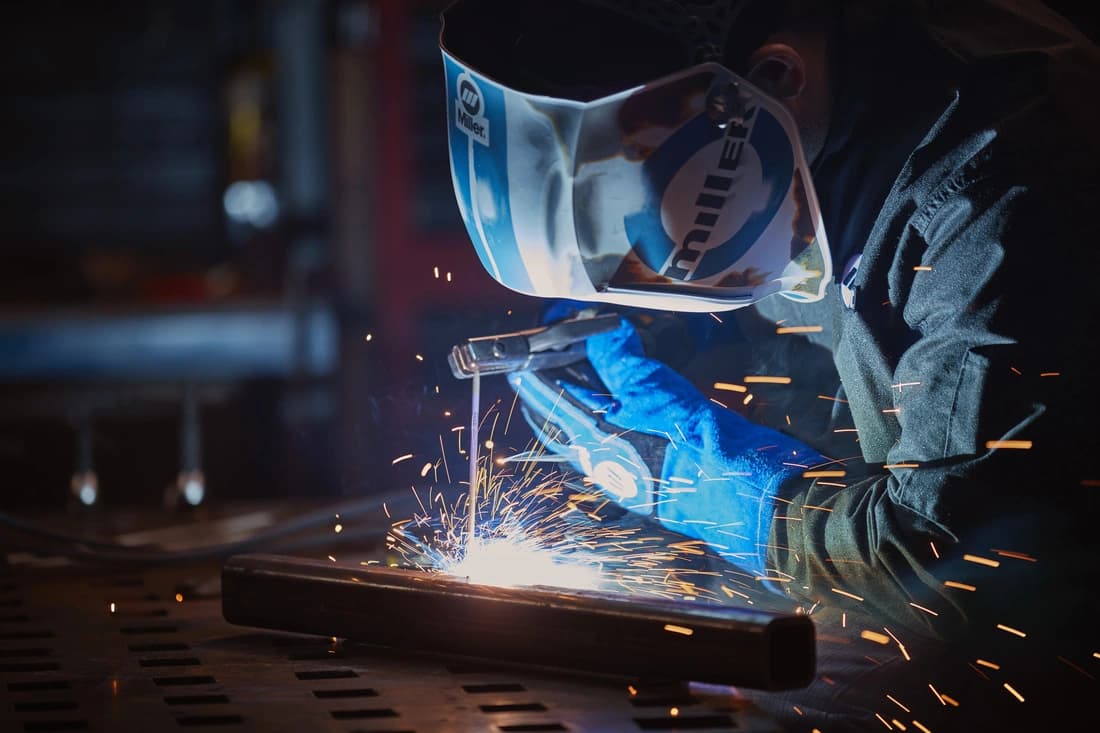
No matter the welding process or material, here are six questions to help determine what filler metal to use for your home welding projects.

Welding Basics for Beginners
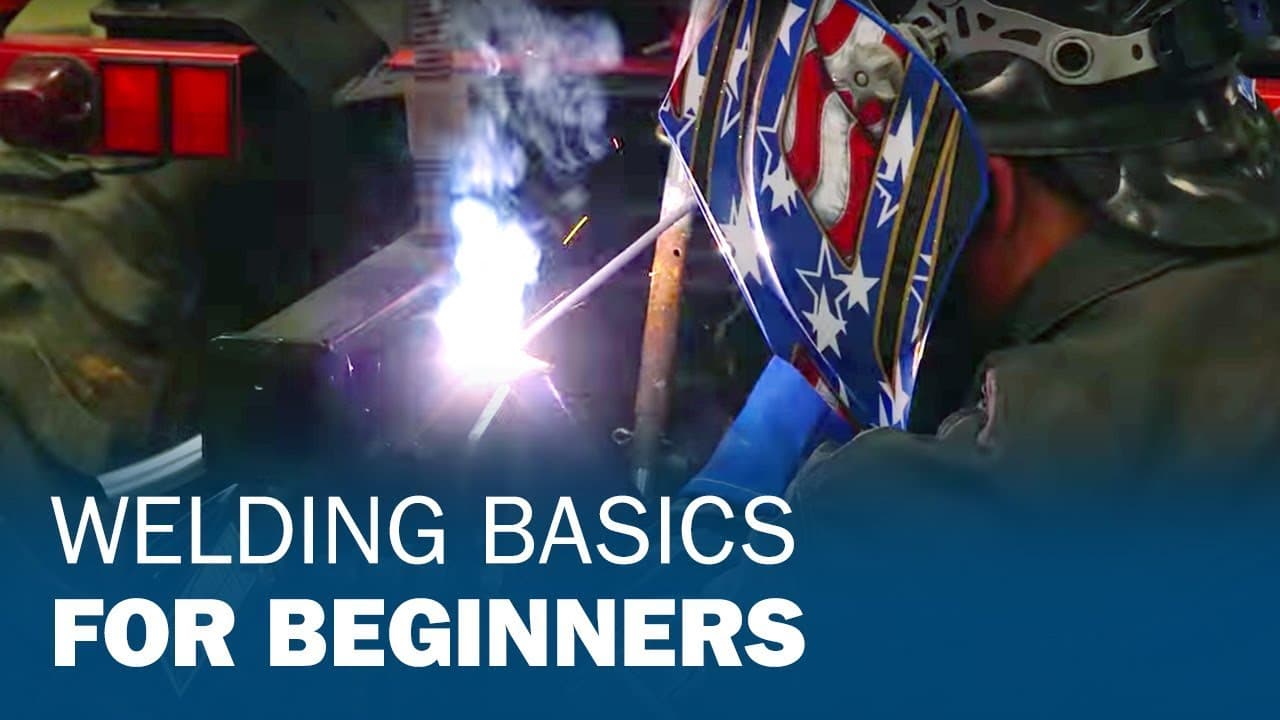
There are many welding processes to choose from — but no single process is suitable for all applications. Therefore, it is critical to consider your skills, the basic processes available, and the capabilities and advantages of each to determine which process is best for your needs and applications. From there, you can determine which welder is best for you.
The most common processes are MIG, TIG and stick. Each has benefits and limitations for certain applications. There’s no one-size-fits-all approach.
MIG/gas metal arc welding (GMAW) — MIG welders use a wire welding electrode on a spool fed automatically at a constant pre-selected speed. The arc, created by an electrical current between the base metal and the wire, melts the wire and joins it with the base, producing a high-strength weld with great appearance and little need for cleaning. MIG is an easy process to learn and can be used on thin or thick metals. It can also create extremely clean welds on steel, aluminum and stainless steel.
Benefits of MIG welding:
Flux-cored arc welding (FCAW)* — Similar to MIG, this is a wire-feed process but differs in that self-shielded FCAW does not require shielding gas. Instead, flux-cored wire shields the arc from contamination. This is a simple and efficient approach, especially when working outdoors, in windy conditions, or on dirty materials. FCAW is widely used in construction because of its high speed and portability.
Both MIG and flux-cored welding can join materials as thin as 26 gauge.
Benefits of flux-cored welding:
*The FCAW process is available through Miller® MIG machines.
TIG/gas tungsten arc welding (GTAW) — This process uses a non-consumable tungsten electrode to produce the welding arc. The weld area is protected from atmospheric contamination by a shielding gas (usually argon), and filler metal is added to the puddle for strength, though some welds, known as autogenous welds, do not require it. A constant-current power supply produces energy that is conducted across the arc through a column of highly ionized gas and metal vapors known as plasma.
TIG welding is most commonly used to join thin sections of alloy steel, stainless steel, and nonferrous metals such as aluminum, magnesium, and copper alloys. The process grants the operator greater control over the arc, allowing for strong, high-quality welds. TIG is comparatively more complex and difficult to master than other processes and is significantly slower.
Benefits of TIG welding:
Stick/shielded metal arc welding (SMAW) — Stick, for many years, has been the most popular method for most garage work. This process uses an electric current flowing from a gap between the metal and the arc-welding electrode. Stick is effective for welding most alloys or joints and can be used indoors and outdoors or in drafty areas. It’s also the most economical method and provides the ability to create a good bond on rusty or dirty metals.
However, it is limited to metals no thinner than 18 gauge, requires frequent rod changing, emits significant spatter and requires that finished welds be cleaned. Stick is also more difficult to learn and use, particularly the ability to strike and maintain an arc. Arc welders are available in AC, DC or AC/DC, with AC being the most economical. It’s used for joining thicker metals of 1/16 inch or greater. Consequently, these machines are a good choice for farmers, hobbyists and home maintenance chores.
Benefits of stick welding:
Identify the types of projects and materials you will weld most often. Are you creating metal sculptures? Do you intend to restore an old muscle car in your garage? Does the motorcycle you bought years ago require some fabrication? Or maybe you need to do basic repairs on farm equipment.
Taking the time up front to identify the projects that will occupy the largest share of your activity will help you determine the specific metal thickness you will likely work with most often and ultimately help you select the most suitable equipment.
| Possible Projects | Average Material Thickness |
|---|---|
| Auto Body | 3/16 inch or less |
| Trailer frames and fencing | 1/4 inch to 5/16 inch |
| Farm, ranch, and landscape | 5/16 inch to 3/8 inch |
| Thick structural components | Over 3/8 inch |
| Bicycles, lawnmowers or tube frames | 1/16 inch |
| Boats, cards and motorcycles | 1/16 inch to 1/8 inch |
| Hunting stands and utility trailers | 1/16 to 1/8 inch |
| General to heavy repair | 3/16 inch to 1/4 inch |
Now, it's time to get a bit more specific and take a look at what process you can use for each metal type. Keep in mind that many of these materials are also processed using varying combinations of two or more metals to reinforce strength and functionality.
| Metal | MIG | Stick | TIG |
|---|---|---|---|
| Steel | X | X | X |
| Stainless Steel | X | X | X |
| Aluminum Alloys | x | ||
| Cast Iron | X | ||
| Chromoly | X | ||
| Copper | X | ||
| Brass | X | ||
| Exotic Metals (Magnesium, Titanium, etc) | X |
The type of equipment you purchase should be suited for the specific functions you require as well as the projects you will work on the most. So, think about your end goal and consider opportunities to expand the usefulness of your equipment. Will you want more power or amperage in the future? Will you ever want to learn or use additional processes?
It is important to take note of the varying amperage and power requirements as well as the duty cycle necessary to achieve the most effective and economical operational results for the projects you’re looking to complete. Try our new Product Selector tool and get welding machine matches based on a few questions.
In addition to the price of the welder itself, don’t forget to include investment for the accessories and supplies you’ll need to operate your new welder. This includes welding protection (helmet, gloves, jacket, etc.) as well as gas and consumables.
Don’t feel rushed into making a purchasing decision — take some time to define your needs. If you have questions or something is unclear, Miller can answer any questions you have about processes, benefits, limitations and machine operation. When you’re ready to match a specific model with your project or business, Miller or a local distributor can suggest the model or product that is the best for you.
Now that you’re more familiar with each welding process, let’s review the recommended models Miller offers.
MIG/flux-cored:
TIG:
Stick:
Multiprocess:
If you’re looking for a machine with multiple welding capabilities, consider purchasing a multiprocess welder. These machines allow you to switch between different processes without the need to purchase multiple machines, making them ideal for hobbyists and professional welders who work on a variety of projects.
How do I determine the right amperage for welding?
Amperage is the measurement of current flowing through the weld and is directly related to the heat generated during welding. As a general rule of thumb, for every .001 inch of material thickness, you need 1 amp of output. For example, if you’re welding a base material that is .125-inch thick, you will need approximately 125 amps. Similarly, for a material that is .250-inch thick (1/4 inch), you would require around 250 amps.
What is duty cycle in welding?
The duty cycle of a welding power source refers to the number of minutes out of a 10-minute period that the machine can operate continuously before it needs to cool down to prevent overheating. For example, the Millermatic 211 PRO that’s rated with a 30% duty cycle at 215 amps can weld for three solid minutes and then must rest for seven minutes. Duty cycle ratings are included in a machine’s product specifications and are typically based on the amperage and the process being used.
When welding at lower amperages, the duty cycle increases, allowing for longer continuous welding periods. Conversely, at higher amperages, the duty cycle decreases. For example, the Multimatic 220 AC/DC is rated at a 60% duty cycle when MIG or flux-cored welding at 105 amps, meaning it can weld six minutes out of every ten. However, when MIG or flux-cored welding at 200 amps, the duty cycle drops to 20%.
How much duty cycle do I need in a welder?
The duty cycle rating you need in a power source depends on the type of work you will do most frequently. For example, in a shop or garage setting, a machine with a lower duty cycle rating will typically cover most jobs. The operator is likely using lower amperages and stopping more frequently, giving the machine a chance to cool down. However, for professional welders working in a manufacturing or fabrication production environment, welding at higher amperages and more frequently, a higher duty cycle is generally more desirable because it allows for more continuous welding. These operators typically use a machine with a 60% duty cycle.
What is the best welding machine for welding outside?
While many welding processes can be completed outside, some are easier than others. For outdoor jobs on the farm or ranch, for example, stick welding or self-shielded flux-cored welding are ideal because they do not require a shielding gas.
Choosing versatile multiprocess equipment, such as the Multimatic 215, provides the flexibility to tackle a range of outdoors jobs with either stick or flux-cored welding. Stick welding is good for quick jobs or repairs on dirty metal, while the wire-feed flux-cored process is more efficient for larger jobs. If you know you mostly stick weld outside, the Maxstar® 161 is a dependable stick/TIG welder that allows you to weld up to 3/16-inch-thick (4.8 mm) material.
If you also need power generation capabilities, consider purchasing an engine-driven welder such as the Bobcat™ 265. Its 9,500-watt output will provide enough power to allow full output with most any Millermatic or Multimatic welder. However, the Millermatic 255 and the Multimatic 255 require a 12,000-watt engine-driven welder to provide full output. You can find the required auxiliary output for every plug-in welder on their product specification sheets.
What is the best welding machine for welding in a shop?
When choosing the best welding equipment for your shop, first consider your amperage needs and the available input power. While you may not need the most powerful machine right away, keep in mind that in the future you may run into projects that require more amperage or power, or you may want to work with aluminum.
Multiprocess welders are a great choice for shop work because they allow you to use different processes without having to buy multiple machines. This flexibility lets you easily switch between stick, TIG, MIG and flux-cored welding depending on the job at hand. The Multimatic 220 AC/DC multiprocess welding machine offers the freedom to use any process, including AC TIG.
However, if you will be strictly MIG welding in the shop, the Millermatic 211 PRO is a great machine. It can weld up to 3/16-inch material at 120V and up to 3/8-inch material at 240V, making it a reliable choice for various shop projects.
Still unsure about which welding machine is best for your shop? Reach out to an expert for tailored guidance. They can help you evaluate your requirements and recommend the perfect machine for your needs.
When choosing the best welding equipment for your shop, first consider your amperage needs and the available input power. While you may not need the most powerful machine right away, keep in mind that in the future you may run into projects that require more amperage or power, or you may want to work with aluminum.
Multiprocess welders are a great choice for shop work because they allow you to use different processes without having to buy multiple machines. This flexibility lets you easily switch between stick, TIG, MIG and flux-cored welding depending on the job at hand. The Multimatic 220 AC/DC multiprocess welding machine offers the freedom to use any process, including AC TIG.
However, if you will be strictly MIG welding in the shop, the Millermatic 211 PRO is a great machine. It can weld up to 3/16-inch material at 120V and up to 3/8-inch material at 240V, making it a reliable choice for various shop projects.
Still unsure about which welding machine is best for your shop? Reach out to an expert for tailored guidance. They can help you evaluate your requirements and recommend the perfect machine for your needs.
Posted May 8, 2025
No matter the welding process or material, here are six questions to help determine what filler metal to use for your home welding projects.
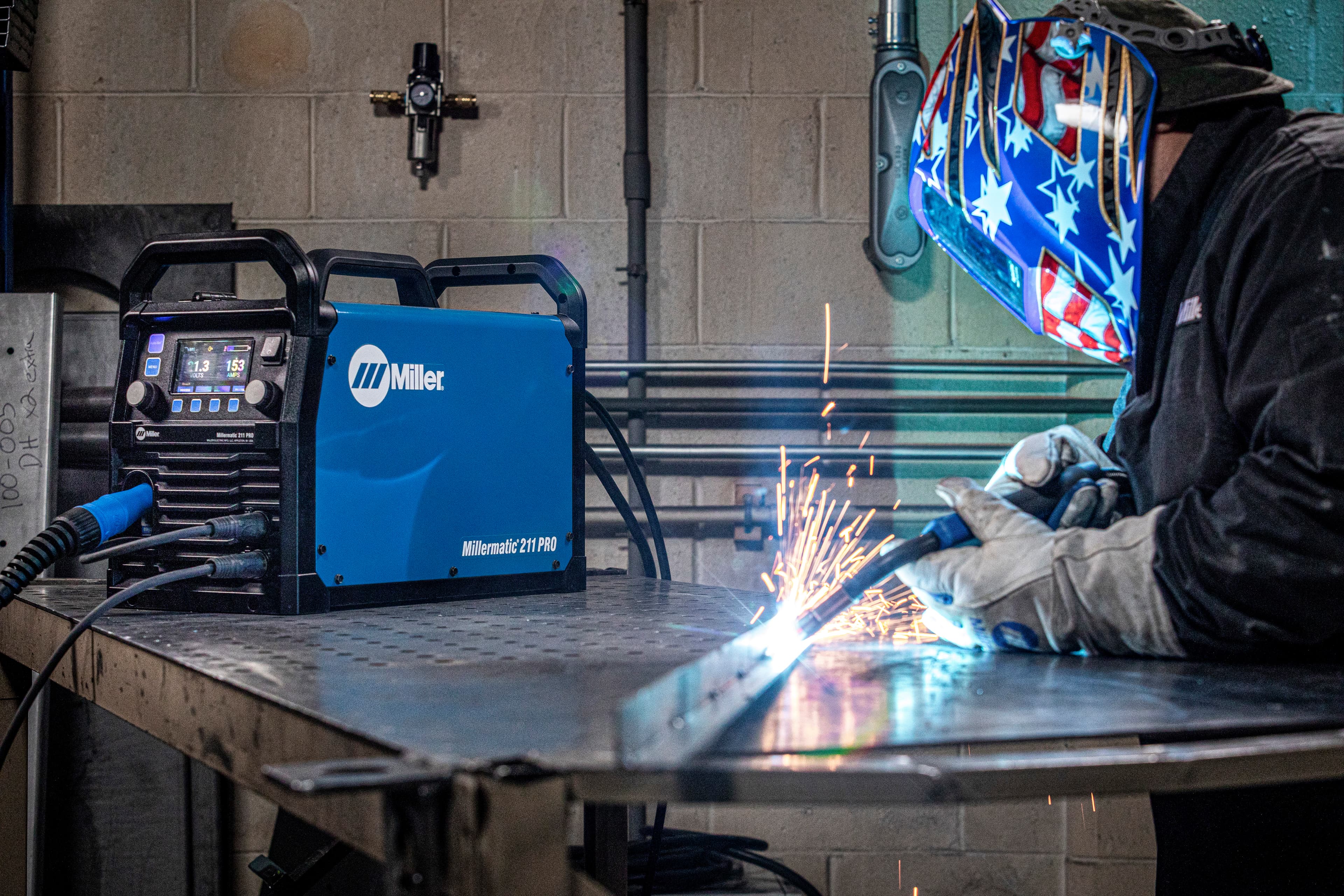
Learn about duty cycle in welding, its importance, and how it impacts your workflow. Ensure optimal performance and safety with the right duty cycle.
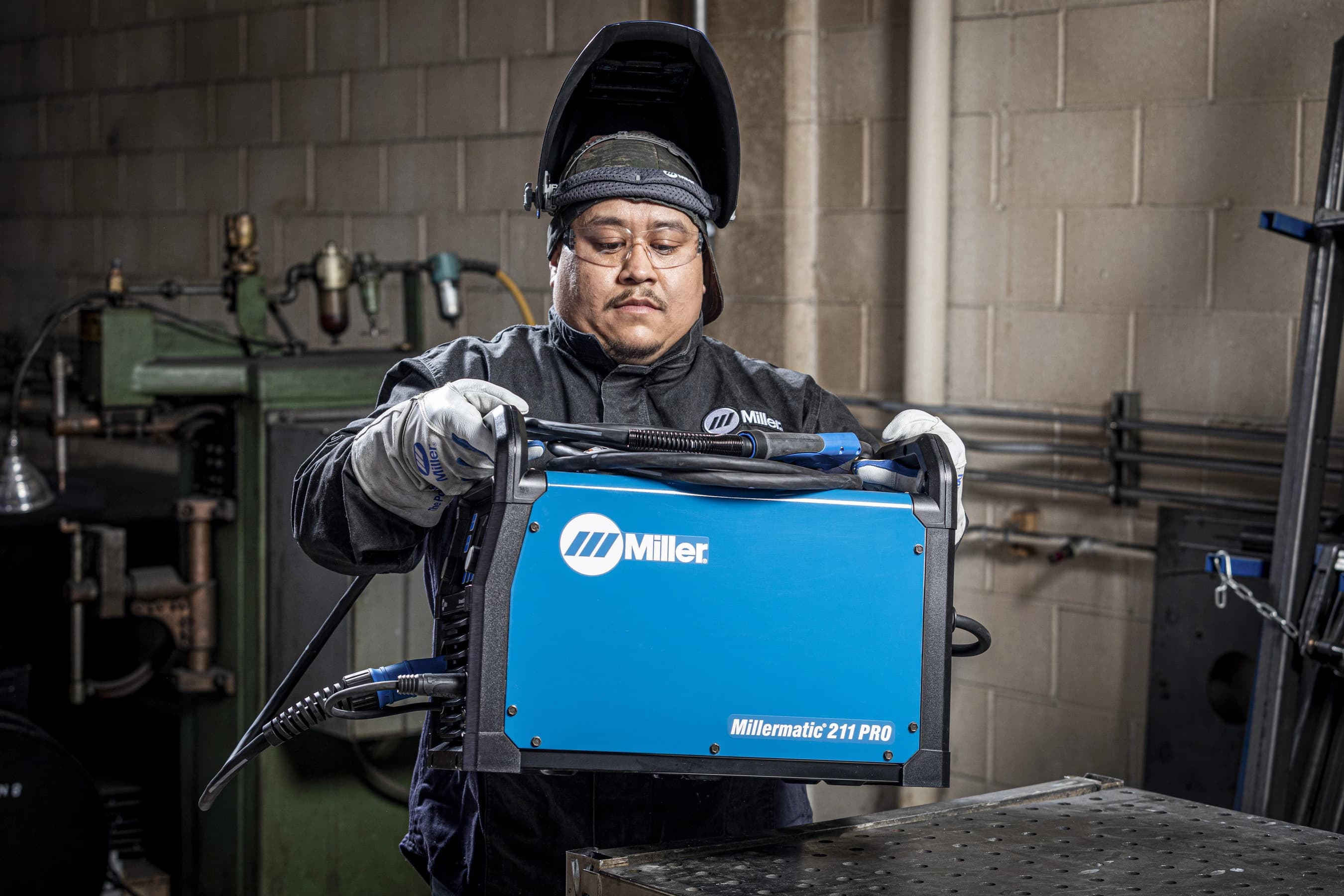
Regular welder maintenance will keep your machine performing in top shape. Follow these guidelines for common welder maintenance tips.