Article
MIG and Flux Cored Welding on the Farm
Learn about the benefits of transitioning from stick welding to MIG and FCAW on the farm — and how to make the change.

Completing necessary maintenance, repairs or modifications can help reduce costly downtime caused by equipment breakdowns when they are most inconvenient.
Many equipment repairs on the farm happen in the weeks leading up to harvest or during the quieter winter season. Using these times as opportunity to complete equipment fabrication and repairs can be critical to help keep things running smoothly.
Completing necessary maintenance, repairs or modifications before the busy planting and harvest seasons can help reduce costly downtime caused by equipment breakdowns when they are most inconvenient. Equipment breakdowns can keep farmers from harvesting or planting crops and even endanger their safety.
Welding is a key part of many repair and fabrication projects on the farm, so it’s important to have versatile and reliable solutions that can meet a wide range of welding needs.
Downtime between busy seasons is a great time to prepare for the planting and harvest seasons. This includes keeping equipment, fences and structures in good shape on the farm. Fixing these issues during the slower months helps avoid emergency repairs that may have to be completed in the field rather than in the shop. For all of these tasks on the farm — and many more — a welder or an engine-driven welder are important tools.
Farmers who purchase used equipment may also find it necessary to make repairs by welding. Perhaps a hitch is bent or broken, for example. Having a welder ensures you can make repairs quickly and at a lower cost than taking the equipment elsewhere. Purchasing a less expensive used item — and having the ability to make any repairs yourself with welding equipment — can help farmers save money and avoid buying new equipment in some cases.
Even new equipment may require some welding. It’s not uncommon for farmers or ranchers to make modifications to new equipment so that it meets their specific needs. When equipment is underbuilt, farmers can use welding to strengthen that piece of equipment to their specifications. For example, a farmer may adds rows to his corn planter so it matches the number of rows on a larger combine. The farmer can order the parts and weld them to the planter to extend the planter rows.
In another example, a farmer with a round bail feeder fabricated new feet for the piece of equipment. The feet original to the piece had worn over time due to use and moisture. To extend the life of the feeder, the farmer fabricated new feet out of flat 1/4-inch stock. Farmers can also perform preventive maintenance and fabrication on new equipment, to ensure the necessary strength and long equipment life.
Welding repairs on the farm can be diverse, but no matter the maintenance or repair need Miller Electric Mfg. LLC has solutions to help get the job done right.
Many farmers and ranchers on small- to mid-size operations are typically welding steel in their repair and fabrication projects. But because different applications sometimes call for different welding processes, selecting the right welder for your operation is important.
The most common welding processes used for fabricating metals are stick welding, MIG welding, flux-cored welding and TIG welding. The same machine can typically perform MIG and flux-cored welding, while TIG machines can usually perform stick welding, as well.
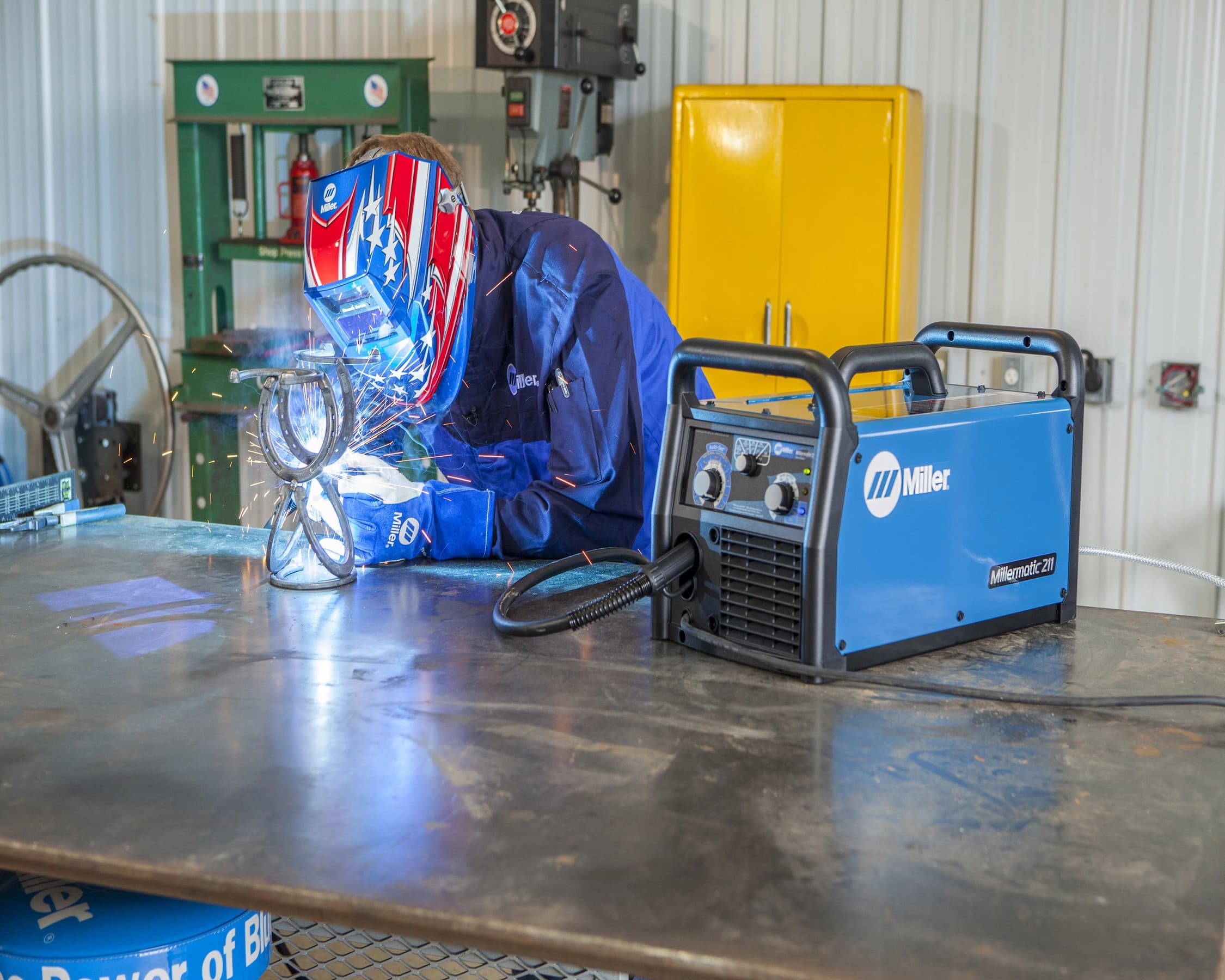
The Millermatic® 211 PRO is a good option for light fabrication and farm and ranch applications, with the ability to weld mild steel from 24-gauge to 3/8-inch thick. It runs on either 120 or 240 volt input power, and weighs 35 pounds. The Auto-Set™ feature offers quick and easy setup by recommending welding parameters based on the selected materials.
The Multimatic® 215 PRO is a multiprocess power source ideal for farmers with a variety of jobs to be done. This machine weighs 35 pounds and can run on either 120 or 240 volts for MIG, DC TIG and stick welding. It offers capacity for MIG welding on 24-gauge to 3/8-inch thick steel and 18-gauge to 3/8-inch thick aluminum, with TIG welding capacity for 24-gauge to 1/4-inch mild steel.
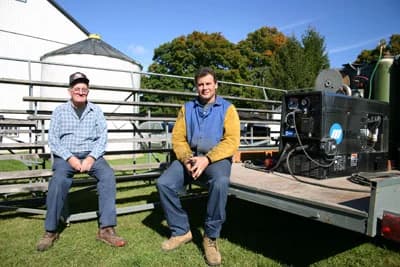
Farmers should also consider a portable engine-driven welder solution that can provide more versatility for repairs in the field. Often wagons, tractors, combines and other farm equipment break down in the field or on the road. Such equipment cannot be easily transported back to the shop for immediate repair. A portable engine-driven welder comes in handy in these situations, so farmers can handle repair and fabrication where needed.
An engine-driven welder can also meet power generation needs in the field, running tools, lights and other items.
The Bobcat™ 265 engine-driven welder provides multiprocess welding capability for stick, MIG, flux-cored and DC TIG welding, and provides 9,500 watts of continuous generator power and 11,000 watts of peak generator power for tools and lights in the field. Remote Start/Stop allows the machine to be turned on and off remotely.
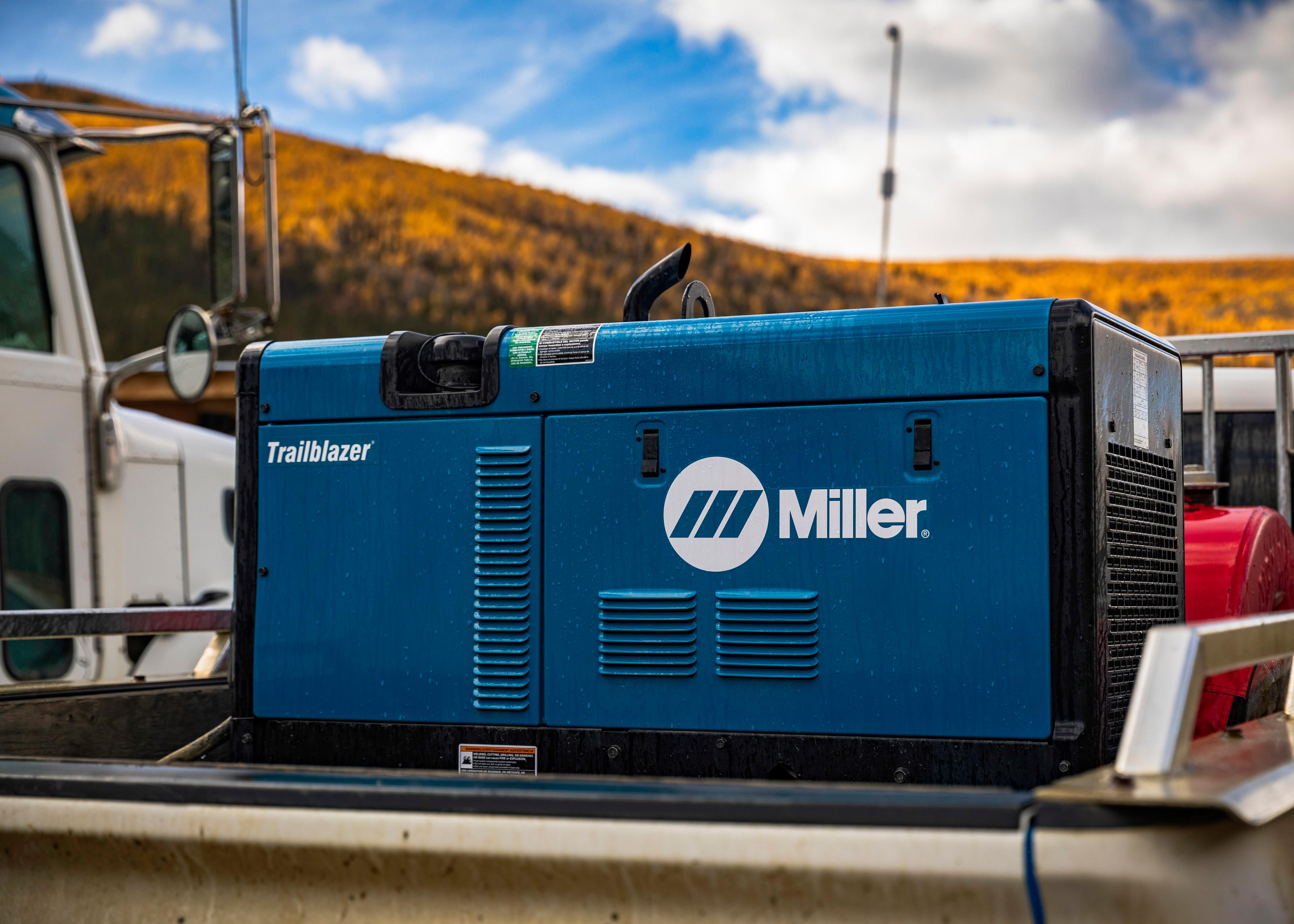
The Trailblazer® 330 is another engine-driven welder from Miller that is a good option for farmers and ranchers who need more advanced welding capabilities. Offering unbeatable arc performance, superior runtimes and increased fuel efficiency, no other compact machine in the 300-amp class delivers more welding power or more auxiliary power with better fuel efficiency and less noise.
Another option, the Blue Star® 185, is a great solution that provides outdoor power for farm, ranch, maintenance and hobbyists. Compact and portable, the machine has a small footprint and is lightweight, so it takes up little truck space and is easy to move around. In addition, weld and auxiliary output exceed all other machines in this class, helping ensure maximum performance throughout the work day.

Bobcat™ 265
Bobcat 265 engine-driven welders are smaller, lighter and easier to use. They also deliver more data visibility, lower fuel costs and reduce noise.
Many farmers and ranchers likely share similar challenges and needs when it comes to repairs, maintenance and modifications on the farm. To help meet these needs, they need portable, versatile and easy-to-use welding equipment.
Fabrication and repair work often happen away from the shop, in the field at all hours of the day. Many farmers also must be self-reliant when emergency repairs spring up.
Welding technology advancements have made many machines more portable, versatile and convenient to use than ever. This helps farmers and ranchers complete fabrication and repairs themselves, so they can get back to work faster — and be up and running when planting and harvest seasons come.
Posted Apr 13, 2024
Learn about the benefits of transitioning from stick welding to MIG and FCAW on the farm — and how to make the change.
Learn how to choose the right equipment for welding on the farm — whether fabricating in the shop or making repairs in the field.
Follow these four maintenance tips to prepare your gas engine welder/generator for the winter months and ensure its operation at any time.