
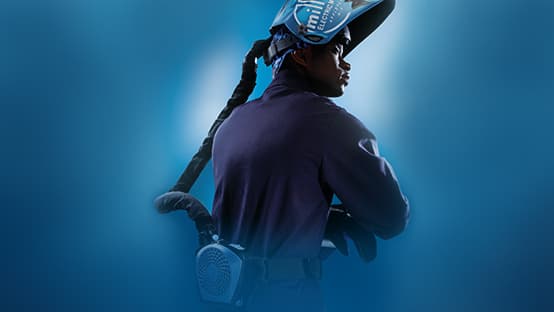
Article
Heat Stress and Welding: Cooling Down Hot Work
Learn how to outfit your welding operators with the best protective clothing and accessories to avoid heat stress — which can lead to a number of health concerns.
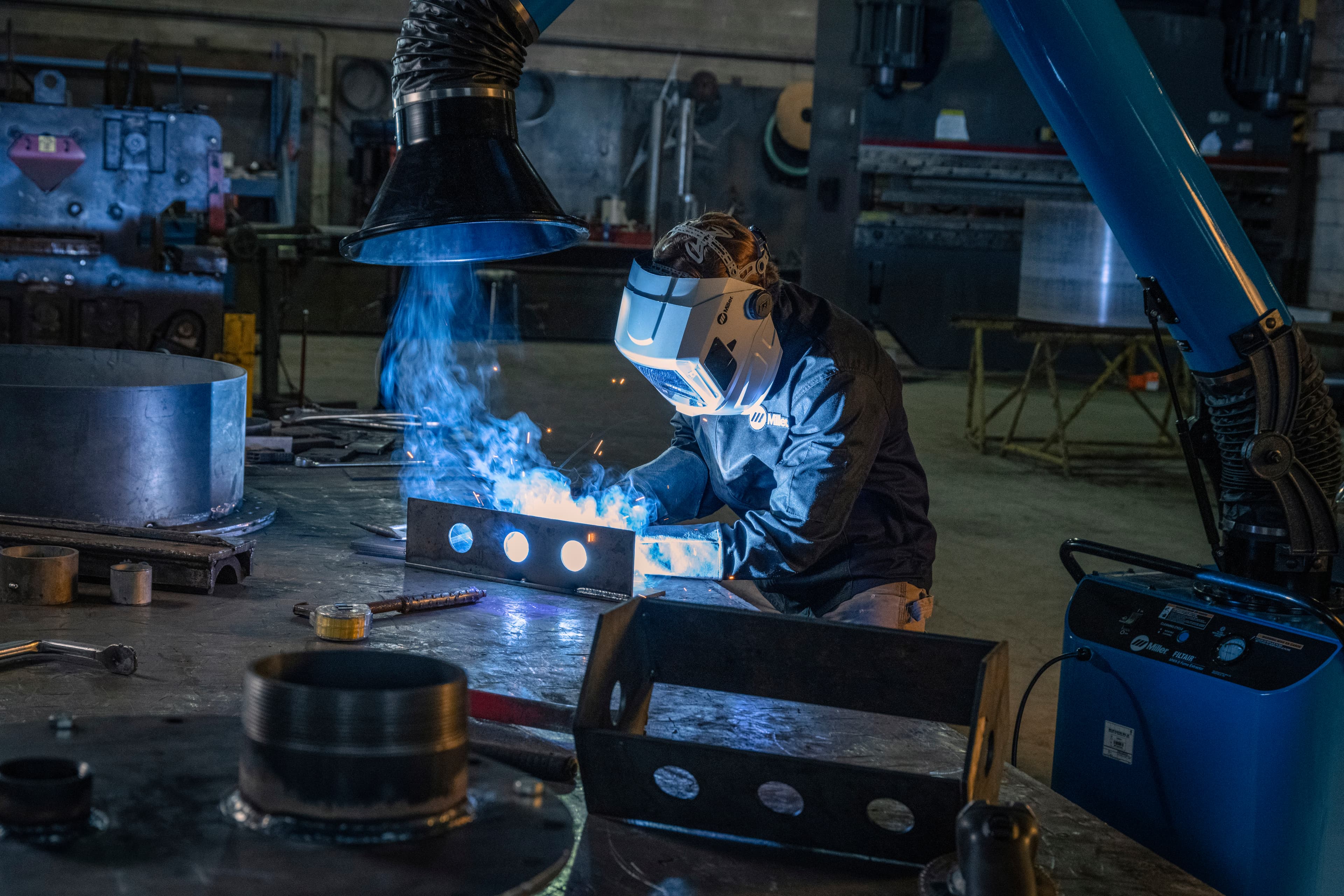
Weld fume management is a critical part of maintaining a safe, productive and compliant welding environment. Weld shops often face fume levels that exceed recommended exposure limits, creating risks that extend beyond regulatory compliance. These risks can include health concerns associated with poor air quality, compliance violations and fines, increased insurance pressure, and challenges attracting and retaining skilled workers.
Effective weld fume control is necessary for meeting requirements established by organizations such as the Occupational Safety and Health Administration (OSHA). OSHA regulates exposure to specific metals, metal oxides and gases found within welding fumes, including contaminants such as hexavalent chromium and manganese. Proactively managing weld fume exposure is an important part of creating a safer environment for employees and maintaining compliance.
A clean, well-managed work environment can also provide a competitive advantage when recruiting and retaining skilled welders. According to WeldingWorkforceData.com, the U.S. welding workforce was estimated at 771,000 professionals in 2024. More than 157,000 welders are approaching retirement, and projections indicate that 320,500 new welders will be needed by 2029 to meet industry demand. In a competitive labor market, demonstrating a commitment to employee safety, air quality and overall working conditions can help manufacturers attract and retain qualified talent.
In addition to OSHA requirements, insurance providers may benchmark exposure levels against recommendations from organizations such as the American Conference of Governmental Industrial Hygienists (ACGIH®), further emphasizing the value of proactive weld fume management.
This article outlines eight best practices for weld fume control using OSHA's Hierarchy of Controls as a framework for evaluating solutions. Topics include process and consumable modifications, fume extraction solutions, respiratory protection and the role employee training plays in reducing exposure.
OSHA's Hierarchy of Controls provides a framework for evaluating workplace hazards and identifying solutions that reduce employee exposure. For welding operations, the hierarchy can help employers evaluate different approaches to weld fume control and determine which combination of solutions best fits their facility, workforce and productivity goals.
The hierarchy prioritizes controls that reduce exposure at the source and generally reduces the burden on the operator. As organizations move down the hierarchy, controls become more dependent on employee behavior and consistent use. In many welding environments, the most effective approach combines multiple levels of the hierarchy.
Before implementing controls, facilities should conduct air sampling with a certified industrial hygienist to identify the types and levels of contaminants present in the welding environment. Exposure levels can vary significantly based on the welding process, materials, consumables and duration of exposure.
P To locate a certified industrial hygienist to conduct air sampling and guide your assessment visit: https://www.aiha.org/consultants-directory
The most effective way to manage weld fumes is to reduce the amount generated in the first place. Changes to welding processes, consumables and welding parameters can significantly affect fume generation. Options may include switching from stick welding to MIG welding or from self-shielded wire to solid wire, depending on the application.
Improving arc stability and reducing spatter can also decrease fume generation. Operations may achieve this through advanced welding processes designed to provide better puddle control and more stable arc characteristics. Mixed shielding gases with higher argon content may also help reduce spatter and overall fume generation.
Consumable selection can also play a role in weld fume management. Some filler metals are formulated to help reduce manganese fume emissions while maintaining weld quality and productivity.
For example, filler metals such as FabCOR® Element™ XP is designed to help address manganese exposure concerns through lower-manganese formulations while still supporting weld performance requirements.
Keep in mind that process or consumable changes may require recertification of welding procedures as well as additional training or testing.
When process modifications cannot sufficiently reduce weld fumes, engineering controls are often the next step. One of the most effective engineering controls is source capture, which removes contaminants before they reach the welder's breathing zone.
Fume extraction guns capture fumes directly at the source, around the weld pool. These systems connect to high-vacuum extraction equipment designed to remove fumes very close to where they are generated, helping prevent contaminants from spreading throughout the facility.
Modern extraction guns have evolved to improve operator comfort and maneuverability while continuing to provide effective source capture. They are often best suited for flat, in-position welding applications.
For operations where fume extraction guns are not practical, low-vacuum/high-volume extraction systems offer another effective source capture solution. These systems use extraction arms, hoods or centralized ducted systems to pull fumes away from the operator's breathing zone.
Compared to high-vacuum systems, high-volume systems move larger amounts of air and provide larger capture zones. Options include mobile units, stationary systems and centralized extraction solutions connected to facility ductwork.
When using extraction arms, proper positioning is critical. The hood should generally be placed above the arc at an angle of approximately 45 degrees and positioned roughly 12 to 18 inches from the welding arc. As operators move throughout the weld, the arm should be repositioned to maintain capture effectiveness.
For automated welding environments, overhead hood capture systems can also help manage weld fumes and may be integrated into larger centralized extraction systems.
Routine maintenance helps ensure fume extraction systems continue to operate at peak performance. Dirty or overloaded filters restrict airflow and reduce the system's ability to capture fumes effectively.
Systems with disposable filters should be monitored regularly and filters replaced according to manufacturer recommendations. Self-cleaning systems require clean, dry compressed air and properly functioning cleaning mechanisms to maintain performance.
Facilities should also consider filter media selection and filtration capacity, particularly in high-fume applications such as automated welding operations.
Training plays an important role in reducing weld fume exposure. Even when engineering controls and respiratory protection are in place, employees must understand how to properly use and maintain equipment.
Training programs should cover:
Operators should also be trained on work practices that help minimize exposure, including:
Even small adjustments to work practices can reduce exposure levels and help improve overall productivity by reducing rework and improving welding efficiency.
Under OSHA's Hierarchy of Controls, respirators are classified as Personal Protective Equipment (PPE). PPE is generally used when higher-level controls are not feasible or cannot adequately reduce exposure. In some applications, respirators may be necessary to help reduce exposure below required limits.
OSHA identifies two primary categories of respirators:
Proper selection depends on workplace conditions and exposure levels. Employers should consider the assigned protection factor (APF) and maximum use concentration (MUC) to determine whether a respirator provides adequate protection. MUC is calculated by multiplying the APF by OSHA's permissible exposure limit (PEL).
Proper fit is critical. Fit testing should occur before use and annually thereafter, or whenever a physical change could impact respirator fit. Please reference this table to see differences in Class, APF, and Fit Test requirements per type of product.
| Type | Class | APF | Fit test | Notes |
|---|---|---|---|---|
| Dust Masks | Air-purifying | 10 | Not required | |
| Half Masks | Air-purifying | 10 | Required for mandatory use | Replaceable filter or canisters |
| Powered air-purifying respirators | Air-purifying | 25 | Not required when used with helmet assembly | Delivers filtered air from the environment to welder’s helmet using a belt-mounted blower. Replaceable filters or canisters |
| Supplied air respirators | Atmosphere-supplying | 25 | Not required when used with helmet assembly | Delivers filtered air from an independent source to welder’s helmet using a belt-mounted blower. Replaceable filters or canisters. Heating and cooling options |
Whether respirator use is mandatory or voluntary, companies should maintain a written respiratory protection program in accordance with OSHA requirements.
For mandatory respirator programs, documentation typically includes:
Employees should be trained on respirator inspection, maintenance and proper use. Unlike many fume extraction filters, respirator filters cannot be cleaned and must be replaced according to an established maintenance schedule.
There is no one-size-fits-all solution for weld fume control. The most effective programs evaluate multiple solutions across OSHA's Hierarchy of Controls and implement the combination that best fits the application, facility and workforce.
P By reducing fume generation, implementing appropriate engineering controls, training employees and maintaining respiratory protection programs, manufacturers can create cleaner, safer and more productive welding environments while supporting compliance and long-term operational goals.
Ready to Take Control? Your facility is unique, and we partner with you to assess your environment and build a customized, holistic fume mitigation strategy.
Learn how to outfit your welding operators with the best protective clothing and accessories to avoid heat stress — which can lead to a number of health concerns.
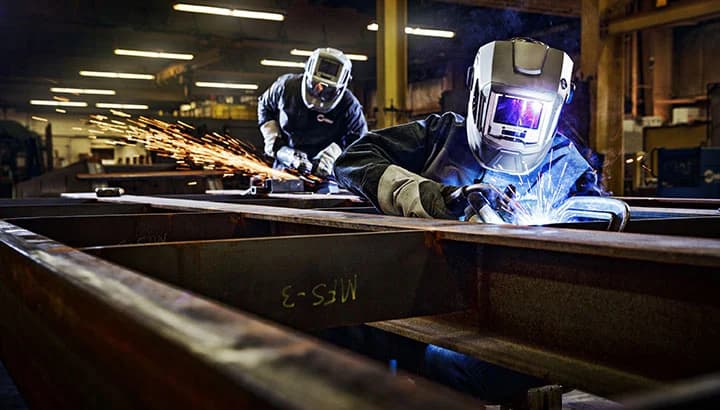
Advanced welding helmets enhance safety, ensure compliance, and improve comfort, helping reduce fatigue and increase productivity on the job.
Reduce heat stress and boost welding performance with cooling gear like CoolBand™ and CoolBelt™, offering comfort, efficiency, and quick ROI.