
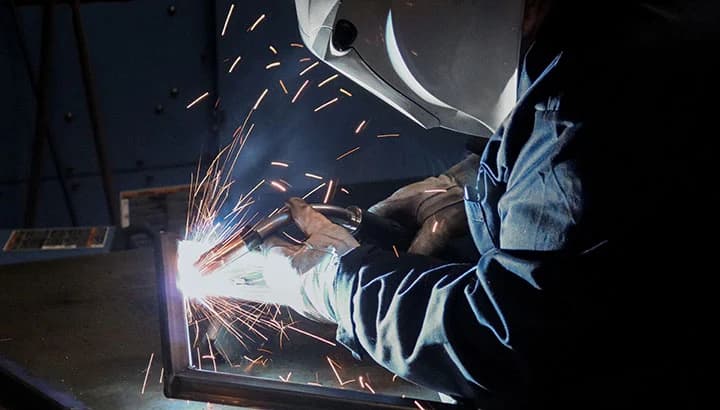
Article
How to Choose MIG Welding Consumables to Optimize Productivity
Labor is 85 percent of a welding operation’s costs. Learn how the right consumables can improve productivity and minimize downtime.
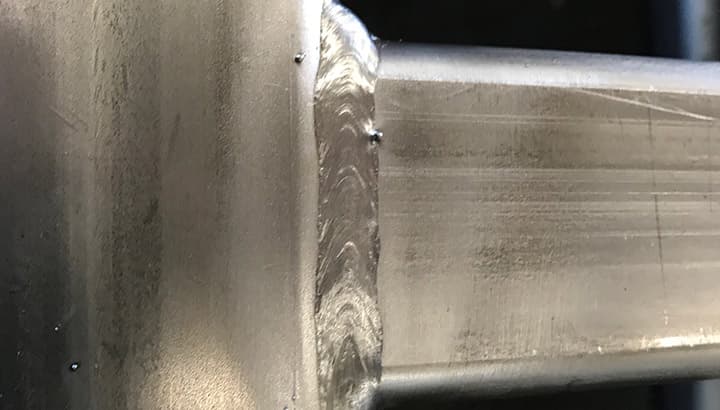
The material is ideal for welding applications that require long life and corrosion resistance — from fabricating fire pits and smokers to repairing damaged household items.
MIG welding can provide benefits for efficiency while still producing high-quality welds, but it’s important to keep in mind some best practices.
Stainless steel stands out for its excellent corrosion resistance, thanks to its added chromium content. This makes it resistant to rust when it’s welded properly.
However, it is also more sensitive to heat input than mild steel is. Too much heat for too long can result in carbide precipitation — which causes the material to lose its corrosion resistance. It can also cause oxidation on the back side of the weld joint. This makes it important to control the heat input, utilize proper gas shielding and maintain a good travel speed when welding.
Because it is more costly than mild steel, following best practices is essential to minimize weld defects, reduce distortion and control costs.
When MIG welding stainless steel, controlling carbon content is key to maintaining corrosion resistance. That starts with selecting the right shielding gas.
Choosing the right filler metal depends on the type of stainless steel you’re welding since stainless comes in several varieties. Common base metals include 304 and 316, while frequently used welding wires are 309 and 316. Many stainless filler alloys are designed to improve puddle fluidity and weld quality.
Proper preparation is important for achieving clean, defect-free welds on stainless steel. When preparing the material use a stainless steel wire brush or stainless-dedicated grinding wheel for cleaning or grinding the metal. Using tools that have previously been used on mild steel can contaminate the steel and could introduce weld defects or impurities.
Using a push technique will provide a better weld bead appearance and promote better puddle wetting. Maintaining the right travel speed is also important: moving too slowly increases heat input. Also, be cautious of using a weave motion with the material due to the amount of heat generated by this technique.
A typical stainless steel weld can have what is referred to as a “ropey bead” appearance compared to mild steel. This is due to the weld puddle’s higher which causes it to set up quickly and limits its ability to flow to the edges of the weld. If you’re using a conventional MIG welding power source with adjustable inductance control, increasing the inductance will help the puddle flow more.
Pulsed MIG can deliver benefits, including less spatter and post-weld cleanup and a nice weld bead appearance. Pulsed MIG spray transfer mode can be a good option to help reduce heat input, which can be especially important on thin materials. It also provides the ability to weld out of position, which can’t be done with conventional CV MIG spray transfer because of the difficulty in controlling the fluid puddle.
Be sure to use drive rolls and a MIG gun liner dedicated for stainless steel welding—not the same ones used for mild steel—to prevent cross contamination in the weld. You can either swap out the drive rolls and liner in the gun or have a separate welding gun dedicated to stainless steel welding. Also, because stainless steel filler metals are a bit harder than other types of filler metal, it can be difficult for V-groove drive rolls to get a good grip on the wire to feed it through the gun. Instead, try using V-knurled drive rolls with the material.
Post-flow shielding gas coverage is a smart practice with the material. While often used in TIG welding, it’s also helpful when MIG welding the material because it helps protect the weld as the weld pool solidifies and shields it from atmospheric contamination as it cools. For proper post-flow, keep the gun nozzle close to the end of the weld for a half second to three seconds to ensure the shielding gas continues to flow back to the weld puddle as it solidifies.
Controlling heat input is critical to maintaining stainless steel’s corrosion resistant properties and producing good welds. MIG welding stainless steel successfully also requires following best practices for choosing the right shielding gas and filler metal.
To dial in your welds even further, read through our article MIG Welding: Setting the Correct Parameters.
Posted Sep 5, 2025
Labor is 85 percent of a welding operation’s costs. Learn how the right consumables can improve productivity and minimize downtime.
Learn MIG welding basics for beginners — how to use a MIG gun, set voltage and wire speed, choose shielding gas and get the right angle for quality welds.

Choose the right MIG gun with confidence — compare air-cooled, water-cooled, push-pull, spool and fume extraction guns plus tips on amperage and consumables.