
Article
3A Sanitary Welding: What Clean, Repeatable TIG Welds Require in Food and Beverage Fabrication
Sanitary TIG welding demands precision. Learn how heat input, arc stability and prep impact clean, repeatable welds in food-grade fabrication.
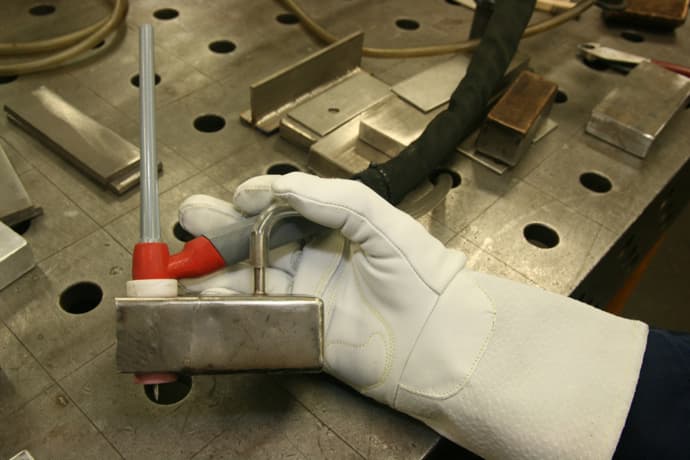
Titanium is relied upon for its extreme strength and corrosion resistance, but improper weld preparation and the introduction of oxygen and other contaminants into the weld zone can render it useless.
Titanium welding is less common than aluminum welding, but it’s one of the most impressive processes used in fabrication today. Titanium offers the highest strength-to-weight ratio of any metal commonly used in manufacturing and fabrication — lighter than steel and significantly stronger than aluminum. While titanium is more expensive, its long-term value outweighs the upfront cost due to the exceptional corrosion resistance, longer service life and reduced maintenance/repair costs.
Because of these advantages, titanium is widely used in demanding applications, including maritime, aviation, military, chemical, power generation, nuclear, desalination and medical applications. Engineers often choose titanium when long-term durability and lifecycle cost savings matter more than raw material prices.
Despite its advantages, titanium can be extremely unforgiving during welding. Elements like oxygen, nitrogen, hydrogen and even foreign contaminants act like kryptonite — compromising strength and corrosion resistance. If contamination occurs, defects can form that require the affected area to be cut away entirely or scrapped. As such, preparation, cleanliness and protection during the weld process are critical. In this article, we’ll look at key factors related to the welding of titanium and how you can ensure the optimal strength and corrosion resistance of your titanium tube and pipe1.
If you walk away from this article with one message, it is that cleanliness is the key to success. So much so that it’s important not to touch the material with your bare hands. Even small amounts of body oil, grease or shop grime will contaminate the material. Avoid touching titanium with bare hands and wear nitrile or lint-free gloves during the prep process.
To reduce the risk of titanium contamination:
Certain cutting methods can also introduce contamination. Whenever possible:
Tool selection is equally important for titanium prep.
#1: Apply an industrial cleaning agent such as acetone or methyl ethyl ketone (MEK) to a lint-free cloth and wipe the inside edges and outer surface of the pipe to remove any contaminants. Let this dissipate. Wear nitrile gloves for this task.
#2: Remove oxides prior to welding as titanium features oxides similarly to aluminum. Grind or file both the inner and outside surface of the pipe 1 inch back from the joint, as well as the actual edge that will butt against the other piece. Grind slowly to minimize heat input.
#3: Do not use steel wool or abrasives in this task as these materials may contaminate the base metal.
Wipe the base metal once more with the acetone or MEK cloth and allow the moisture to dissipate before striking an arc. Do NOT use chlorine-based cleaning agents.
#4: Wipe down the filler metal with acetone or MEK to ensure no transfer of contaminants through the filler rod. If time passes between the cleaning of the filler rod and the beginning of the welding process, place that filler rod in an air-tight container. If the filler rod has been left exposed, clean it again before welding.
#5: Clip the end of the filler rod just before you begin welding to expose pure, clean titanium for the beginning of your weld.
An important safety note: Dust created in the grinding and preparation of titanium can be volatile. Titanium powder is used regularly in pyrotechnics, and as such, it is important to properly gather and dispose of dust created during preparation to both minimize chances for contamination and fire hazards in the workplace.
As a general rule of thumb, we recommend that titanium tube or pipe thinner than 5 millimeters should be welded autogenously (square butt joint — no filler metal added). We typically don’t recommend adding filler metal until thickness exceeds 5 millimeters, although AWS D10.6 recommends a v-groove on thicknesses exceeding 2.4 millimeters and a u-groove on thicknesses exceeding 9.5 millimeters.
Ultimately, use your best judgment and follow your certified welding procedures. The advantage of welding autogenously is that you minimize heat put into the part and minimize the risk of contaminants entering the weld pool via the filler metal.
For most titanium tube and pipe applications, 100% argon is the recommended shielding and backing gas. Titanium reacts the most with oxygen when it exceeds a certain temperature threshold — roughly 500 to 800 degrees Fahrenheit. That reaction leads to embrittlement and loss of corrosion resistance. As such, it is critical to protect the weld puddle with shielding gas until it drops below these temperatures (and why minimizing heat input is important). This includes mandatory back purging of the tube or pipe using any variety of commercially available dams and purges.
The majority of titanium pipe welding is done in open-air environments, so a purged gas chamber, while effective, is often impractical. Gas chambers offer extreme protection but are costly, time-intensive and not ideal for large components.
Occasionally, weld procedures may call for alternative shielding mixtures.
Two components that you may not generally use in other TIG welding applications but are critical to the shielding process are a gas lens and trailing shields. A gas lens replaces the standard collet body and improves the flow and coverage of the shielding gas around the tungsten, arc and weld pool. Trailing shields can either be purchased or fabricated to match specific joint configurations and provide a continuous secondary shielding gas source to ensure the weld puddle and heat-affected zone stay protected until each drops below the 500- to 800-degree window.
Use a clean, nonporous plastic hose to transport all shielding gases as rubber absorbs oxygen that could contaminate the weld. Some welders will also use oversized cups to achieve additional coverage surrounding the weld, but this is only necessary within practical means.
Welding titanium tube and pipe is relatively straightforward as it is recommended to weld in a direct current electrode negative (DCEN) setting. As such, a transformer- or inverter-based welding power source with DC capabilities will suffice. AC welding capabilities are not necessary (unless you are regularly using the power source to weld other alloys as well).
Factors to consider when selecting a titanium welding machine:
High frequency arc starting capabilities are critical, as the tungsten should never touch the base material.
Pulsing capabilities are extremely helpful in reducing heat input, improving arc stability and increasing penetration. As such, inverters with higher pulsing frequencies may provide an advantage here.
Low amperage capabilities. A power source with a range of three to 200 amps provides an excellent range for most titanium tube/pipe welding applications.
Either an air- or water-cooled torch will suffice in this application, depending on factors such as accessibility to the joint and welding amperage. Water-cooled torches are smaller and offer greater comfort and joint accessibility but come in at a higher price point, along with the need to purchase or add a cooling device. Air-cooled torches are a bit larger but cost less and are likely suitable for the majority of titanium welding applications.
According to AWS D10.6, thoriated and lanthanated tungsten electrodes are preferred, although we’ve also seen customers use two-percent ceriated tungsten. The tungsten should be ground to a point and sized as follows:
Filler metal is typically matched directly to the base metal, although there are some instances where a variation is used to achieve desired mechanical properties, such as using a filler metal with lower strength to improve ductility. Filler metal selection should always be dictated by the weld process.
While your success will depend largely on your preparation, there are a few important pointers to keep in mind when welding titanium tube and pipe:
Upon completion, titanium will tell you if it is an acceptable weld or not by its color. Colors ranging from silver to straw to brown are typically acceptable. As you get into blues, greens, grays and eventually white, these welds are unacceptable. Step back and examine each step of your process to determine where contamination is entering the weld. Eliminating that variable should help you get the colors you are looking for.
If contamination is present, the weld joint has to be completely cut away and started anew — there is no quick fix for a contaminated titanium weld.
With these tips and resources, you should be on your way to making a successful weld on titanium tube and pipe. Always consult your weld procedures to guide you, and when in doubt – clean.
Welders must be careful when working with titanium to maintain its exceptional qualities for strength and corrosion resistance. When welding titanium pipe and tubing, keep in mind:
American Welding Society. AWS D10.6/D10.6M:2000 Recommended Practices for Gas Tungsten Arc Welding of Titanium Piping and Tubing Miami: American Welding Society, 2000
1 This article discusses general best practices — always follow certified weld procedures.
Posted Mar 3, 2024
Sanitary TIG welding demands precision. Learn how heat input, arc stability and prep impact clean, repeatable welds in food-grade fabrication.
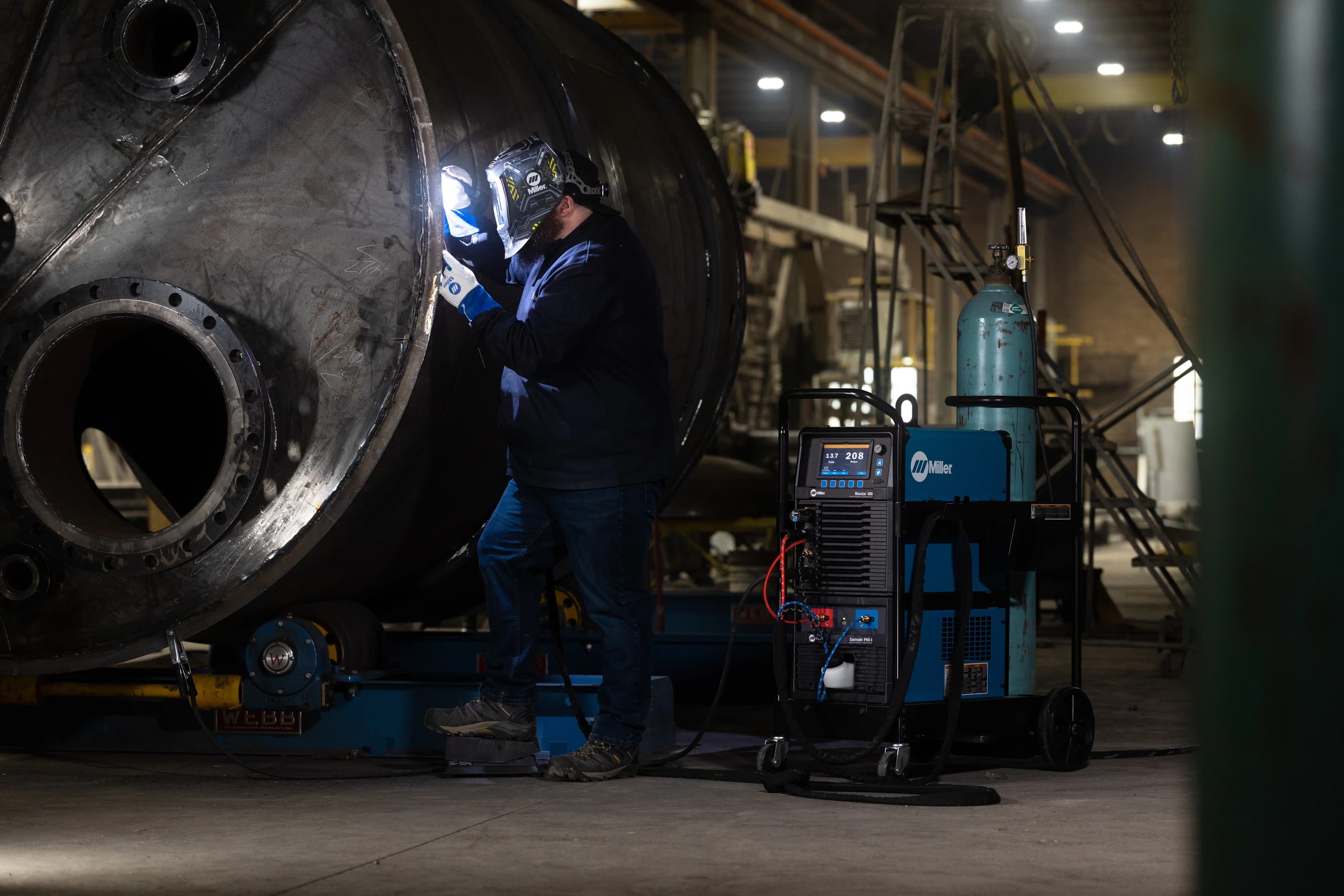
Good-grade welding requires strict controls to prevent contamination. Learn five common mistakes and how to improve weld quality, consistency and durability.
Discover how low-heat welding processes help reduce sugaring, heat tint and distortion in stainless steel for cleaner, more sanitary applications.