
Article
3A Sanitary Welding: What Clean, Repeatable TIG Welds Require in Food and Beverage Fabrication
Sanitary TIG welding demands precision. Learn how heat input, arc stability and prep impact clean, repeatable welds in food-grade fabrication.
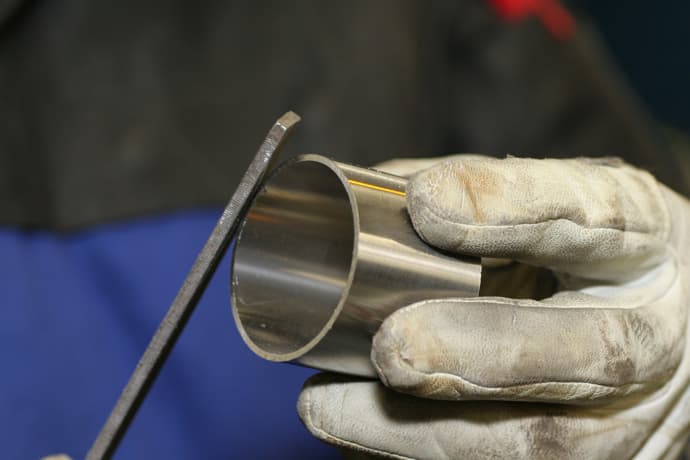
Learn how to weld stainless steel pipe and tubing while maintaining corrosion resistance. Explore filler metal selection, shielding gas, heat control and productivity tips.
Welding stainless steel pipe and tubing requires precise control over heat, filler metals, shielding gases and cleanliness, a level of control often supported by TIG power sources like the Miller® Maxstar® line, in order to maintain corrosion resistance and meet quality standards.
While traditional methods remain effective, updated techniques can increase welding productivity without sacrificing corrosion resistance.
Important: Certified welding procedures should only be modified through proper qualification processes.
Selecting filler metal for stainless steel pipe is about enhancing the properties of the weld and meeting the application's requirements. It's critical for controlling carbon levels, corrosion resistance and weld performance.
Filler metals with an “L” designation (e.g., ER308L)
Filler metals with an “H” designation
Filler metals with higher silicon levels, such as ER309LSi, increase weld puddle fluidity, improve tie-ins and increase travel speeds for greater productivity. The 309 series filler metals are also particularly adept at joining dissimilar stainless steels and in overlay applications.
When welding stainless steels, use low-trace (or “tramp”) filler metals whenever possible. These are residual elements in the raw materials used to make filler metals. Impurities like tin, sulfur, phosphorus, arsenic and antimony can reduce corrosion resistance.
Sensitization is the leading cause of corrosion in stainless steel welds. It is affected by the chemistry of the base material and filler metal, as well as the temperatures at which the weld cools.
Chromium oxide is the “stainless” layer of stainless steel. If you raise the carbon levels in the weld and neighboring heat-affected zone, it forms chromium carbides, which tie up the chromium, preventing the formation of chromium oxide. This in turn allows the steel to corrode or it will not have the intended corrosion resistance.
Welding stainless steel tube and pipe traditionally requires a back purge of argon. This protects the weld root and helps maintain corrosion resistance.
In non-critical applications, nitrogen can be used as a lower-cost alternative for back purging. However, this may lead to the formation of some nitride compounds in the weld root, which can reduce corrosion resistance. This trade-off is often acceptable in environments where internal corrosion resistance risk is low, such as:
For gas tungsten arc welding (GTAW) of stainless steel:
Shielding gas selection for MIG welding is more complex. Common gas mixes include:
These mixtures typically contain a high percentage of argon or helium, with less than 5% carbon dioxide.
Why limit CO₂?
Carbon dioxide can break down in the arc and introduce carbon into the weld pool. This can create a sensitized weld, making it more vulnerable to corrosion.
Additional considerations:
Flux-cored wires designed for stainless steel typically run on a 75% argon / 25% CO₂ mix.
Some processes allow stainless steel welding without a back purge:
However, this does not apply to duplex stainless steels:
Proper heat control and joint preparation are critical when welding stainless steel pipe and tubing. These factors play a key role in maintaining corrosion resistance and minimizing rework.
A discussion on welding stainless steel tube and pipe is not complete without a discussion on joint preparation. The normal trappings of welding stainless steel apply: Use dedicated brushes, files and grinders that never touch carbon steel or aluminum. Cleanliness is critical. Even trace elements of foreign materials incorporated into the weld can cause flaws and lead to reduced corrosion resistance and strength.
Because stainless steel is so sensitive to heat input, how operations cut and bevel the pipe can also have a detrimental effect on the weld. Any gap or lack of fit-up requires the welder to add more filler metal and can slow the welding process down, leading to buildup of heat in the affected area. You want as close to perfect fit-up as possible, especially on sanitary and high-purity tubing.
The welding process itself also plays a critical role in controlling heat input and cooling, and thereby corrosion resistance and distortion. Operations typically use TIG welding for stainless steel tube and pipe, often relying on inverter-based systems like the Maxstar® to deliver precise arc control. TIG welding remains the optimal solution for extremely high-purity applications, especially on tube or pipe up to 6-inch diameter and schedule 10 wall thickness.
For food-grade stainless steel, the preferred method is an autogenous TIG square butt weld. This approach fuses the pipe without adding filler metal, which helps keep heat input low and avoid changes in weld chemistry from added filler material. Autogenous TIG welding is most effective on material thinner than 1/8 inch.
As the pipe gets thicker — in the schedule 10 to 40 range — it becomes necessary to bevel the pipe and add filler metal. However, there are exceptions. In small-diameter pipes with thicker walls (such as 2-inch diameter, schedule 80), TIG welding can still be the best option. In these cases, switching to a wire process is often impractical due to the limited diameter.
Today’s TIG inverters perform this application extremely well, as the pulsing capabilities have improved substantially since the days of the larger transformer-based machines and help to keep heat input down.
Pulsing at these higher frequencies increases the arc focus by pulsing quickly between a high peak and low background current. This allows welders to get more penetration, move faster and reduce the heat-affected zone.
While there remain thicker high-purity pipe applications that still require a TIG root and/or a TIG hot pass, MIG root passes on stainless steel are regularly certified in less critical applications and, in some cases, even in applications traditionally performed with TIG.
Some applications are even being completed without the assistance of a back purge. This is made possible with a modified short-circuit MIG welding process such as RMD, available with the PipeWorx pipe welding system.
Important limitation:
This approach should never be done in high-purity applications involving duplex stainless steels, such as those in:
A typical process for larger diameter pipe (e.g., 12-inch schedule 40 in oil and gas applications) includes:
This approach eliminates the need for a TIG hot pass, improving efficiency without sacrificing weld quality.
RMD is an advancement over traditional short-circuit MIG because it actively anticipates and controls the short circuit. The system reduces current at the moment of contact to create a more stable and consistent metal transfer.
This controlled transfer provides several benefits:
The smoother transfer also helps compensate for high-low misalignment between pipe sections, making it more forgiving of imperfect fit-up while still producing consistent internal root reinforcement.
During RMD welding, the shielding gas exits the nozzle with minimal disturbance and can be pushed through the root opening. This helps protect the backside of the weld from oxidation.
As a result, some fabricators have been able to qualify procedures without a backing gas in certain austenitic stainless steel applications.
RMD also helps address the ongoing skilled labor shortage by making the process easier to learn.
These factors can reduce training time from weeks to just a few days for new welders.
One of the biggest advantages of RMD is the ability to increase welding speed without increasing heat input, helping preserve the corrosion resistance and mechanical properties of stainless steel.
Combined with the ability to eliminate a TIG hot pass — and, in some cases, back purging — this results in significant time and cost savings.
Lower heat input with RMD also helps minimize distortion, which is especially important when working with stainless steel.
Some fabricators report being able to:
This reduces handling, simplifies workflow and can significantly lower overall labor hours.
Posted May 1, 2024
Sanitary TIG welding demands precision. Learn how heat input, arc stability and prep impact clean, repeatable welds in food-grade fabrication.
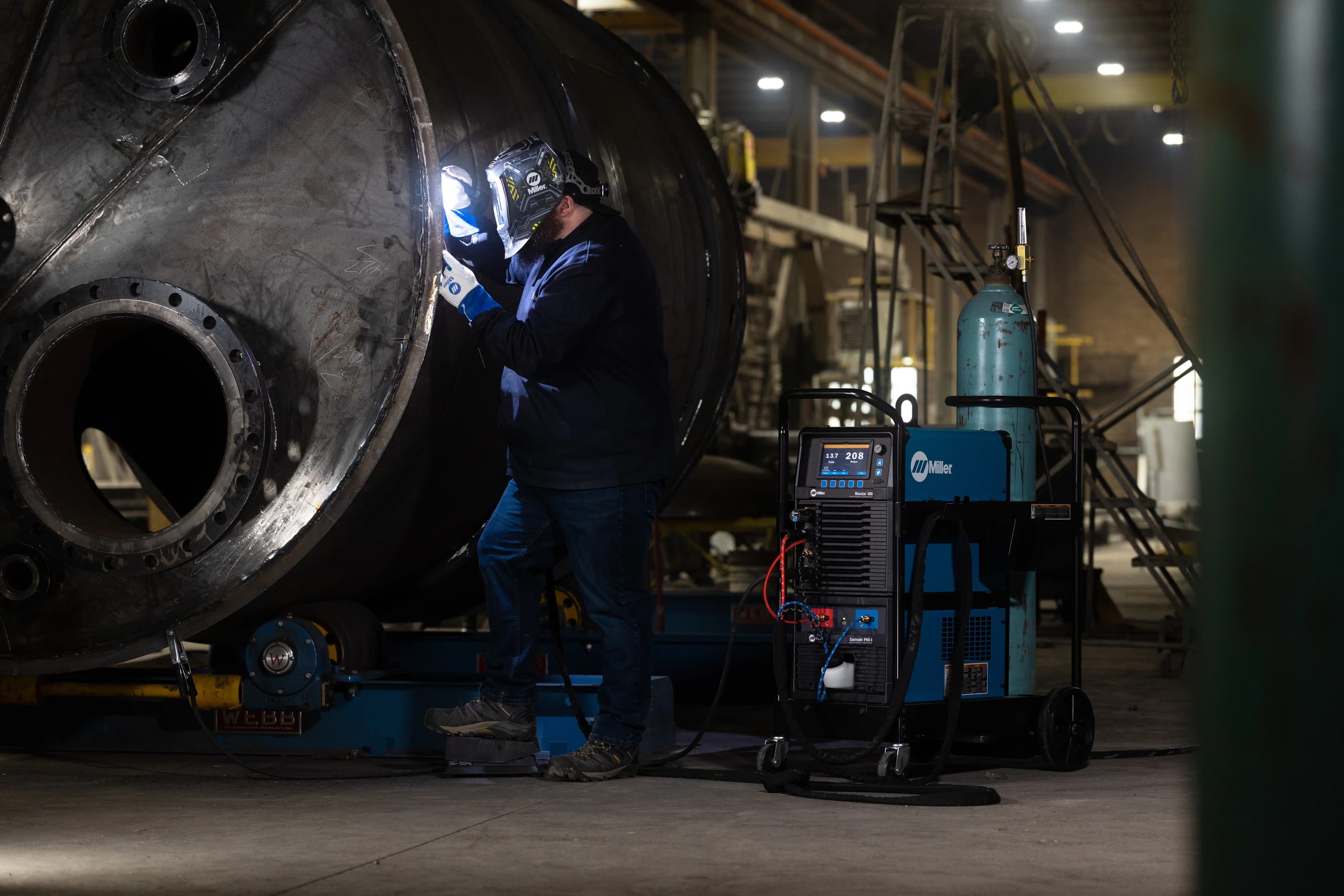
Good-grade welding requires strict controls to prevent contamination. Learn five common mistakes and how to improve weld quality, consistency and durability.
Discover how low-heat welding processes help reduce sugaring, heat tint and distortion in stainless steel for cleaner, more sanitary applications.