
Article
3A Sanitary Welding: What Clean, Repeatable TIG Welds Require in Food and Beverage Fabrication
Sanitary TIG welding demands precision. Learn how heat input, arc stability and prep impact clean, repeatable welds in food-grade fabrication.
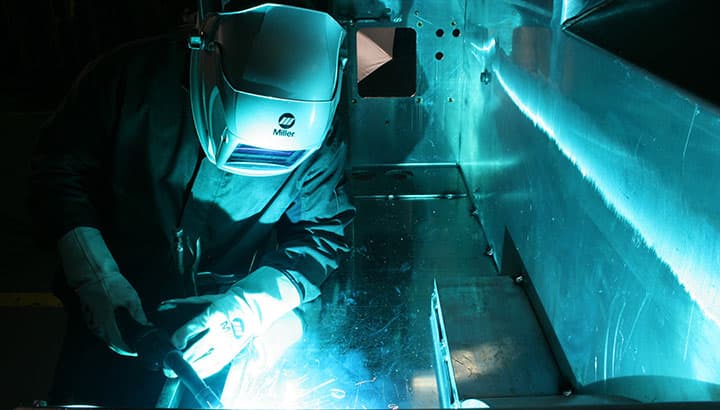
Aluminum sheet metal is lightweight, easy to form and does not rust, which offers manufacturers the option to skip the painting step when producing parts with this material. These benefits make aluminum sheet metal popular in a range of applications, from toolboxes and jon boats to signs and awnings.
But welding this thin material does present some challenges.
Learn about five tips to help control heat input and improve technique to optimize results and reduce rework when MIG welding aluminum sheet metal in a manufacturing operation.
First, it’s important to understand what is meant by the term “sheet metal.” In discussing sheet metal, people are often referring to material that is 1/8-inch thick (.125) or less. Sheet metal comes in a range of thicknesses, and people may have different definitions of what they consider sheet metal to be depending on their application.
For the purposes of this article, the term sheet metal refers to material 1/8-inch thick or less.
The right welding process can help improve results with aluminum sheet metal. Pulsed MIG welding lowers heat input and makes it easier to weld thin materials and minimize burn-through.
Pulsed MIG alternates between a high peak current and a lower background current, lowering the overall amperage. The pulse of peak current propels the molten droplet across the arc and provides the energy to produce good fusion associated with spray transfer, while the low background current allows the weld puddle to cool.
What are some benefits of pulsed MIG welding?
There are many factors to consider when selecting the best filler metal for welding aluminum sheet metal. These include the base metal alloy, service temperature and environment, formability and more.
The two most common aluminum filler metals are 4043 and 5356. They produce very different results when welding sheet metal. Characteristics of a 4043 filler metal include:
When pulsed MIG welding material that’s 1/8-inch thick to 16-gauge, a 3/64-inch filler metal can be used provided there is tight fit-up. For even thinner materials, try a .035-inch filler metal. For CV MIG welding on sheet metal, wire diameters of .035 inch are recommended.
A 100% argon shielding gas is the most common in MIG welding aluminum sheet metal.
Proper, tight part fit-up is especially important when welding thin materials. Gaps between the pieces to be welded can contribute to warpage. Even a small gap can turn into a larger gap if the piece warps — forcing the operator to slow down to fill the larger gap and add unwanted heat into the weld. This can lead to bottlenecks in your line.
Ensure there are no gaps in part fit-up. It’s also recommended to have the edges of the pieces overlap slightly. Use a lap corner part fit-up rather than an outside corner fit-up to reduce the chance for burn-through.
Another option to combat burn-through is to use a copper backing bar when MIG welding sheet metal. Place or clamp a copper bar on the back side of the welded area, which helps dissipate heat faster than atmospheric cooling alone.
Keeping a fast travel speed and a small bead during welding also helps minimize burn-through, warpage and distortion on sheet metal. A slower travel speed means dwelling longer in an area, causing heat to build up.
Operators should always use stringer beads (not weave) and use the fastest travel speed possible to maintain a good bead profile. Avoid backstepping techniques, as they slow travel speeds and increase heat input and distortion. Pulsed MIG welding is recommended because it provides the ability for a fast travel speed, especially compared to other processes that may be used to weld aluminum sheet metal.
Bead sequences can be greatly affected by part geometry and the fixturing in use. Use weld bead sequences, such as intermittent welds, rather than a constant weld bead, to help offset distortion and warping. When possible, weld beads in any low heat sinking areas first to minimize burn-through. Also, it can help to spread the weld sequence around the part to reduce localized heating in one area.
Another option is to make short welds in one direction, starting the next weld behind the beginning of the previous bead. This reduces heat buildup while still allowing operators to weld in one direction.
MIG welding aluminum sheet metal leaves little room for error. To reduce the risk of burn-through, warpage and distortion, follow these tips to reduce heat input, keep travel speeds high, and ensure there are no gaps in part fit-up.
The end results can help manufacturing operations reduce rework and costs.
Posted Mar 27, 2024
Sanitary TIG welding demands precision. Learn how heat input, arc stability and prep impact clean, repeatable welds in food-grade fabrication.
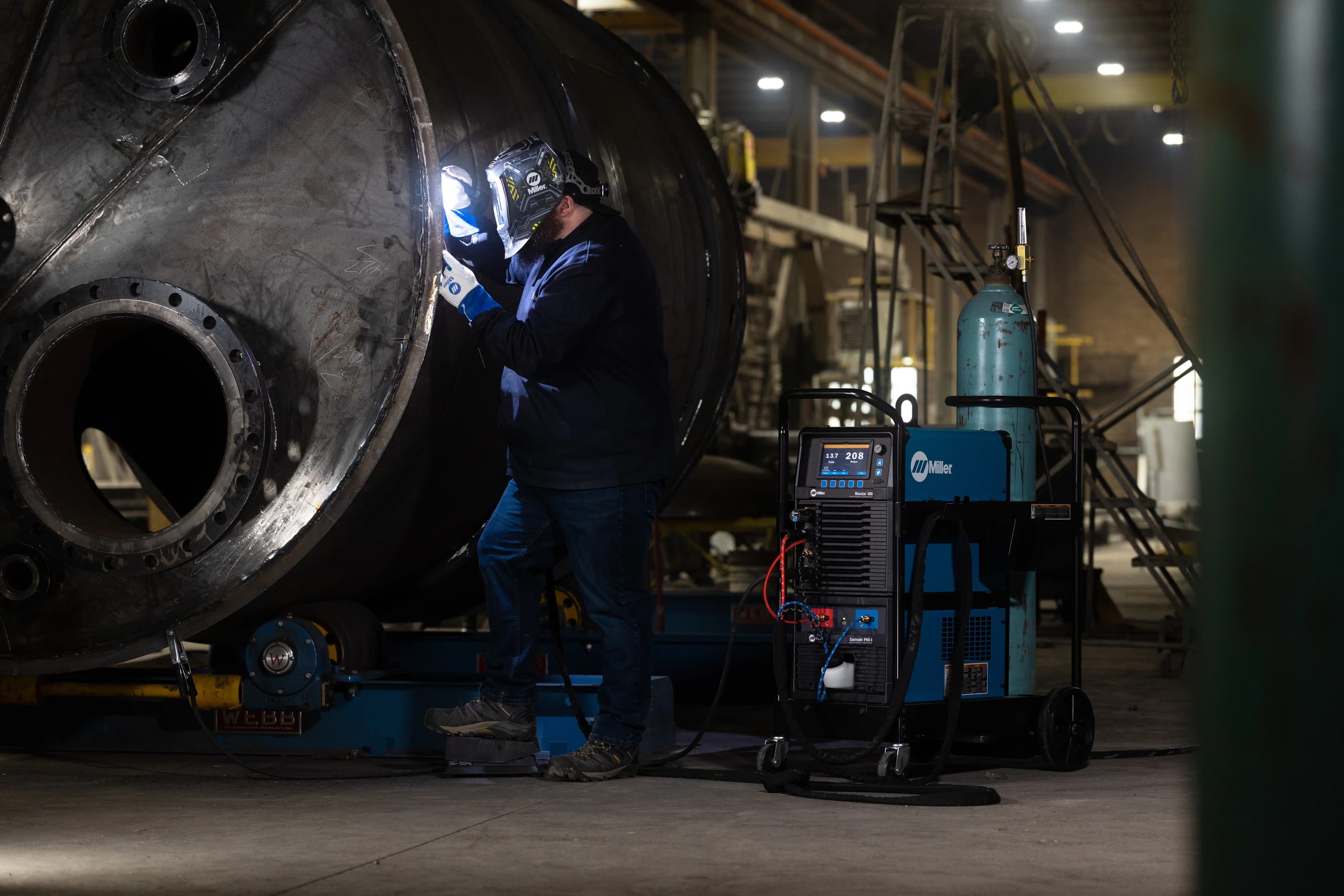
Good-grade welding requires strict controls to prevent contamination. Learn five common mistakes and how to improve weld quality, consistency and durability.
Discover how low-heat welding processes help reduce sugaring, heat tint and distortion in stainless steel for cleaner, more sanitary applications.