
Article
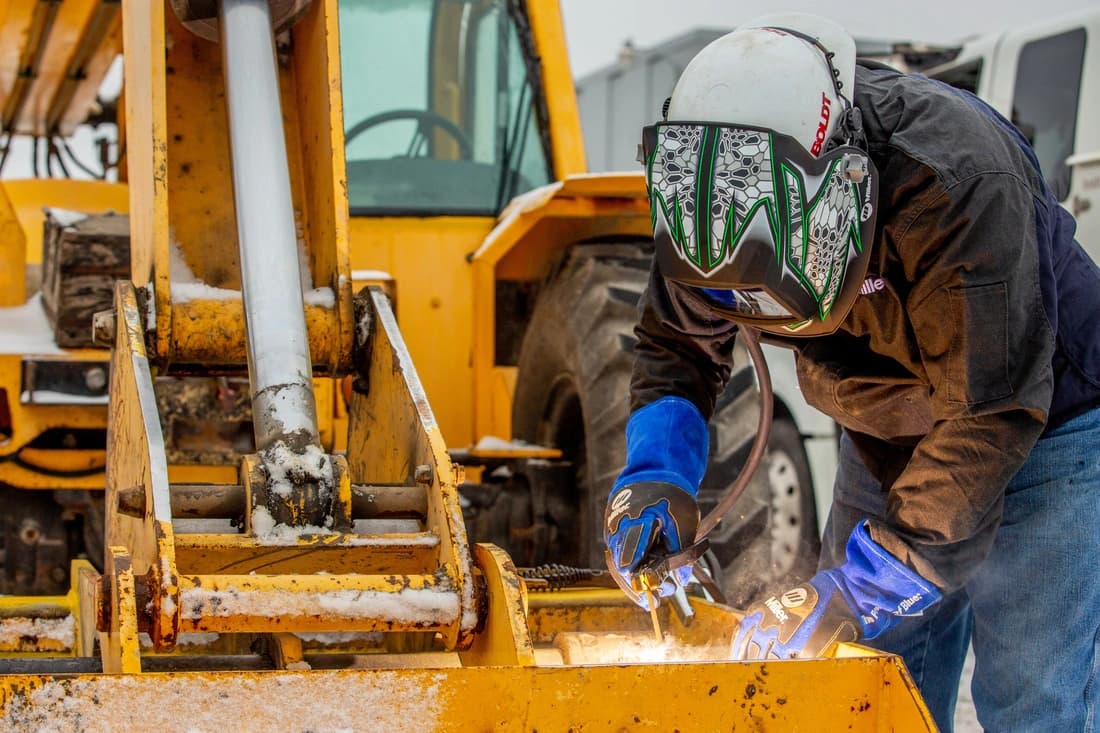
4 Must-Dos to Winterize Your Engine-Driven Welder
Follow these four maintenance tips to prepare your gas engine welder/generator for the winter months and ensure its operation at any time.
Chris Roehl
Product manager, Miller Electric Mfg. LLC
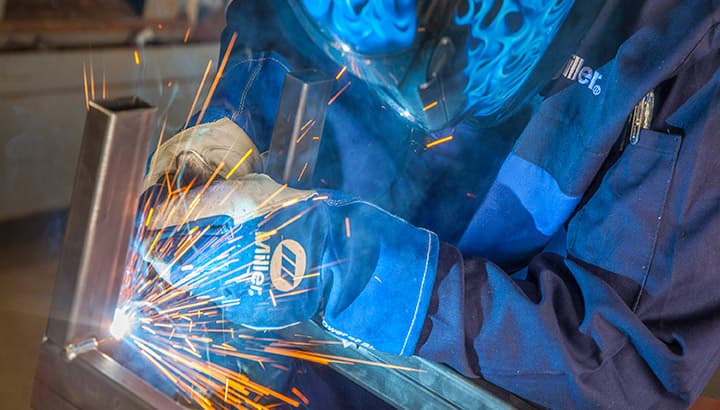
Learn how to select the best welder for the welding repairs and projects encountered on a farm or ranch.
Farms encounter a wide variety of welding repairs and projects, from fixing a gate hinge to repairing a steel chopper blower. So, having the right welder depends on a lot of factors. Do you have to bring the welder to the work or can you take the work to the welder? Which process (MIG, stick or TIG) fits your needs?
To help determine the right welder for your operation, consider these questions:
Typical farm/ranch welding applications include:
Because different applications sometimes call for different welding processes, selecting the right welder for your operation is important.
The most common welding processes used for fabricating metals are stick, MIG, flux-cored and TIG welding. Note that MIG and flux-cored welding can be performed by the same machine, and that TIG machines can usually stick weld, too.
Unfortunately, there is no single welding process suitable for all welding situations. For this reason, it is necessary to weigh the advantages and disadvantages
Process | MIG | Flux cored | Stick | TIG |
Type of metal it can weld | Steel, stainless, aluminum | Steel, stainless | Steel, stainless | All weldable metals |
Metal thickness | 24 gauge and up | 1/8" and up | 1/8" and up | 22 gauge and up |
Welding speed | Very fast | Very fast | Slow | Very slow |
Skill required | Some skill | Some skill | More skill | Most skill |
Purchase cost | Moderate | Moderate | Low | High |
Operating cost | Low | Low | High | High |
One way of classifying the "size" of welding power sources is by how much amperage they can generate at a given duty cycle. Duty cycle is the number of minutes out of a 10-minute cycle a welder can operate. For example, the Millermatic® 252 MIG welder can deliver 200 amps of power at a 60% duty cycle. It can weld continuously at 160 amps for six minutes, and then must cool down during the remaining four minutes to prevent overheating.
Next, consider that thin metals require less amperage and thicker metals require more amperage. For example, to MIG weld 18-gauge steel in a single pass takes roughly 70 amps, where welding 1/4 inch steel in a single pass requires roughly 180 amps.
The phrase “in a single pass” is the key, because multiple passes can be made to weld thicker material. However, this takes more time, so you may exceed the machine's duty cycle and spend more time waiting than welding.
For light repair work on steel, stainless steel and aluminum — from sheet metal to material 3/16-inch thick — a 130- to 150-amp MIG unit with a 30 percent duty cycle can perform many of the welding jobs a farm or ranch requires. For heavier repair or fabrication jobs — trailer hitches, axles, hardfacing — consider a 200- to 250-amp MIG unit with a 40 to 60 percent duty cycle, or consider a 175- to 250-amp stick machine.
Remember, you need sufficient amperage to ensure proper penetration on the root (first) pass, and you cannot make up for a poor root pass with subsequent passes. Actual amperage used depends on the type of weld (butt, lap, fillet, corner), welding position (flat, vertical down, vertical up, overhead), electrode diameter, type of shielding gas, and other factors.
Mild steel | 1/16" | 3/32" | 1/8" | 1/4" | 1/2" |
Stick, E6013 | 20-45 | 40-90 | 80-130 | 250-350 | 300+ |
MIG | 100-120 | 125-145 | 140-150 | 180-190 | 300+ |
Flux cored | N/A | 110-125 | 140-155 | 170-190 | 430-470 |
TIG | 55-90 | 90-120 | 95-130 | 245-330 | 330-440 |
Approximate welding amperage used for various thicknesses of mild steel
Can you bring the work to the welder, or does the welder need to go to the work? And if you bring the welder to the work, is power available? Small welders, like the Millermatic 211 MIG unit, weigh about 38 pounds and operate off 120 or 240 volt household current. By running a flux-cored wire, you can eliminate the need for a shielding gas bottle for added portability. Small stick welders are also portable.
For repairs or breakdowns that occur far from an electrical outlet, consider purchasing an engine-driven welder/generator, such as the Miller Blue Star® 185 or Bobcat™ 225 welder/generator. Not only do these machines provide their own welding power, they also provide auxiliary power to run tools and lights. Many people keep the generator in a truck bed, enabling them to drive to wherever repairs are needed.
While basic engine drive units like the Blue Star can only stick weld, the larger engine drive units are often multiprocess machines capable of stick, MIG and TIG welding by adding the right accessories.
Stick
Traditionally, most farms and ranches have a small AC stick welder, primarily because they cost a few hundred dollars. While stick welders are great for general repairs on steel or for hardfacing, they do have drawbacks:
Stick does have its advantages beyond its lower price tag. Because the electrodes are self-shielding, they are better suited for windy, outdoor conditions than MIG or TIG. Stick is also more forgiving than MIG when welding on dirty or rusty metal. (Still, it is always advisable to scrape or grind off paint, rust and other debris; welding on the cleanest material possible produces a stronger weld.)
If you plan to purchase a stick welder, try to buy an AC/DC welder. For most applications, DC reverse polarity welding offers advantages over AC, including:
MIG
While an old stick welding pro may disagree, learning to MIG weld is easier. With a little practice, even a first-time MIG user can achieve a good-looking weld. This means that anyone can use it.
For the farm or ranch, a MIG welder probably offers more advantages than any other welding process. The advantages of MIG welding are:
A further advantage is that the same equipment used for MIG welding also performs flux-cored welding. Rather than running a solid wire coupled with a shielding gas, flux-cored welding uses self-shielded wire with flux inside.
The advantages of flux-cored welding are:
Between its MIG and flux-cored capabilities, a wire welder can perform any task a stick welder can and do it more efficiently. While a good quality wire welder costs $450 to $4,000 (depending on its size), the costs for wire and gas are much less than that for stick welding rods. Coupled with the ability to weld aluminum and sheet metal, a wire welder can pay for itself very quickly.
TIG
This welding process uses a non-consumable tungsten electrode and a shielding gas that protects the welding area from contamination. The concentrated heat and precise control of the TIG arc allows thin material (.010 inch) to be welded. The advantages of TIG welding are:
Although TIG welding is a relatively slow process, it provides high quality welds. Typical applications are for aluminum irrigation pipes, stainless steel sprayer tanks and aluminum engine parts.
The weather finally cleared, and Wisconsin dairy farmer Al Hoffmann has 385 acres of haylage to cut and store when the chopper blower band for the silo snaps in half. Part of the 3/16-inch steel band has worn paper thin and snapped, and on this Saturday, the nearest replacement band is two days away. Using his Millermatic® wire welder, Hoffmann saves the band by tack welding it together and then welding on a back-up strip of steel. The repaired chopper blower moves more than 800 tons of haylage in the next few days.
"This farm has a lot of old iron, but welders keep my machinery running," Hoffmann says. In addition to the two wire welders, he also uses a 175-amp stick welder, primarily for hardfacing the bucket on his skid loader or repairing his manure spreader.
Does every farm or ranch need two or three different types of welders? While Hoffmann wouldn't trade in any of his machines, he "can't imagine not having a wire welder. It's easy to use, makes heavy welds, yet still allows me to work on thin sheet metal. I wouldn't have even attempted to repair the chopper blower band with a stick welder because it was so thin. It would have burned right through."
Portability also was important during the construction of the equal potential grounding grid in the free stall barn. This job required making hundreds of tack welds to connect the steel reinforcing bars together. With a small MIG welder, Hoffmann moved from joint to joint easily.
Posted Apr 14, 2024
Follow these four maintenance tips to prepare your gas engine welder/generator for the winter months and ensure its operation at any time.
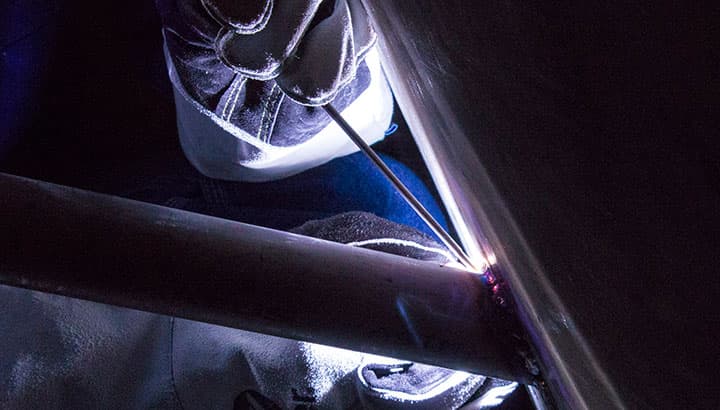
Switching between TIG and stick polarity is made easier with new technology from Miller, which allows operators to make changes at the joint.
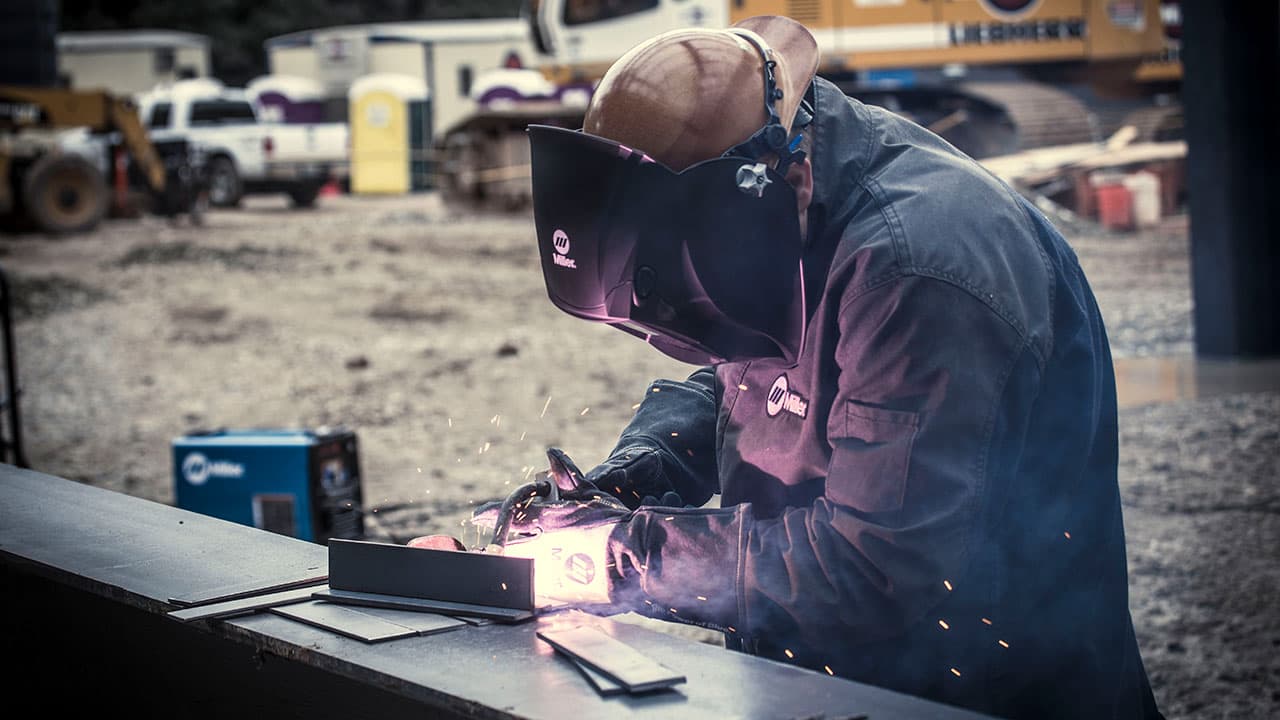
Are you or your welders experiencing wire feeder problems? Learn how to avoid issues with the right suitcase wire feeder.