Driving Improvements in Automation with Welding Information
Implementing a welding information management system in a robotic weld cell can be key to driving welding automation improvement.

Bobbi Jo Matheny
Product Manager
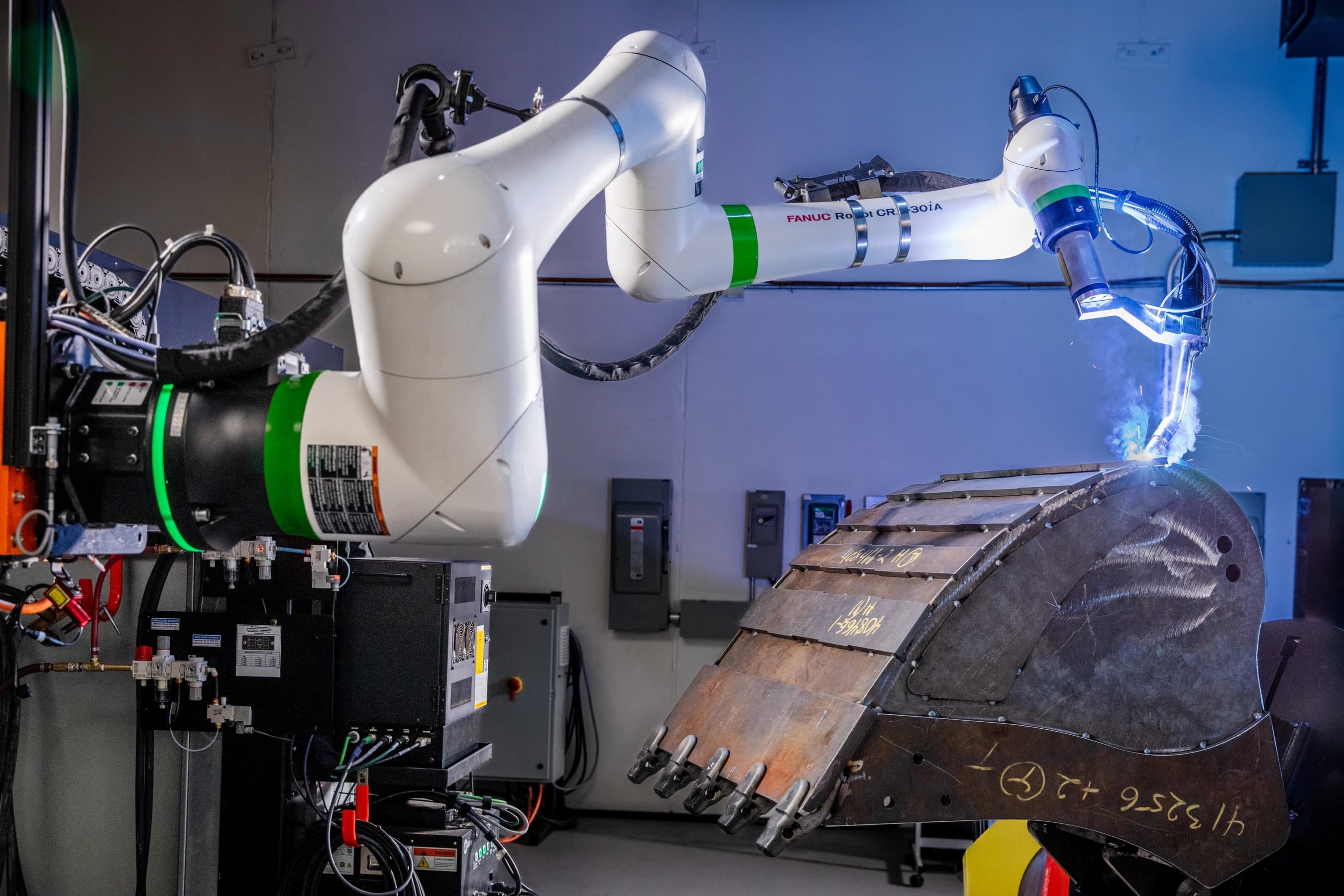
Automation has often felt out of reach for heavy fabrication manufacturing. Traditional robot cells are powerful, but they require rigid setups, dedicated tooling and significant upfront investment. In high-mix or project-based environments, that rigidity can limit flexibility. Conversely, collaborative welding robots have historically been used for lighter-duty work, such as smaller parts, shorter welds and compact environments.
Improvements in arm reach and automation usability are pushing those limits, making it easier to bring automation to larger, more complex weldments. Solutions like the Miller® Copilot™ Builder™ featuring the FANUC CRX-30 70-inch arm provide a more practical path to automating work that was once considered too big, too variable or too difficult to justify.
One of the biggest barriers to automation in heavy fabrication has always been access. Larger weldments often require frequent repositioning or complex fixturing just to reach all the necessary welds. Longer-reach collaborative robots change that equation and offer a more adaptable alternative. With extended reach, manufacturers can:
The result is a simpler, more flexible setup that allows shops to automate more without redesigning their entire workflow. This flexibility is especially valuable for shops serving multiple markets or bidding project-to-project work.
An extended reach naturally helps reach the entire weld area on a larger part, but it can also improve overall throughput. With the ability to access more of a work area, operators can:
For many shops, this means longer run times, fewer interruptions and better utilization of both labor and equipment. As collaborative automation has matured, ease of use has become just as important as overall reach. The Miller Copilot Builder platform is designed with this in mind.
The Copilot user experience is built specifically for welders, prioritizing clarity, guided workflows and hands-on programming that aligns with how welders already think and work. Instead of relying on complex coding or dedicated robotics specialists, operators can:
Even with the addition of a longer-reach FANUC arm, the programming experience remains consistent. For current Copilot users, transitioning to a longer-reach system requires minimal retraining, allowing teams to scale capability without increasing complexity.
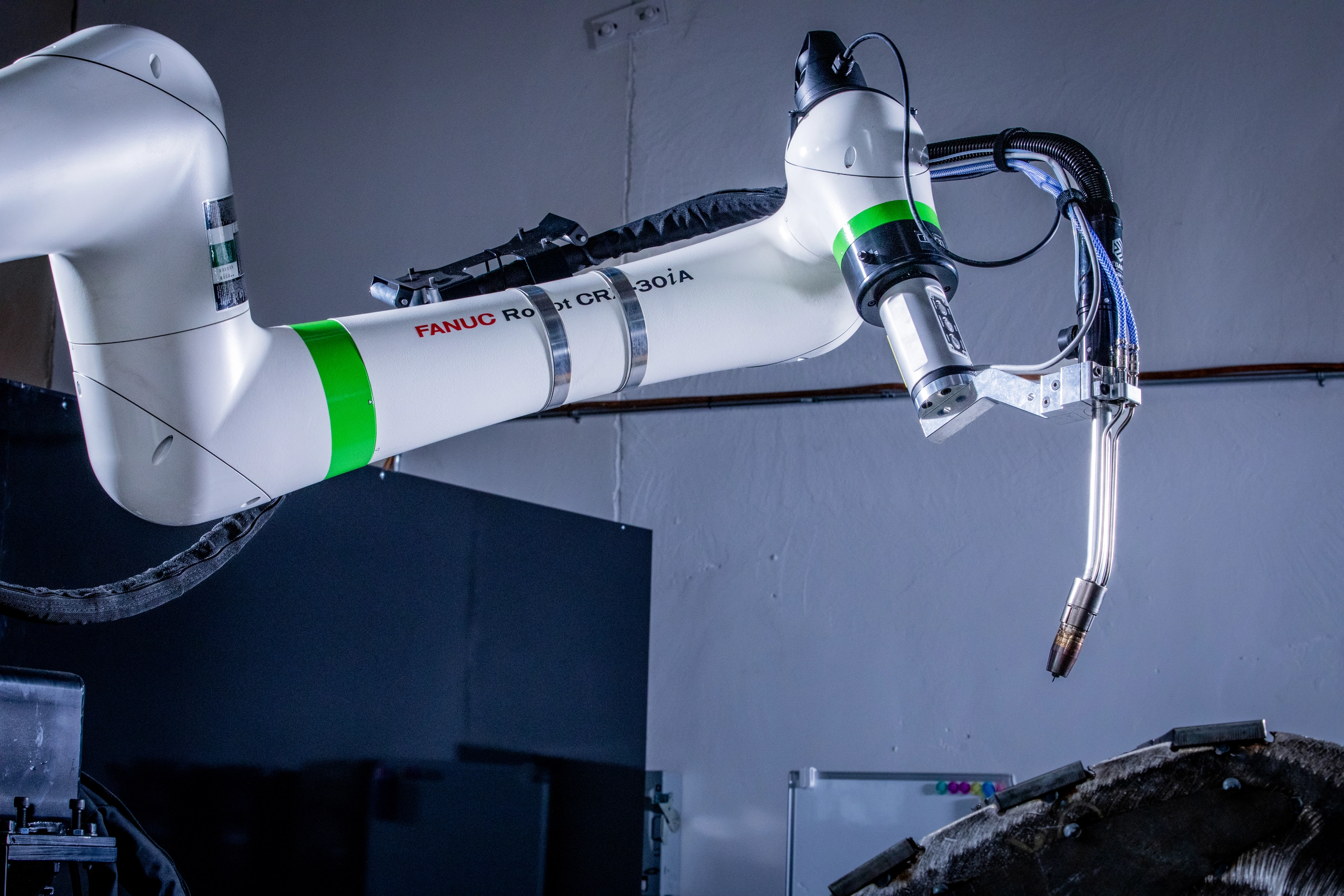
Many manufacturers already use FANUC robots for applications like material handling or part manipulation. Integrating a long-reach FANUC arm on a welding cobot is a natural extension of FANUC’s widely recognized name in industrial automation. Pairing the Copilot Builder platform and straightforward programming software with a FANUC arm delivers:
As a fully integrated system, it’s designed to ensure that communication between the arm, power source and software works seamlessly out of the box.
The biggest challenge for manufacturers that are new to automation is knowing where to start. Miller’s approach centers on partnership and hands-on support throughout the process. Getting started with Miller typically involves the following steps:
This process helps reduce risk, build internal confidence and ensure the selected solution is aligned with real production conditions.
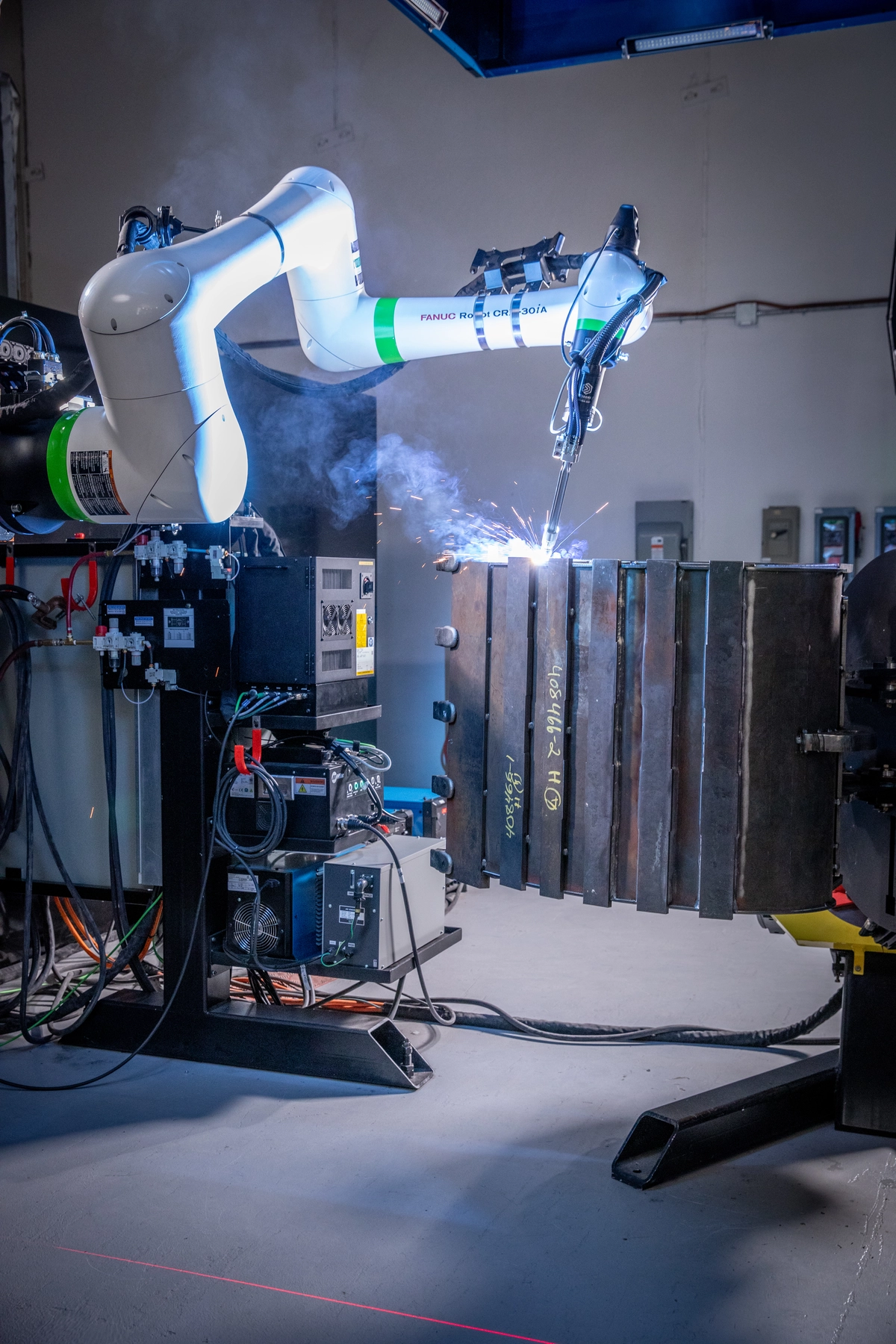
While longer-reach cobots literally expand the physical reach of the automation, they also expand what heavy fabrication manufacturers see as possible. With improved flexibility, easier programming and a collaborative approach to implementation, automation becomes:
Solutions like the Copilot Builder with FANUC CRX-30 help bridge the gap between capability and usability, giving manufacturers a tool that not only addresses today’s labor and productivity challenges but supports long-term growth.
As more shops look to automate larger, more complex weldments, longer-reach collaborative systems are providing a clear next step that balances reach, flexibility and ease of use in a single solution.
Posted Aug 12, 2026
Implementing a welding information management system in a robotic weld cell can be key to driving welding automation improvement.
For first-time users, welding automation can seem intimidating. When making the investment, it is important to plan the purchase carefully and to implement best practices to achieve the best results.
To gain the best success when implementing a robotic welding system it’s important to follow some best practices.