
PerformArc™ PA1100HW
Rotate parts into the desired welding position, maximizing torch access and weld quality. Find PerformArc specifications, features, and resources.

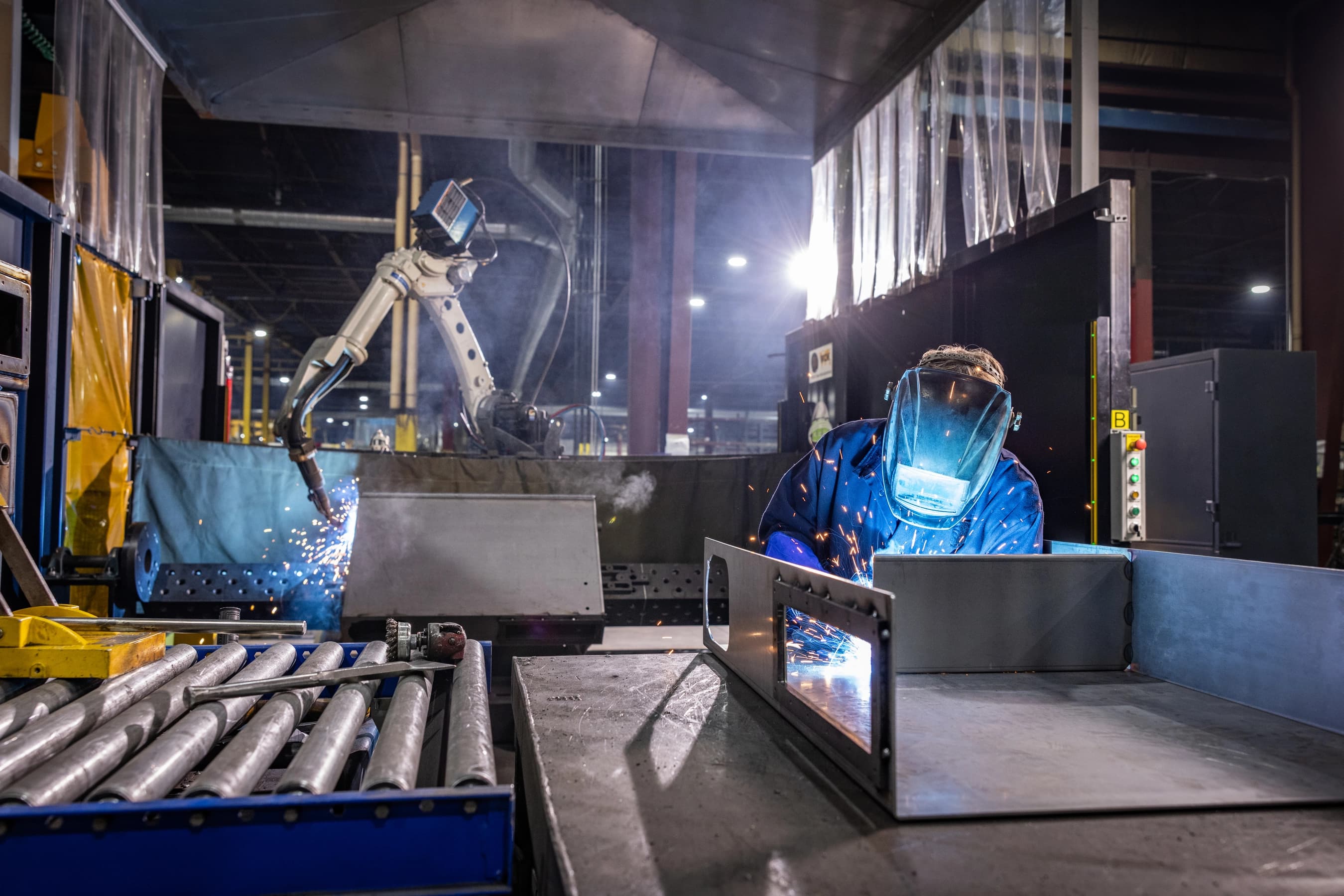
We were able to take around 25 different tanks off of the hand-weld cells — larger tanks — move them over to the robot cell and increase throughput by about 25 to 40 percent on those tanks.
Plant manager, IFH Group
Demand for larger tanks, frequent changeovers and difficulty recruiting and retaining skilled welders were putting pressure on IFH Group’s capacity. The manufacturer needed to increase output without taking robotic cells out of production for programming or losing the welding expertise behind every tank. By expanding its robotic welding system and using offline programming, IFH increased throughput 25 to 40 percent on a family of larger tanks while reducing on-cell programming and manual tank handling.
IFH Group’s manufacturing history in Rock Falls, Illinois, began in 1945 as King’s Weld Shop. Today, the company produces made-to-order hydraulic and fuel reservoirs for agricultural equipment, construction machinery and other off-road and specialty vehicles. It works with steel, aluminum and stainless steel in a high-mix environment where every setup, program and production hour counts.
That product mix is also getting heavier. Pat Murphy, vice president of operations at IFH Group, says customer demand has steadily shifted toward larger hydraulic and fuel tanks, even as skilled welders remain difficult to recruit and retain.
The challenge was not simply to automate more welding. IFH needed a production system that could flex across many tank designs, preserve welding knowledge, keep robotic cells available for production and reduce the physical handling required by larger workpieces.
Working with Miller Electric Mfg. LLC, IFH now operates six Miller® PerformArc robotic welding cells: three PerformArc PA1100HW cells and three PerformArc 1100SS cells. The PA1100HW cells handle mainly smaller tank work. The 1100SS cells provide the work envelope and positioning capacity needed for larger, heavier products and two-stage processes.
Each new tank moves through a cross-functional launch process spanning engineering, quality, production and automation. The team decides whether a part is better suited to robotic or manual welding, builds the fixture, runs trials and submits a first article to the customer for approval. Welding expertise remains central to every automated job.
Introducing a new product once required an IFH programmer to stand at a robotic cell and build the program with a teach pendant. The cell produced no customer parts while that work was underway.
With IntelliPath™ offline programming, senior robot programmer Tony Garcia can start with computer-aided design (CAD) data and develop most of the program off the production floor. When the fixture and first tank are ready, he sends the program to the robot, runs the initial cycle and adjusts only the points that need refinement.
Murphy estimates that programming that could take about 15 hours at the cell now requires two to three hours of on-cell touch-up. Garcia says some prototype programs reach production readiness with roughly an hour at the cell instead of days. The result is more time available for production and a shorter path from design to finished tank.
Miller’s support and training is next level. They don’t just give you a box and drop it off.
Senior robot programmer, IFH Group
The clearest productivity gain came when IFH moved about 25 larger tank models from manual welding to a PerformArc 1100SS cell. Nathan Dahlstrom, plant manager at IFH Group, reports a 25 to 40 percent increase in throughput on those tanks.
| 24 - 40% | Six | Three-Four |
|---|---|---|
| Reported throughput increase | PerformArc cells in operation | Manual tank flips replaced |
| Across about 25 larger tank models moved ot PerformArcc 1100SS cell | Three PerformArc PA 1100HW cells and three PerformArc 1100Ss cells | Through automated positioning on applicable jobs |
Reported operational results from IFH Group interview participants.
The dual-station 1100SS layout also lets operators load one station while the robot welds at the other. Instead of losing production time to programming or a part change, the automated process keeps welding.
For a tank manufacturer, more output only matters when weld quality holds. IFH pairs programmed parameters and touch sensing, which helps the robot account for normal variation in hand-built assemblies, with weld-process review and leak testing. Interview participants report fewer leak issues on tanks moved to the PerformArc cells. People remain responsible for inspection and testing.
Automation also changes how operators handle the work. On some large tanks, the robot positioner replaces three or four manual flips during welding. This reduces lifting and repositioning while placing more of the weld in an ideal orientation.
For Garcia, automation opened a career path. He spent years as a manual welder, then moved through aluminum welding, prototyping and fixturing before becoming IFH’s senior robot programmer. That welding background now informs how every fixture, program and weld sequence is built.
IFH operated two Miller robotic welding cells when Murphy joined the company in 2021. As the business and product mix changed, IFH added four more. Miller has supported the expansion with application testing, programming help, training and service.
Miller has been a key partner for us as we’ve grown our business. What we look for in any business relationship is a partnership, not a transactional one.
Vice President of Operations, IFH Group
That partnership will remain central as IFH considers its next phase of automation. The objective is straightforward: Keep adapting as tanks and requirements change while preserving the quality, safety and manufacturing knowledge behind the work.
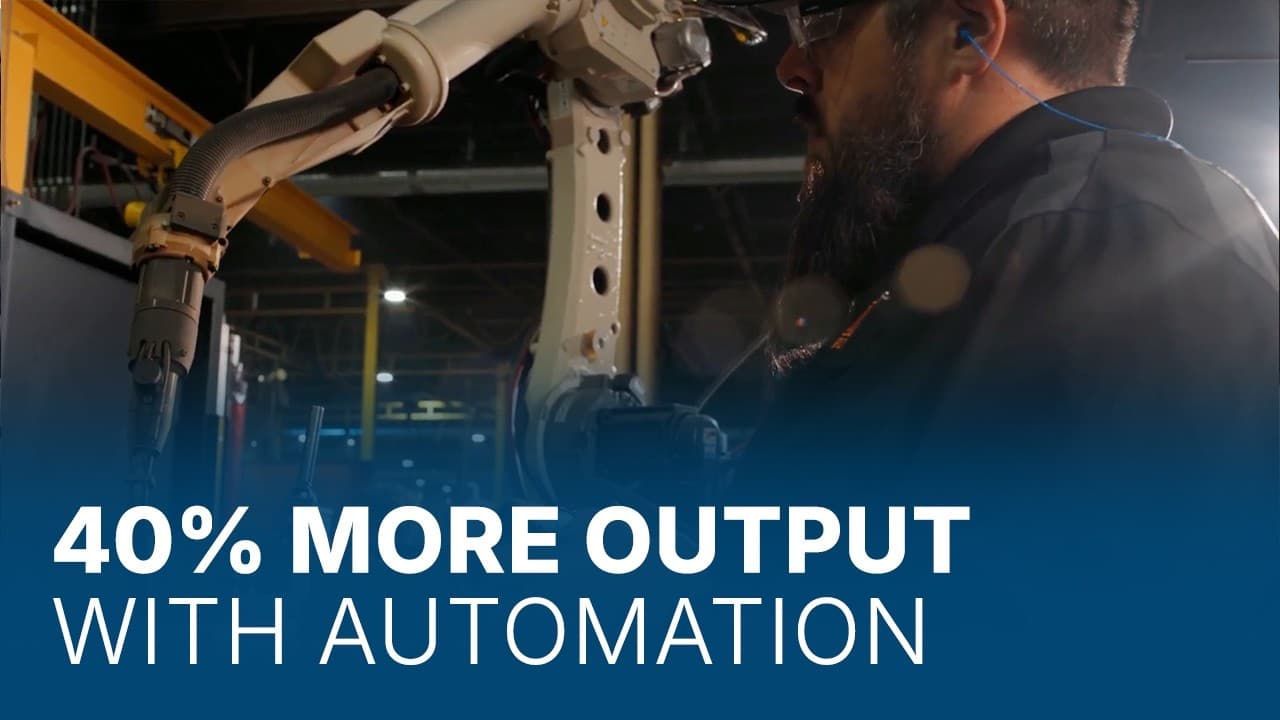
How IFH Group Increased Welding Throughput Up to 40% with Automation
Posted Jul 26, 2026
Rotate parts into the desired welding position, maximizing torch access and weld quality. Find PerformArc specifications, features, and resources.

Standard load station jog provides complete load position flexibility. Find PerformArc specifications, features, and resources.